

Why Is Political Education Important for the General Elections Commission?
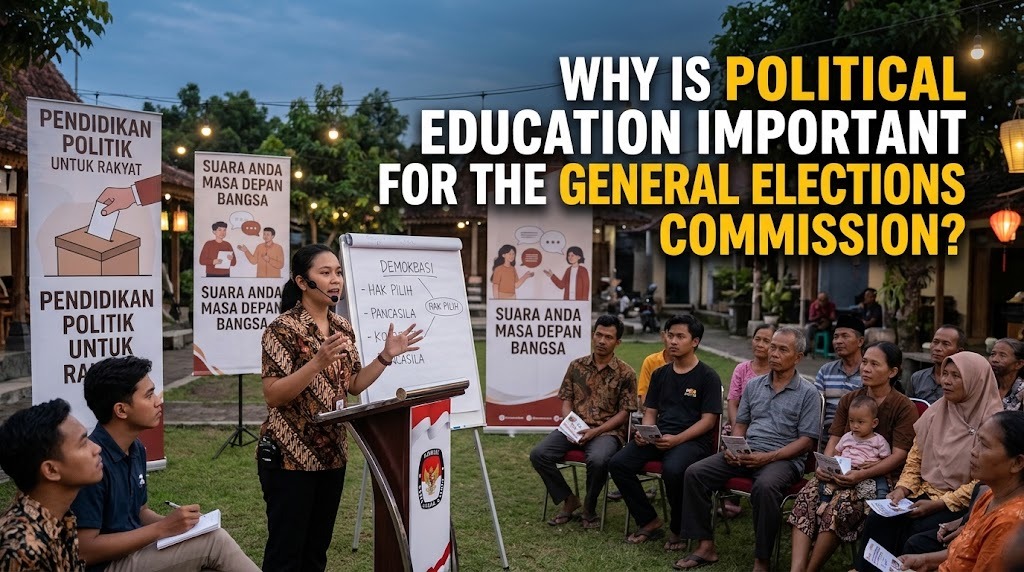
Political education is an important part of building a healthy democratic society. In Indonesia, the General Elections Commission (KPU) has a significant responsibility not only to organize elections but also to encourage public understanding of democratic processes. Citizens need to understand their political rights, voting procedures, and responsibilities when participating in elections. Without sufficient political knowledge, people may struggle to make informed decisions when choosing political representatives and national or regional leaders.
The importance of political education becomes even greater as Indonesia continues to develop its democratic system. The KPU needs to help citizens understand that elections are not simply activities conducted every five years but also opportunities to influence the country's future. Through educational programs, public campaigns, and accessible information, the commission can encourage people to participate responsibly. Political awareness helps voters evaluate candidates, recognize misleading information, and understand the importance of their votes. Therefore, political education is an essential element in strengthening democracy and improving the quality of elections.
INCREASING PUBLIC UNDERSTANDING OF DEMOCRACY
One of the main purposes of political education is to increase public understanding of democracy. Many citizens know that elections allow them to choose leaders, but not everyone understands how the electoral system works. The KPU can provide information about election procedures, political institutions, voting rights, and the responsibilities of elected representatives. This knowledge helps people recognize the importance of democratic participation beyond simply casting a ballot. When citizens understand the democratic system, they can become more active and responsible members of society.
Political education also helps explain the relationship between elections and government policies. Citizens need to understand that the leaders they elect have responsibilities that affect education, healthcare, infrastructure, economic development, and other public services. By providing accessible educational materials, the KPU can help voters understand the consequences of their political choices. Public discussions and community outreach activities can also encourage people to ask questions and exchange opinions. Better democratic understanding allows citizens to participate in elections with greater awareness and confidence.
ENCOURAGING RESPONSIBLE VOTER PARTICIPATION
Political education plays an important role in encouraging citizens to exercise their voting rights responsibly. Some people may avoid participating in elections because they believe their individual votes will not make a difference. Others may not understand the registration process, voting requirements, or location of their assigned polling stations. Through educational campaigns, the KPU can explain why every eligible vote matters and how citizens can participate in elections. Clear information can reduce confusion and encourage greater voter participation.
Responsible participation also means that citizens should consider candidates carefully before making political decisions. Voters need to examine candidate backgrounds, proposed programs, qualifications, and public commitments rather than choosing based only on popularity or emotional influence. The KPU can encourage this awareness by providing neutral information about election procedures and facilitating public education activities. Citizens should also understand that voting is a democratic right that must be exercised freely without intimidation or pressure. Informed voter participation contributes to a more meaningful and representative electoral process.
PREVENTING POLITICAL MISINFORMATION AND HOAXES
The spread of false information is a serious challenge in modern elections. Social media and digital communication platforms allow information to reach millions of people within a short period. However, these platforms can also be used to distribute misleading claims about candidates, political parties, election procedures, and official results. Without sufficient political knowledge, citizens may have difficulty distinguishing reliable information from fabricated content. Political education helps people develop the ability to evaluate information before accepting or sharing it.
The KPU can contribute to preventing misinformation by publishing accurate election information through official communication channels. Educational programs can also teach citizens to check information sources, compare reports, and avoid spreading unverified claims. Cooperation with relevant institutions, including Bawaslu, is important when addressing election-related violations and misinformation within their respective responsibilities. Citizens also need to understand that misleading information can damage public trust and create unnecessary political conflict. Digital and political literacy help create a more informed society that is less vulnerable to election-related hoaxes.
BUILDING AWARENESS AMONG YOUNG VOTERS
Young people are an important part of Indonesia's democratic future. Many students and young adults participate in elections for the first time when they reach voting age. However, some may have limited knowledge about political institutions, election regulations, and the responsibilities of elected leaders. The KPU can help address this challenge through educational activities in schools, universities, and communities. These programs can introduce democratic principles and explain how young citizens can participate in the electoral process.
Political education for young voters should also include discussions about critical thinking, responsible social media use, and evaluating political information. Young people often obtain information through digital platforms, making it important for them to recognize misleading content and understand different political perspectives. The KPU can use educational videos, public discussions, and digital campaigns to communicate election information in ways that are easy to understand. Youth political participation is important because young voters can influence future leadership and contribute new perspectives to democratic development. Educating them today helps build a more responsible generation of voters.
STRENGTHENING PUBLIC TRUST IN THE ELECTION PROCESS
Public trust is essential for maintaining a credible democratic election system. Citizens need confidence that elections are organized fairly, transparently, and according to applicable regulations. Political education helps build this confidence by explaining the responsibilities of election organizers and the procedures used throughout the electoral process. When people understand how voter registration, voting, and vote counting work, they may feel more confident about participating. Clear explanations can also reduce misunderstandings about election administration.
The KPU must provide reliable information and communicate important decisions openly to support public trust. It should explain election procedures in accessible language and respond to public questions through appropriate communication channels. Political education can also introduce citizens to the roles of other election institutions, including Bawaslu, which supervises election implementation. This knowledge helps people understand that election management involves different institutions with specific responsibilities. Transparency and public understanding work together to strengthen confidence in democratic institutions.
SUPPORTING FAIR AND HIGH QUALITY ELECTIONS
Political education contributes to the quality of elections by helping citizens make decisions based on knowledge and consideration. When voters understand candidate programs, political responsibilities, and election regulations, they can evaluate political participants more carefully. This encourages healthier political competition because candidates must gain public support through credible programs and responsible communication. An informed electorate can also demand greater accountability from elected representatives. Therefore, political education benefits not only individual voters but also the broader democratic system.
The KPU can support this objective through continuous educational activities before, during, and after election periods. These activities should reach different groups of society, including students, first-time voters, people with disabilities, and communities in remote areas. Educational materials must be accessible, neutral, and easy to understand. The commission also needs to evaluate its educational programs to identify areas that require improvement. Quality political education helps create an informed electorate and supports fairer, more inclusive, and more credible elections in Indonesia.
CONCLUSION
Political education is important for the General Elections Commission because it helps citizens understand democracy, exercise their voting rights, and participate responsibly in elections. Through educational campaigns and accessible information, the KPU can improve public awareness, prevent misinformation, encourage youth participation, and strengthen trust in election administration. Political education also supports voters in evaluating candidates and understanding the responsibilities of elected representatives. However, building a strong democratic culture requires cooperation between election institutions, educational organizations, communities, and citizens. Therefore, continuous political education is an important investment in developing informed voters and a stronger democracy in Indonesia.
Recent Posts

Bagaimana Sistem SKS pada Program Kuliah... 22.11.2026/47 View

How Does Technology Make Daily Evaluation... 21.11.2026/74 View

Apa Strategi Menghadapi Kesenjangan antara Kompetensi... 21.11.2026/75 View

Mengapa Inventaris Aset Penting bagi Kelancaran... 21.11.2026/72 View

When Should Musicians Join a Record... 21.11.2026/75 View
