

Why Is Political Literacy Important for Students?
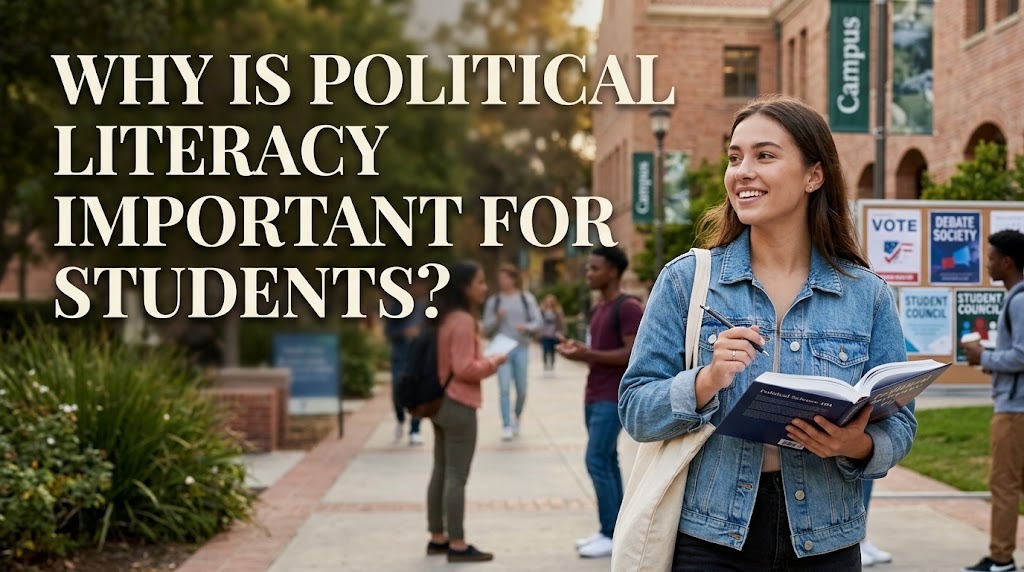
Political literacy is the ability to understand political issues, public institutions, civic rights, responsibilities, and democratic processes. Students encounter political information through school, university, news platforms, social media, and conversations. Understanding this information can help them become more aware of issues that affect their communities and daily lives.
Developing political literacy for students does not mean directing them toward a particular political opinion. Instead, it provides knowledge and skills that can help students evaluate information, understand different perspectives, communicate respectfully, and participate responsibly in civic life.
HELPING STUDENTS UNDERSTAND PUBLIC ISSUES
Students may encounter discussions about education, employment, public services, laws, environmental issues, and other matters influenced by public policy. Political literacy can help them understand how these issues relate to government institutions and society.
Basic political knowledge can also make unfamiliar terms and public processes easier to understand. Students can learn about the roles of government institutions, how public policies are developed, and how citizens can participate in civic affairs.
By understanding public issues, students can connect what they learn in education with situations in their communities. This can encourage curiosity and motivate them to seek additional information from credible sources.
IMPROVING THE ABILITY TO EVALUATE INFORMATION
Students are exposed to a large amount of information through digital platforms. Political content can appear in news articles, videos, social media posts, discussions, and other online sources. The quality and accuracy of this information can vary.
Political literacy skills can help students examine the source of information, consider the evidence provided, compare different sources, and distinguish facts from opinions. UNESCO's media and information literacy framework emphasizes the importance of accessing, evaluating, and using information effectively.
These abilities are useful beyond political topics. Students who develop strong information literacy can apply critical evaluation skills when studying academic subjects and making decisions about information encountered online.
DEVELOPING CRITICAL THINKING AND RESPECTFUL DIALOGUE
Political issues can involve different perspectives and interpretations. Critical thinking can help students examine arguments, consider evidence, and understand why people may reach different conclusions about the same issue.
Students can practice these skills by discussing public issues in class, participating in appropriate academic activities, or reviewing different sources of information. The purpose is not to make everyone hold the same view but to encourage thoughtful and evidence-based discussion.
Respectful dialogue is also an important part of democratic culture. The Council of Europe identifies dialogue, respect for diversity, human rights, and peaceful conflict resolution as important elements of democratic culture.
PREPARING STUDENTS FOR CIVIC PARTICIPATION
Civic participation can take different forms depending on a student's age, legal rights, and circumstances. Students can participate by learning about community issues, joining appropriate organizations or activities, volunteering, expressing opinions respectfully, and becoming familiar with democratic processes.
Political literacy can help students understand their rights and responsibilities as members of society. Learning about these concepts early can provide a foundation for more informed participation as they grow older.
Education can support this process by creating opportunities for students to discuss public issues, practice critical thinking, and understand how communities and institutions function. These experiences can make civic learning more practical and relevant.
BUILDING INFORMED AND RESPONSIBLE STUDENTS
The importance of political literacy for students also relates to their preparation for life beyond the classroom. As students become adults, they may have greater opportunities and responsibilities to participate in civic and democratic processes.
Learning to verify information, understand different perspectives, and communicate respectfully can help students make informed judgments. These skills can also be useful when dealing with political information on social media and other digital platforms.
Political literacy should therefore focus on knowledge and independent thinking rather than promoting a specific political position. By developing informed civic awareness, students can better understand public affairs and decide for themselves how they want to participate in society.
CONCLUSION
Political literacy is important for students because it helps them understand public issues, evaluate information, develop critical thinking, communicate respectfully, and prepare for civic participation.
Developing political literacy skills through education and everyday learning can give students a stronger foundation for understanding political and social issues. These skills can support responsible participation while allowing students to form their own informed views.
Recent Posts

Bagaimana Sistem SKS pada Program Kuliah... 22.11.2026/33 View

How Does Technology Make Daily Evaluation... 21.11.2026/67 View

Apa Strategi Menghadapi Kesenjangan antara Kompetensi... 21.11.2026/67 View

Mengapa Inventaris Aset Penting bagi Kelancaran... 21.11.2026/65 View

When Should Musicians Join a Record... 21.11.2026/66 View
