

Why Is Public Participation Important in State Budget Preparation?
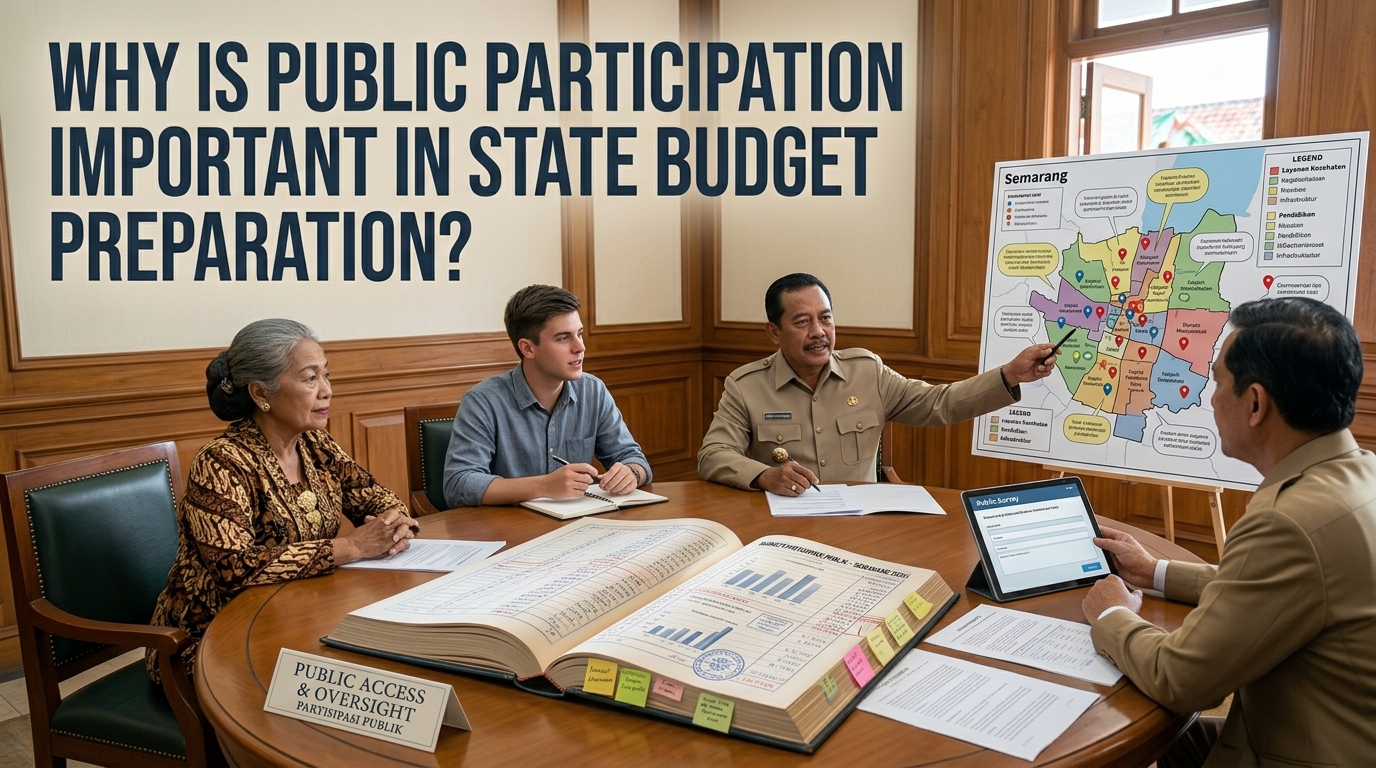
Public participation is an important part of state budget preparation because government spending directly affects people's daily lives. When citizens have opportunities to express their needs and concerns, the government can make better decisions about how public money should be allocated. In Indonesia, the State Budget or Anggaran Pendapatan dan Belanja Negara (APBN) supports essential services, including education, healthcare, infrastructure, and social protection. Public involvement can help decision-makers understand which programs deserve attention and whether proposed policies reflect community priorities. Therefore, meaningful public participation can improve budget transparency, strengthen accountability, and support more inclusive national development.
HELPING THE GOVERNMENT IDENTIFY PUBLIC NEEDS
Public participation helps the government understand the problems people face in their daily lives. Citizens may highlight issues such as limited access to healthcare, damaged roads, inadequate schools, or a lack of employment opportunities. This information can complement official statistics and help decision-makers identify urgent priorities. Community input is particularly useful when needs differ between urban areas, rural communities, and remote regions. By considering public feedback, the government can develop more responsive budget plans that address real problems instead of relying only on general assumptions.
IMPROVING BUDGET TRANSPARENCY
Transparency means making information about government revenue, spending plans, and budget decisions available to the public. Participation encourages government institutions to explain why certain programs receive funding and why other proposals may not be prioritized. Citizens who understand the budgeting process can ask relevant questions and examine whether spending decisions match stated development goals. Public discussions can also help identify unclear explanations or information gaps that require further attention. Open communication and accessible budget information make it easier for people to understand how public money is planned and managed.
STRENGTHENING GOVERNMENT ACCOUNTABILITY
Public participation can encourage government officials to take greater responsibility for their budget decisions. When citizens, community organizations, and researchers examine spending priorities, officials have stronger incentives to explain their choices. Public feedback can also draw attention to projects that appear ineffective or do not address the needs they were intended to serve. However, accountability requires more than collecting opinions; concerns must be considered through appropriate procedures and followed up when necessary. Effective public oversight helps encourage responsible financial management and reduces opportunities for waste or misuse of public funds.
PROMOTING FAIRER BUDGET ALLOCATION
Different communities have different needs, so public participation can help the government distribute resources more fairly. For example, a remote community may need improved transportation and basic healthcare, while a densely populated city may require better public transport and waste management. Listening to these differences helps decision-makers evaluate which programs deserve greater attention. Public involvement can also give disadvantaged groups an opportunity to raise concerns that might otherwise receive limited attention. Fair and inclusive budgeting helps ensure that development benefits reach a wider range of people rather than concentrating resources in areas with stronger economic or political influence.
BUILDING PUBLIC TRUST IN GOVERNMENT
People are more likely to trust government institutions when they have opportunities to express their views and understand how decisions are made. Public participation creates a channel for communication between citizens and policymakers. It also helps clarify the reasons behind difficult choices, especially when available funding cannot meet every request. Although participation does not guarantee that every proposal will be accepted, transparent explanations can help people understand budget priorities. Over time, genuine public engagement can strengthen public confidence in government institutions and encourage greater civic responsibility.
SUPPORTING BETTER DEVELOPMENT PROGRAMS
Public input can improve the design of development programs by providing practical information about local conditions. Residents may identify problems with proposed infrastructure, explain barriers to accessing public services, or suggest improvements based on their experiences. This information can help officials assess whether a program is realistic and likely to deliver its intended benefits. After implementation, public feedback can also reveal whether services have improved and whether further action is needed. Community-informed planning can therefore make public spending more effective and help development programs achieve better results.
ENCOURAGING PARTICIPATION IN INDONESIA
In Indonesia, public participation can occur through development planning consultations, community meetings, public discussions, and other official feedback channels. Regional planning forums, commonly known as Musrenbang, provide opportunities for communities to communicate development priorities within the planning process. At the national level, citizens can also engage through consultations and communication with their representatives, including members of the House of Representatives (DPR). These opportunities operate within established laws, procedures, and budget constraints. Strengthening meaningful citizen involvement can help connect government planning with community needs at both national and regional levels.
ADDRESSING CHALLENGES IN PUBLIC PARTICIPATION
Despite its benefits, public participation can face several challenges. Some citizens may lack access to budget information, have limited time to attend meetings, or find financial documents difficult to understand. Others may feel that their opinions will not influence final decisions. Participation can also become unbalanced if only well-connected groups are able to contribute regularly. The government should therefore provide accessible information, use inclusive consultation methods, explain how feedback is considered, and report the results of participation. Inclusive and well-organized consultation helps ensure that public involvement is meaningful rather than merely a formal requirement.
CONCLUSION
Public participation is important in state budget preparation because it helps the government identify public needs, improve transparency, strengthen accountability, and allocate resources more fairly. It can also build public trust and improve the design of development programs. In Indonesia, opportunities such as Musrenbang and other consultation channels can help connect community priorities with government planning. However, successful participation requires accessible information, inclusive processes, and clear explanations of how public feedback is used. By encouraging meaningful public participation, the government can prepare a more responsive and accountable state budget that supports sustainable national development.
Recent Posts

Bagaimana Sistem SKS pada Program Kuliah... 22.11.2026/47 View

How Does Technology Make Daily Evaluation... 21.11.2026/74 View

Apa Strategi Menghadapi Kesenjangan antara Kompetensi... 21.11.2026/76 View

Mengapa Inventaris Aset Penting bagi Kelancaran... 21.11.2026/72 View

When Should Musicians Join a Record... 21.11.2026/76 View
