

Why Is Renewable Energy Important in Reducing Global Warming?
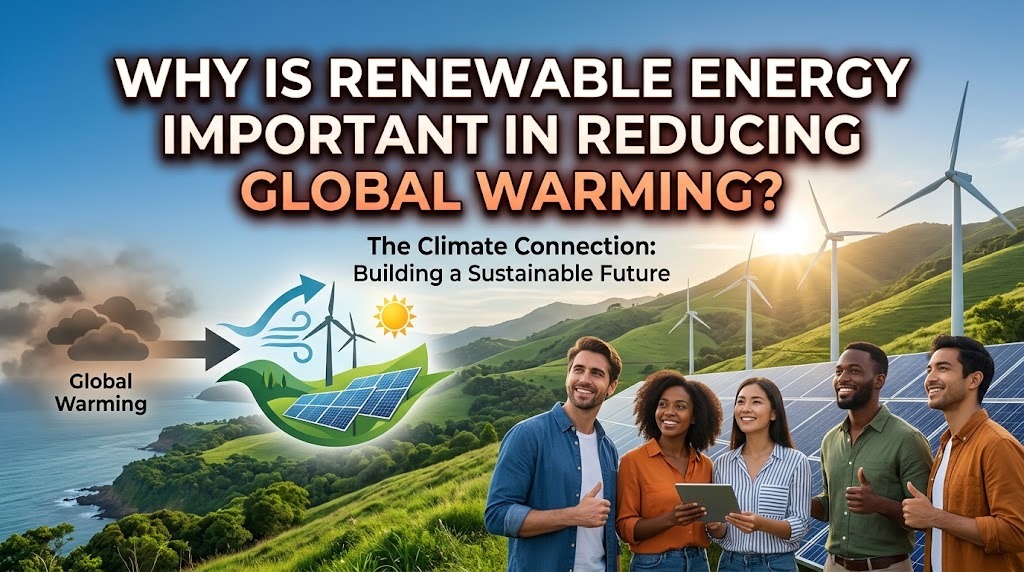
Global warming is a major environmental challenge caused largely by the accumulation of greenhouse gases in the atmosphere. One of the main sources of these emissions is the burning of fossil fuels, such as coal, petroleum, and natural gas, to generate electricity, power vehicles, and operate industries. As energy demand continues to grow, finding cleaner ways to produce energy becomes increasingly important.
Renewable energy is an important solution because it provides electricity and heat from sources that are naturally replenished, including sunlight, wind, and flowing water. These technologies generally produce much lower greenhouse gas emissions during operation than fossil fuel-based energy systems. Understanding why renewable energy helps reduce global warming can explain its role in building a cleaner and more sustainable energy future.
RENEWABLE ENERGY REDUCES GREENHOUSE GAS EMISSIONS
One of the main reasons renewable energy is important in reducing global warming is its ability to replace energy sources that release large amounts of greenhouse gases. Coal and natural gas power plants emit carbon dioxide when they burn fuel to generate electricity. Solar panels and wind turbines, by contrast, generate electricity without directly burning fossil fuels during operation.
Replacing fossil fuel electricity with renewable sources can therefore lower emissions from the power sector. Hydropower can also generate electricity with relatively low operational emissions, although its overall environmental impact depends on factors such as reservoir design and location. Renewable energy systems still require materials, manufacturing, transportation, and construction, which can produce emissions. Nevertheless, their total life-cycle greenhouse gas emissions are generally lower than those of fossil fuel-based electricity generation.
SOLAR AND WIND POWER PROVIDE CLEANER ELECTRICITY
Solar energy uses photovoltaic panels to convert sunlight into electricity, while wind turbines generate electricity from moving air. Both technologies can help reduce dependence on coal and natural gas when they replace fossil fuel generation. They can also be installed in different settings, from residential rooftops to large power facilities.
The availability of sunlight and wind varies by location and time, so these sources require suitable planning and electricity systems. Energy storage, improved transmission networks, and a mix of energy sources can help balance fluctuations in production. Solar and wind projects must also consider land use, wildlife, and local environmental conditions. With responsible planning, they can expand electricity supply while helping reduce carbon emissions.
RENEWABLE ENERGY SUPPORTS CLEANER TRANSPORTATION AND INDUSTRY
The benefits of renewable energy and climate change mitigation extend beyond electricity generation. Clean electricity can power electric cars, buses, trains, and other vehicles, reducing their dependence on petrol and diesel. When electric transportation uses electricity generated from low-carbon sources, its overall greenhouse gas emissions can be substantially lower than those of comparable conventional vehicles.
Renewable electricity can also support industrial processes and building systems that currently rely on fossil fuels. For example, electric heating equipment and certain industrial technologies can replace some direct fuel use when suitable infrastructure is available. In sectors where direct electrification is difficult, renewable electricity may help produce low-emission hydrogen or other alternative fuels. These changes require investment and careful planning, but they can help reduce emissions across several parts of the economy.
RENEWABLE ENERGY CAN IMPROVE ENERGY SECURITY
Another benefit of renewable energy is that it can diversify a country's energy supply. Sunlight, wind, and flowing water are locally available resources in many regions, reducing the need to import all energy from fossil fuel suppliers. Greater energy diversity can help countries manage changes in fuel prices and reduce some risks associated with dependence on imported resources.
Renewable energy can also support electricity access in remote communities when systems are designed to meet local needs. For example, appropriately sized solar installations combined with battery storage can provide electricity in areas where extending the main power grid is difficult. However, reliable energy systems still require maintenance, suitable equipment, and planning for periods when renewable generation is low. A balanced energy strategy can combine renewable sources, storage, efficient electricity networks, and other appropriate technologies to maintain dependable supply.
RENEWABLE ENERGY CREATES OPPORTUNITIES FOR SUSTAINABLE DEVELOPMENT
The transition to renewable energy can create employment and economic opportunities in manufacturing, installation, engineering, maintenance, and energy management. New projects can also encourage investment in infrastructure and technical skills. These benefits depend on local conditions, workforce preparation, project design, and how the transition is managed.
Renewable energy can also help improve air quality when it replaces the burning of coal, oil, or gas, reducing certain forms of air pollution. Cleaner air can provide public health benefits, while lower greenhouse gas emissions can help limit future climate risks. However, renewable energy projects must be developed responsibly to avoid unnecessary damage to ecosystems and communities. By combining environmental safeguards with workforce development and long-term planning, countries can support a more sustainable energy system.
CONCLUSION
Renewable energy is important in reducing global warming because it can replace fossil fuel-based electricity and support lower-emission transportation, buildings, and industries. Solar, wind, hydropower, and other renewable sources generally produce much lower greenhouse gas emissions during operation than conventional fossil fuel systems. They can also diversify energy supplies and create opportunities for economic development.
However, expanding renewable energy requires investment in infrastructure, storage, transmission networks, and responsible project planning. Governments, businesses, and communities can support the transition by improving energy efficiency and increasing access to cleaner electricity. By combining renewable energy with other effective climate measures, societies can reduce greenhouse gas emissions and help limit future global warming.
Recent Posts

Bagaimana Sistem SKS pada Program Kuliah... 22.11.2026/49 View

How Does Technology Make Daily Evaluation... 21.11.2026/76 View

Apa Strategi Menghadapi Kesenjangan antara Kompetensi... 21.11.2026/78 View

Mengapa Inventaris Aset Penting bagi Kelancaran... 21.11.2026/74 View

When Should Musicians Join a Record... 21.11.2026/78 View
