

Why Is Responsibility Important In Character Education?
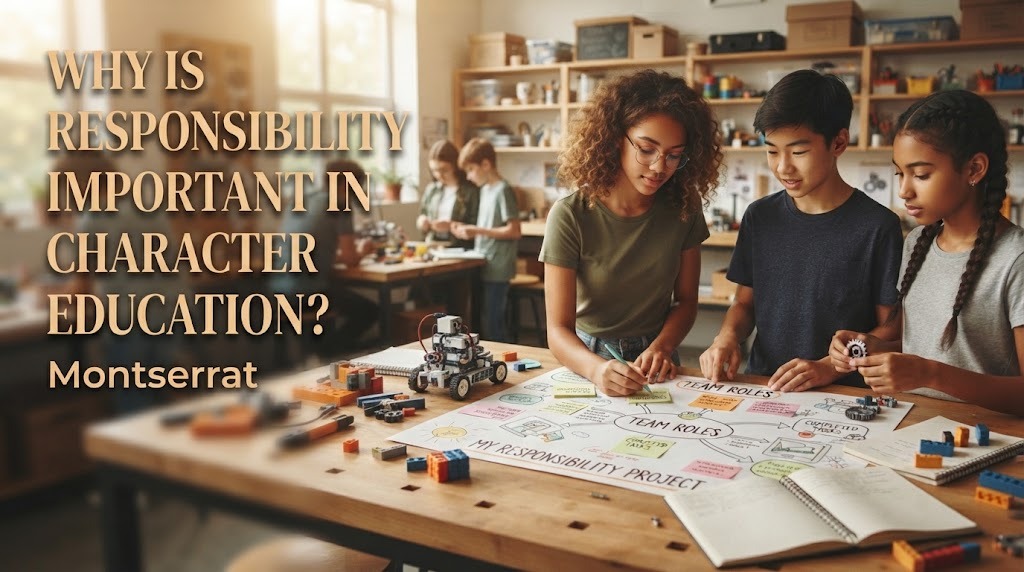
Responsibility is one of the most important values in character education because it teaches students to understand their duties and the effects of their actions. A responsible person does not simply complete tasks but also understands the importance of being accountable for decisions. In school, responsibility can be practiced through assignments, classroom rules, teamwork, and daily behavior. These experiences help students develop habits that can be useful throughout their lives. Therefore, teaching responsibility from an early age can help students build strong and positive character.
DEVELOPING ACCOUNTABILITY
Responsibility teaches students that their actions have consequences. When students complete their duties properly, they learn that their effort can produce positive results. When they make mistakes, responsibility encourages them to admit what happened instead of blaming others. This helps students develop accountability, which means being willing to accept the results of their choices. Such a mindset is important for personal growth.
Accountability also helps students learn from their mistakes. Instead of seeing mistakes only as failures, students can identify what went wrong and think about how to improve. Teachers can support this process by giving students opportunities to correct their actions. For example, a student who forgets an assignment can learn to organize their schedule better. These experiences gradually make responsible behavior part of everyday life.
IMPROVING STUDENT DISCIPLINE
Responsibility and discipline are closely connected in character education. Students need discipline to complete their responsibilities consistently. Arriving at school on time, completing homework, following classroom rules, and preparing learning materials are simple examples. When these behaviors are practiced regularly, students can develop stronger daily routines. Good routines can also help students manage their time more effectively.
Responsibility gives students a reason to follow these routines. They begin to understand that completing their duties is not only about obeying teachers but also about preparing themselves for future goals. Students who manage their responsibilities can become more organized and independent. This can support their academic activities and personal development. Over time, discipline can become a natural habit rather than something students do only because they are being monitored.
BUILDING INDEPENDENCE
Teaching responsibility can help students become more independent. Independent students are able to manage tasks and make decisions without always waiting for other people to guide them. Character education can provide opportunities for students to take responsibility for their own learning and activities. For example, students can be encouraged to plan assignments, organize school materials, and solve simple problems on their own. These activities help them develop confidence in managing responsibilities.
Independence does not mean that students must handle every problem alone. Responsible students also understand when they need to ask for help. They can seek guidance from teachers, parents, or classmates while still taking responsibility for the final effort. This balance helps students become more mature in dealing with challenges. The ability to work independently while knowing when to cooperate is valuable in both education and future careers.
STRENGTHENING TRUST AND RELATIONSHIPS
Responsibility can help students build trust with other people. When students keep promises, complete tasks, and behave consistently, classmates and teachers can depend on them. Trust is important for creating healthy relationships in classrooms and communities. Students who demonstrate responsibility are more likely to be seen as reliable members of a group. This can encourage stronger cooperation between students.
Responsibility also teaches students to consider how their actions affect others. For example, failing to complete a group assignment may create additional work for classmates. Understanding this impact encourages students to respect other people's time and effort. They can learn that being responsible is not only about personal success but also about caring for others. This understanding can strengthen teamwork and social relationships.
PREPARING STUDENTS FOR FUTURE LIFE
Responsibility is useful beyond school because adults face many duties in their personal and professional lives. Students will eventually need to manage work, finances, relationships, decisions, and other responsibilities. Learning responsibility at school gives them opportunities to practice these skills in a safe environment. They can gradually learn how to manage deadlines, solve problems, and make thoughtful choices. These experiences can prepare them for greater responsibilities in the future.
Employers and communities also value people who can be trusted to complete their duties. A responsible person is more likely to respect deadlines, communicate honestly, and take action when problems occur. These qualities can support career readiness and long-term personal development. Character education therefore connects school behavior with skills that students may need as adults. Strong responsibility can become a foundation for a reliable and productive future.
ENCOURAGING ETHICAL DECISIONS
Responsibility is also connected to ethical decision making. Students may face situations where they need to choose between an easy option and the right option. Character education can teach them to consider the consequences of their decisions before taking action. For example, students can learn why cheating, lying, or intentionally harming others can have negative effects. Responsibility encourages them to think about both their own interests and the well-being of others.
Making ethical decisions requires students to understand important values such as honesty, fairness, respect, and integrity. These values help students develop a clear sense of what responsible behavior looks like. Teachers can strengthen this learning through discussions, real-life examples, and classroom activities. Students can then practice making choices based on principles rather than pressure. This can help them become more thoughtful and trustworthy individuals.
CONCLUSION
Responsibility is an essential part of character education because it helps students understand their duties, choices, and consequences. It develops accountability, discipline, independence, trust, teamwork, and ethical decision making. These qualities can support students in school while also preparing them for future education, careers, relationships, and community life. Responsibility becomes stronger when students are given regular opportunities to practice it in real situations. By making responsibility part of daily learning, schools can help students develop mature, reliable, and positive character.
Recent Posts

Bagaimana Sistem SKS pada Program Kuliah... 22.11.2026/35 View

How Does Technology Make Daily Evaluation... 21.11.2026/69 View

Apa Strategi Menghadapi Kesenjangan antara Kompetensi... 21.11.2026/69 View

Mengapa Inventaris Aset Penting bagi Kelancaran... 21.11.2026/67 View

When Should Musicians Join a Record... 21.11.2026/68 View
