

Why Is Scientific Literacy Important for Facing False Information?
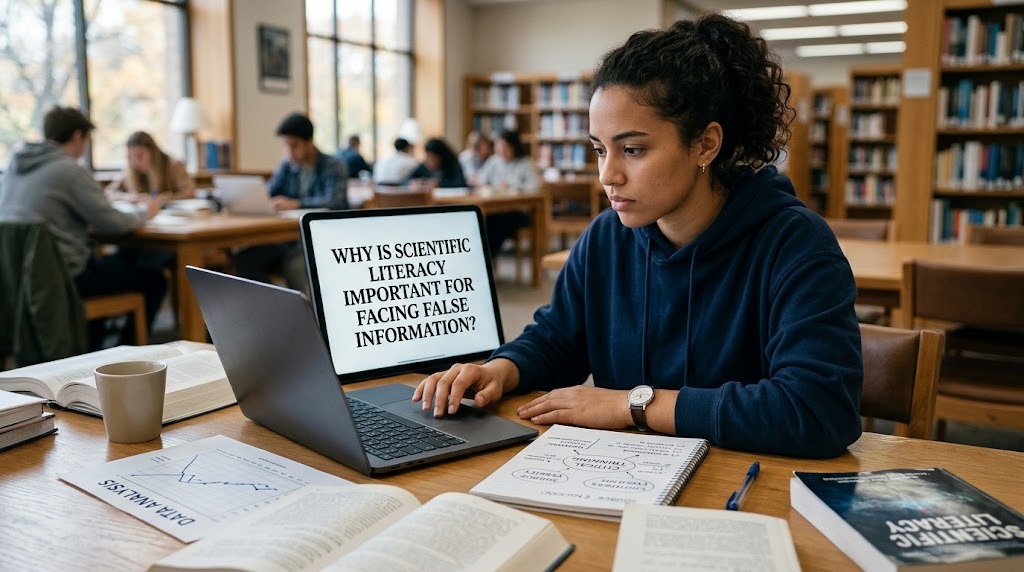
Scientific literacy is increasingly important because people encounter large amounts of information through websites, social media, videos, and digital platforms. Some information may be supported by reliable evidence, while other claims can be inaccurate, incomplete, or misleading. Scientific literacy helps people examine information carefully before accepting or sharing it. It encourages individuals to ask questions, check evidence, and compare information from trustworthy sources. Therefore, scientific literacy can help people respond more carefully to false information.
UNDERSTANDING SCIENTIFIC LITERACY
Scientific literacy is the ability to understand scientific concepts, evaluate evidence, and apply scientific knowledge to real-life situations. It does not require people to become experts in every scientific field. Instead, it helps individuals develop the ability to understand basic scientific information and assess whether a claim has reasonable support. This ability is useful when people encounter scientific topics in the media or online. Scientific literacy therefore supports responsible information use.
In the digital era, information can spread quickly and reach many people within a short time. A claim may appear convincing because it has been shared repeatedly, even though repeated sharing does not prove that the information is accurate. Scientific literacy encourages people to focus on evidence and reliable sources rather than popularity. Individuals can examine who produced the information and whether credible evidence supports the claim. This approach can reduce the risk of accepting unsupported scientific information.
SCIENTIFIC LITERACY HELPS EVALUATE CLAIMS
One of the important roles of scientific literacy is helping people evaluate claims before believing them. When encountering a scientific statement, individuals can ask what evidence supports it and whether the source is trustworthy. They can also compare the claim with information from recognized scientific or educational sources. This process helps distinguish evidence based information from statements that are based mainly on opinions or assumptions.
Students can practice this skill by examining different explanations for the same topic. They can identify the evidence provided by each source and consider whether the conclusions are supported by that evidence. If a claim contains strong conclusions but provides little or no evidence, students can recognize the need for further investigation. This habit develops analytical thinking and makes it easier to approach questionable information carefully.
SCIENTIFIC LITERACY SUPPORTS SOURCE CHECKING
Checking the source of information is an important part of dealing with false information. Scientific literacy encourages individuals to consider who created the content, when it was published, and whether the information is supported by reliable evidence. A credible source should provide enough information for readers to understand where its claims come from. People can also compare information with other reliable sources before accepting it. These steps can improve information verification skills.
Source checking is especially important on social media because content can be created and shared by people with different levels of knowledge. A post that looks professional does not automatically mean that its scientific claims are correct. Individuals should examine the evidence rather than judging information only by its appearance or popularity. Developing this habit can help students become more responsible digital users.
SCIENTIFIC LITERACY AND DIGITAL INFORMATION
Digital technology provides many opportunities for learning, but it also makes it easier for inaccurate information to spread. Scientific literacy helps people navigate this environment by encouraging them to think critically about digital content. Students can compare information from multiple credible sources and look for supporting evidence before reaching a conclusion. They can also recognize that short posts or videos may leave out important scientific context.
False information can appear in many forms, including misleading headlines, incomplete explanations, altered statistics, or claims presented without sufficient evidence. Scientific literacy does not mean that every online claim should automatically be rejected. Instead, it encourages people to investigate the claim and determine whether the available evidence supports it. This balanced approach promotes responsible digital literacy.
SCIENTIFIC LITERACY BUILDS RESPONSIBLE DECISIONS
False information can influence people's decisions about health, technology, the environment, and other important issues. Scientific literacy helps individuals make decisions based on reliable evidence rather than unsupported claims. Before acting on information, people can check the source, examine the evidence, and consider whether other trustworthy sources provide similar information. This process can lead to more informed decisions.
For students, these skills are useful both inside and outside the classroom. They can use scientific literacy when completing assignments, researching topics, reading news, or discussing scientific issues online. Over time, these habits can become part of their everyday approach to information. Scientific literacy therefore contributes to a society in which people are more careful about what they believe and share.
CONCLUSION
Scientific literacy is important for facing false information because it helps people understand scientific claims, evaluate evidence, check sources, and think critically. It provides useful skills for identifying information that requires further verification. In the digital era, these abilities are increasingly important because information can spread rapidly through online platforms. By developing evidence evaluation, source checking, critical thinking, and responsible digital literacy, students can become more careful and informed users of information. Scientific literacy ultimately helps people respond to scientific information with greater understanding and responsibility.
Recent Posts

Bagaimana Sistem SKS pada Program Kuliah... 22.11.2026/33 View

How Does Technology Make Daily Evaluation... 21.11.2026/67 View

Apa Strategi Menghadapi Kesenjangan antara Kompetensi... 21.11.2026/67 View

Mengapa Inventaris Aset Penting bagi Kelancaran... 21.11.2026/65 View

When Should Musicians Join a Record... 21.11.2026/66 View
