

Why Is Scientific Literacy Important for Students in the Digital Era?
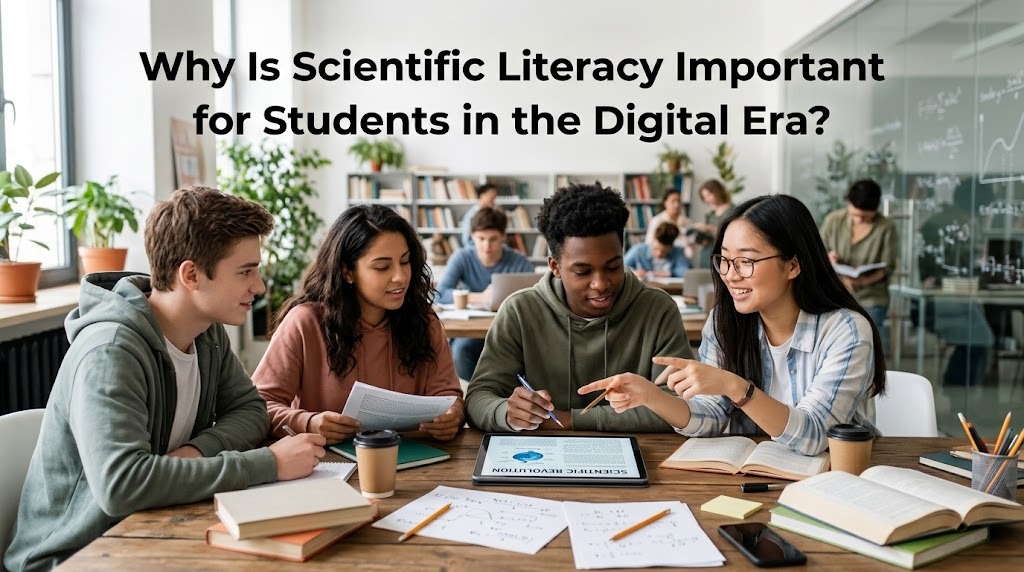
Scientific literacy is an important skill for students because it helps them understand scientific information, evaluate evidence, and use knowledge in daily situations. In the digital era, students are exposed to large amounts of information from websites, social media, videos, and online platforms. Scientific literacy helps them distinguish between reliable information and misleading claims. It also supports critical thinking, problem solving, and responsible decision making. Therefore, scientific literacy is increasingly important for students who want to adapt to a rapidly changing world.
UNDERSTANDING SCIENTIFIC LITERACY
Scientific literacy refers to the ability to understand scientific concepts, use scientific evidence, and apply scientific knowledge to real-life situations. It is not only about memorizing formulas, definitions, or facts from textbooks. Students also need to understand how scientific knowledge is developed and how evidence can be used to support a conclusion. This ability allows students to ask questions, examine information, and develop logical explanations. As a result, scientific literacy can make learning more meaningful and connected to everyday life.
For students, scientific literacy can also involve understanding the relationship between science, technology, society, and the environment. For example, students may learn about climate change and then examine how human activities affect the environment. They can also use scientific information to understand topics such as nutrition, energy, health, and technology. These experiences encourage students to connect classroom knowledge with real situations. Strong scientific literacy therefore supports both academic learning and practical understanding.
SCIENTIFIC LITERACY AND CRITICAL THINKING
The digital era gives students access to information almost instantly, but not all information available online is accurate. Scientific literacy helps students evaluate claims based on evidence instead of accepting information immediately. Students can consider where information comes from, whether reliable evidence supports it, and whether different sources provide consistent explanations. This process encourages them to think carefully before reaching a conclusion. It also helps reduce the risk of accepting unsupported scientific claims.
Critical thinking is closely connected to scientific literacy because both require students to examine information logically. When students encounter a scientific claim online, they can ask questions about the evidence behind it and consider alternative explanations. They can also identify differences between scientific evidence, personal opinions, and assumptions. These habits are useful when students study science as well as other subjects. In the long term, they can become more careful and independent learners.
SCIENTIFIC LITERACY IN THE DIGITAL ERA
Digital technology has changed how students learn and access scientific information. Online libraries, educational websites, digital simulations, scientific videos, and learning platforms can provide students with a wide range of resources. These tools can make difficult scientific concepts easier to visualize and understand. However, students still need the ability to check the credibility of digital information. Without this skill, having access to more information does not necessarily lead to better understanding.
Scientific literacy can guide students when they use digital resources for learning. They can compare information from several trustworthy sources and look for evidence from recognized educational or scientific institutions. Students can also learn to identify exaggerated headlines, unsupported claims, and information presented without sufficient evidence. This is especially important when discussing topics that can spread quickly through social media. Therefore, digital learning should be supported by strong information evaluation skills.
SCIENTIFIC LITERACY SUPPORTS BETTER DECISIONS
Scientific literacy can help students make decisions by teaching them how to use evidence and logical reasoning. Everyday choices can involve scientific information, such as selecting healthy food, understanding environmental issues, or using technology safely. Students who understand basic scientific principles can examine the possible effects of different choices. They can also recognize when a claim requires more evidence before it should be accepted. This approach encourages evidence based decision making.
The ability to make informed decisions is useful beyond the classroom. Students may eventually face situations involving health information, environmental problems, technological changes, and other complex issues. Scientific literacy gives them a foundation for understanding these issues without relying only on opinions or popular claims. It also encourages students to recognize uncertainty when scientific evidence is still developing. This makes scientific literacy a practical skill for both education and everyday life.
SCIENTIFIC LITERACY AND FUTURE SKILLS
Scientific literacy can prepare students for a future in which science and technology continue to influence many areas of life. Many careers require people to understand data, technology, research, or scientific processes. Even careers that are not directly related to science can benefit from skills such as problem solving, logical reasoning, and evaluating evidence. Students who develop these abilities can become more prepared to respond to changes in education, employment, and society. Scientific literacy therefore contributes to broader future readiness.
In addition, scientific literacy can encourage students to become curious and willing to learn throughout their lives. Scientific knowledge continues to develop, so students need to understand that learning does not stop after completing a lesson or graduating from school. They can continue examining new evidence and updating their understanding when better information becomes available. This attitude supports lifelong learning and adaptability. For these reasons, scientific literacy is not simply a school skill but an important part of preparing students for the future.
CONCLUSION
Scientific literacy is important for students in the digital era because it helps them understand scientific information, evaluate evidence, and apply knowledge to real-life situations. It strengthens critical thinking, supports better decisions, and helps students identify unreliable information in the digital environment. Scientific literacy also develops useful abilities such as problem solving, information evaluation, and lifelong learning. By developing these skills through education and responsible use of technology, students can become more informed and adaptable individuals. Ultimately, strong scientific literacy can help students face technological and social changes with greater understanding and confidence.
Recent Posts

Bagaimana Sistem SKS pada Program Kuliah... 22.11.2026/33 View

How Does Technology Make Daily Evaluation... 21.11.2026/67 View

Apa Strategi Menghadapi Kesenjangan antara Kompetensi... 21.11.2026/67 View

Mengapa Inventaris Aset Penting bagi Kelancaran... 21.11.2026/65 View

When Should Musicians Join a Record... 21.11.2026/66 View
