

Why Is Semester Evaluation Important for Academic Progress?
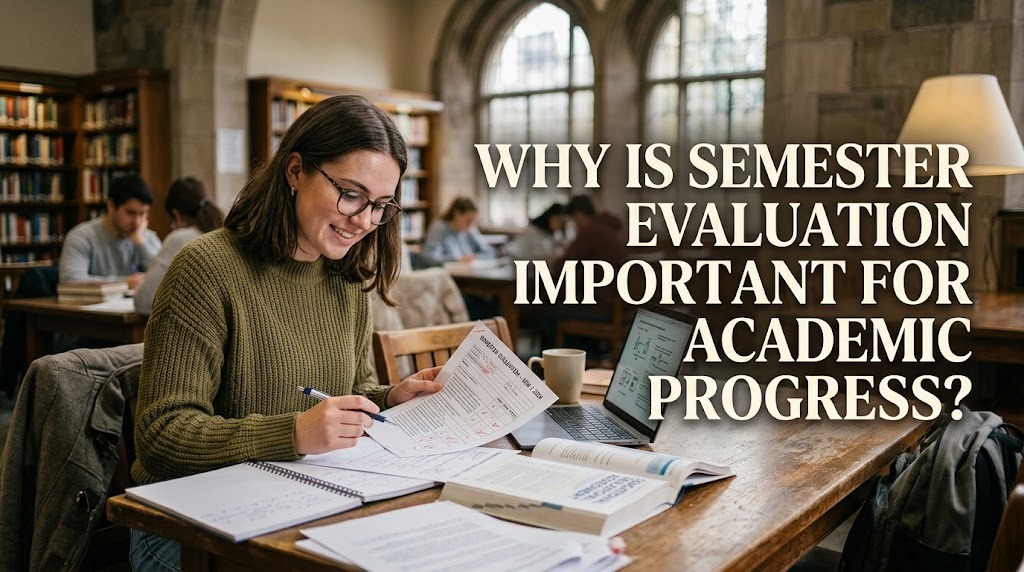
Semester evaluation is an important part of the educational process because it helps teachers, students, and parents understand academic progress over a specific period. Through this evaluation, students can identify their strengths, recognize areas that need improvement, and develop better learning strategies. Semester evaluation is not only about achieving high scores but also about understanding how effectively students learn and apply their knowledge. By using evaluation results wisely, students can improve their academic performance, build confidence, and prepare for future learning challenges.
UNDERSTANDING SEMESTER EVALUATION
Semester evaluation is a process used to measure students' learning achievements at the end of an academic semester. It generally involves written examinations, assignments, projects, practical activities, and other assessments that reflect students' understanding of learning materials. Teachers use these methods to determine whether students have achieved the expected learning objectives. The evaluation also provides information about students' participation, learning progress, and ability to apply concepts in different situations.
Unlike daily assessments that focus on specific topics, semester evaluation provides a broader picture of academic development. It helps students understand how well they have mastered the material taught throughout the semester. The results can also reveal learning difficulties that may not be obvious during regular classroom activities. Therefore, semester evaluation serves as an important foundation for improving educational quality and supporting continuous academic progress.
MEASURING ACADEMIC ACHIEVEMENT
One of the main purposes of semester evaluation is to measure academic achievement based on established learning objectives. The results show whether students understand important concepts, remember essential information, and apply their knowledge appropriately. Teachers can use assessment scores and other learning evidence to determine which competencies students have mastered and which require further practice. This information helps provide a clearer picture of academic performance than relying on general impressions alone.
However, academic achievement should not be judged exclusively by examination scores. Assignments, classroom participation, projects, and practical activities can demonstrate abilities that written tests may not fully capture. Considering different forms of assessment creates a more balanced understanding of student learning. By reviewing these results together, teachers and students can identify meaningful progress and determine appropriate steps for future improvement.
IDENTIFYING LEARNING STRENGTHS AND WEAKNESSES
Semester evaluation helps students recognize their academic strengths and weaknesses. For example, a student may perform well in reading comprehension but struggle with mathematical problem-solving. Understanding these differences allows students to focus their efforts on areas that need additional attention while continuing to develop their existing abilities. This approach makes learning more purposeful and prevents students from spending all their study time on subjects they already understand.
Teachers can also use evaluation results to identify common difficulties among students. If many students struggle with the same topic, teachers may need to explain the material differently or provide additional practice. Individual feedback can help students understand why they make certain mistakes and how to correct them. When strengths and weaknesses are identified early, students have a better opportunity to improve before facing more advanced learning materials.
IMPROVING LEARNING STRATEGIES
Semester evaluation provides useful information for improving learning strategies. After reviewing their results, students can determine whether their current study habits are effective or need adjustment. For instance, students who frequently forget information may benefit from regular revision, practice questions, and spaced repetition rather than studying everything shortly before an examination. Students who have difficulty understanding complex topics may need to use examples, visual explanations, or group discussions.
Effective learning strategies should be based on actual needs rather than assumptions. Students can compare their preparation methods with their results to discover which approaches work best for different subjects. Teachers can support this process by recommending suitable learning resources and providing constructive feedback. With consistent adjustments, students can develop more independent study habits and improve their ability to manage academic responsibilities throughout the next semester.
SUPPORTING TEACHERS IN IMPROVING INSTRUCTION
Semester evaluation is valuable for teachers because it provides evidence about the effectiveness of their teaching methods. Student performance can indicate whether learning objectives have been achieved and whether instructional materials are appropriate for the class. When students consistently struggle with particular concepts, teachers can review their explanations, classroom activities, and assessment methods. This process helps teachers make informed decisions instead of relying only on assumptions about student understanding.
Evaluation results can also guide the planning of future lessons. Teachers may introduce additional exercises, provide individual assistance, or use different teaching approaches to address specific learning difficulties. They can also identify students who need more challenging activities to maintain their development. By using assessment information constructively, teachers can create a more responsive learning environment that supports different abilities, learning needs, and academic goals.
ENCOURAGING STUDENT MOTIVATION AND RESPONSIBILITY
Semester evaluation can encourage students to take greater responsibility for their academic development. When students understand their results, they can set realistic goals and create practical plans to achieve them. Clear goals, such as improving performance in a particular subject or completing assignments more consistently, make academic progress easier to monitor. Recognizing improvement can also increase confidence and encourage students to maintain positive learning habits.
Nevertheless, evaluation should not become a source of excessive pressure or unhealthy competition. Students have different learning speeds, backgrounds, and personal circumstances, so comparing scores without considering these differences may discourage them. Constructive feedback should emphasize effort, progress, and opportunities for improvement rather than treating grades as the only measure of ability. This supportive approach helps students develop resilience, self-discipline, and a more positive attitude toward learning.
STRENGTHENING PARENTAL SUPPORT AND ACADEMIC PLANNING
Semester evaluation helps parents understand their children's academic progress and identify areas where additional support may be necessary. Report cards and teacher feedback can provide useful information about subject performance, learning habits, and possible difficulties. Parents can use this information to discuss academic goals with their children and establish routines that support consistent study. They can also communicate with teachers when students need further explanation, additional learning resources, or other forms of assistance.
In addition, evaluation results can support academic planning for the following semester. Students and parents can work together to create realistic study schedules, prioritize challenging subjects, and monitor progress over time. Schools may also use assessment information to plan remedial activities, enrichment programs, and other learning support. When students, parents, and teachers cooperate, semester evaluation becomes a practical tool for improving educational outcomes rather than simply recording final grades.
CONCLUSION
Semester evaluation is important for academic progress because it measures learning achievement, identifies strengths and weaknesses, and helps students improve their study strategies. It also enables teachers to refine their instructional methods and allows parents to provide more appropriate support. When evaluation results are interpreted fairly and used constructively, they can encourage motivation, strengthen responsibility, and guide future learning plans. Ultimately, semester evaluation should be viewed as an opportunity to learn from past performance and make continuous improvements, not merely as a process of obtaining grades.
Recent Posts

Bagaimana Sistem SKS pada Program Kuliah... 22.11.2026/60 View

How Does Technology Make Daily Evaluation... 21.11.2026/87 View

Apa Strategi Menghadapi Kesenjangan antara Kompetensi... 21.11.2026/85 View

Mengapa Inventaris Aset Penting bagi Kelancaran... 21.11.2026/83 View

When Should Musicians Join a Record... 21.11.2026/87 View
