

Why Is Semester Evaluation Important for Measuring Learning Progress?
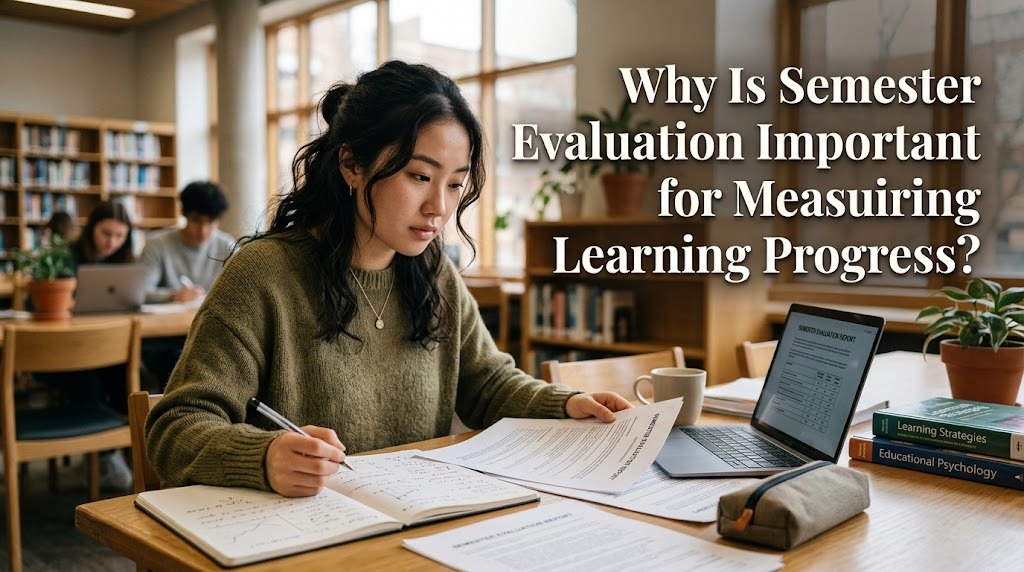
Semester evaluation is an essential part of education because it helps teachers and students understand how much learning progress has been achieved during an academic period. Through examinations, assignments, projects, and other assessment activities, teachers can measure students' understanding of the material and identify areas that need improvement. The results also help students recognize their strengths, address learning difficulties, and prepare for future lessons. When conducted fairly and consistently, semester evaluation provides valuable information for improving teaching quality and supporting better academic outcomes.
MEASURING STUDENTS' UNDERSTANDING OF LEARNING MATERIALS
Semester evaluation helps teachers determine whether students understand the concepts taught throughout the semester. Assessment activities can measure their ability to remember information, explain ideas, apply knowledge, and solve problems. For example, a mathematics examination may show whether students can apply formulas correctly, while a written assignment can demonstrate their ability to organize ideas and support arguments. These different forms of assessment provide a clearer picture of students' understanding than classroom participation alone.
The results also help teachers identify differences between memorizing information and understanding concepts deeply. A student may remember a definition but struggle to apply it in a practical situation. By examining answers and completed assignments, teachers can recognize these difficulties and provide additional explanations. This process ensures that learning evaluation focuses not only on grades but also on the knowledge and skills students develop.
IDENTIFYING STUDENTS' STRENGTHS AND WEAKNESSES
Another important benefit of semester evaluation is its ability to reveal students' academic strengths and weaknesses. Some students may excel in written examinations but experience difficulties with presentations, practical activities, or analytical tasks. Others may demonstrate strong reasoning skills while needing additional support with specific concepts. Identifying these differences helps teachers understand individual learning needs more accurately.
Students can also use evaluation results to reflect on their own performance. By reviewing incorrect answers and teacher feedback, they can determine which subjects require more attention. For example, a student who consistently struggles with reading comprehension can dedicate more time to vocabulary development and reading practice. This awareness helps students create realistic learning goals and develop more effective study habits.
TRACKING ACADEMIC PROGRESS OVER TIME
Semester evaluation allows teachers to monitor learning development across different academic periods. By comparing results from previous assessments, teachers can identify improvements, recurring difficulties, and changes in students' performance. This information helps determine whether existing teaching strategies and learning activities are producing positive results. However, comparisons should consider differences in assessment difficulty, learning objectives, and other relevant circumstances.
For students, tracking academic progress provides a clearer understanding of their development. Improving results may indicate stronger understanding or more effective study habits, while declining performance may signal a need for additional support. Nevertheless, a single score does not always represent a student's overall ability. Teachers should consider assessment results alongside classroom work, participation, individual circumstances, and other relevant evidence.
HELPING TEACHERS IMPROVE TEACHING STRATEGIES
Semester evaluation provides useful feedback about the effectiveness of teaching methods. When many students struggle with the same topic, teachers can review how the material was explained and whether the learning activities were appropriate. They may introduce clearer examples, additional exercises, group discussions, or alternative instructional methods. These adjustments can help students understand difficult concepts more effectively.
Evaluation results can also guide teachers in planning lessons for the next semester. By identifying topics that require more attention, teachers can allocate classroom time more effectively and select suitable learning resources. They can also provide different levels of support according to students' needs. This continuous process of assessment and adjustment helps create a more responsive learning environment.
ENCOURAGING STUDENT MOTIVATION AND SELF-REFLECTION
Semester evaluation can encourage students to take greater responsibility for their learning. When students receive clear feedback about their achievements, they can recognize the value of consistent effort and identify practical ways to improve. Understanding their progress can also increase confidence, especially when they see improvement in subjects they previously found difficult. This encourages them to set meaningful goals and remain engaged in their studies.
Self-reflection is equally important because students need to understand why they achieve particular results. They can review their preparation methods, time management, concentration, and understanding of learning materials. If their study strategies are ineffective, they can experiment with different approaches, such as regular practice, summarizing lessons, or asking teachers for help. In this way, semester evaluation becomes an opportunity for personal development rather than simply a process of receiving grades.
PROVIDING CONSTRUCTIVE FEEDBACK FOR IMPROVEMENT
Constructive feedback helps students understand what they have done well and what they need to improve. Semester evaluation gives teachers an opportunity to explain errors, clarify misunderstandings, and recommend practical learning strategies. Effective feedback should be specific, understandable, and focused on actions students can take. Instead of providing only a numerical score, teachers can explain which concepts require further practice and how students can strengthen their skills.
Students benefit most when they use this feedback to guide their next learning activities. They can revisit difficult lessons, complete additional exercises, and ask questions about concepts they do not understand. Teachers can then monitor whether these efforts lead to improvement in subsequent assessments. This cycle of assessment, feedback, and practice supports continuous learning and helps prevent unresolved difficulties from affecting future academic performance.
SUPPORTING FAIR AND EFFECTIVE ACADEMIC DECISIONS
Semester evaluation provides evidence that teachers and schools can use when making academic decisions. Assessment results can help identify students who need remedial instruction, additional learning support, or more challenging educational activities. They also help teachers determine whether students have met specific learning objectives. When interpreted carefully, these results contribute to more informed decisions about students' educational progress.
To ensure fairness, teachers should use clear assessment criteria and appropriate evaluation methods. Relying on a single examination may not fully represent a student's knowledge, practical abilities, or learning development. Combining examinations with assignments, projects, and other relevant assessments can provide a more balanced understanding of achievement. Teachers should also explain grading standards clearly so students understand how their work is evaluated.
PREPARING STUDENTS FOR FUTURE LEARNING CHALLENGES
Semester evaluation helps students prepare for future learning by identifying knowledge and skills they need to strengthen. Many subjects build on previously learned concepts, meaning that unresolved difficulties can make later lessons more challenging. Evaluation results allow students and teachers to address these gaps before moving forward. This is especially important in subjects that require cumulative understanding, such as mathematics, science, and language learning.
The evaluation process also develops useful skills, including time management, critical thinking, problem-solving, and self-discipline. Students learn to prepare for assessments, analyze their performance, and adjust their learning strategies when necessary. These abilities can support their development in higher education and future professional environments. By using assessment results constructively, students can become more independent and adaptable learners.
CONCLUSION
Semester evaluation is important for measuring learning progress because it helps teachers assess understanding, identify strengths and weaknesses, and monitor academic development. It also provides feedback that supports better teaching methods, encourages student motivation, and guides academic decisions. For the best results, evaluation should use fair assessment methods and consider more than examination scores alone. When teachers and students use the results to make meaningful improvements, semester evaluation becomes an effective tool for achieving stronger learning outcomes.
Recent Posts

Bagaimana Sistem SKS pada Program Kuliah... 22.11.2026/60 View

How Does Technology Make Daily Evaluation... 21.11.2026/87 View

Apa Strategi Menghadapi Kesenjangan antara Kompetensi... 21.11.2026/85 View

Mengapa Inventaris Aset Penting bagi Kelancaran... 21.11.2026/83 View

When Should Musicians Join a Record... 21.11.2026/87 View
