

Why Is State Budget Preparation Important for Economic Stability?
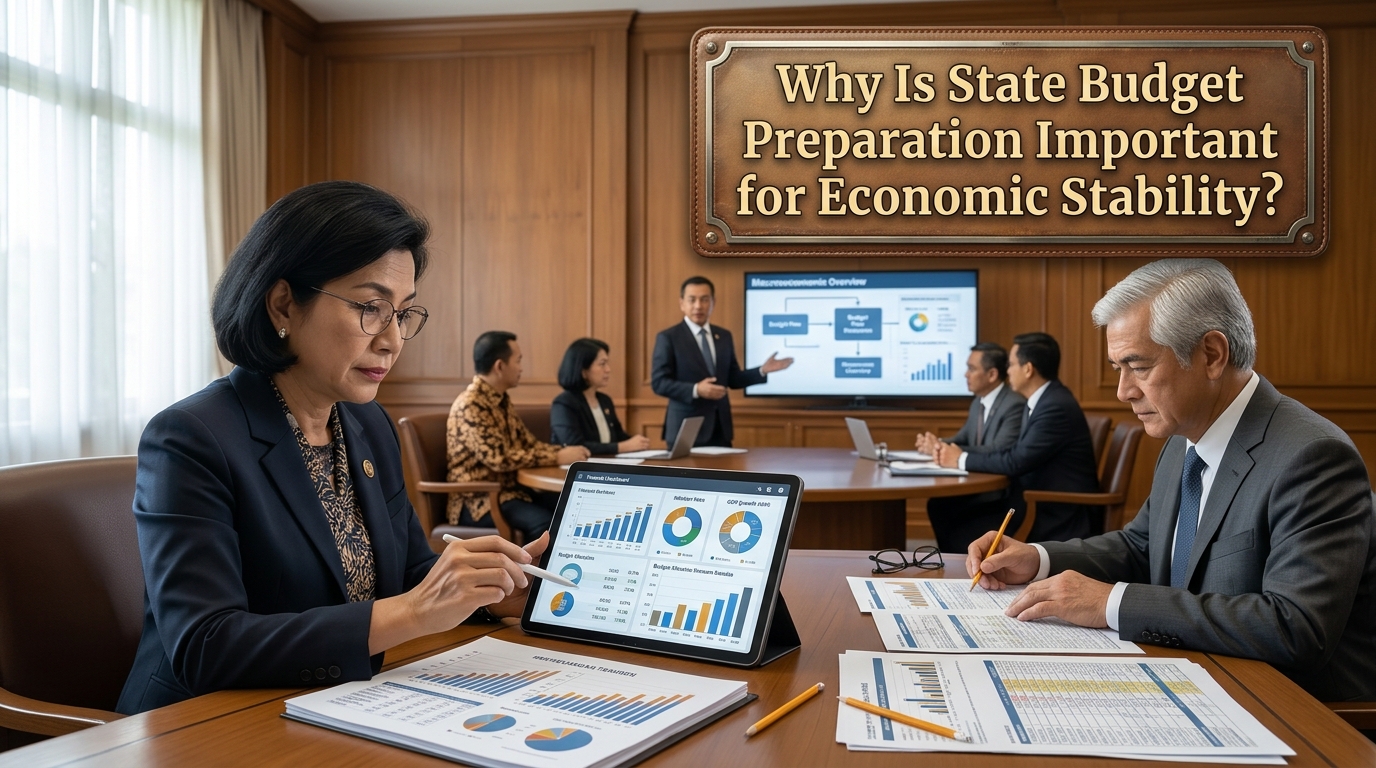
State budget preparation is an essential process that helps a government manage public finances and maintain economic stability. It determines how the government collects revenue, allocates spending, and manages financing to support national development. A well-planned budget can help control public debt, maintain essential services, and respond to economic challenges. It also provides direction for investment in infrastructure, education, healthcare, and other sectors that support long-term growth. Therefore, effective state budget preparation is important for maintaining a stable economy and improving people's quality of life.
WHAT IS STATE BUDGET PREPARATION?
State budget preparation is the process of planning government revenue and expenditure for a specific fiscal year. Revenue may come from taxes, non-tax income, natural resources, and other lawful sources. The government then determines how to distribute available funds among public services, development programs, and administrative needs. This process requires careful analysis of economic conditions, public priorities, and financial risks. Through budget planning, the government can make informed decisions about how to use limited resources effectively.
In Indonesia, the state budget is known as the Anggaran Pendapatan dan Belanja Negara (APBN). It serves as the central government's annual financial plan and reflects national economic and development priorities. The preparation process involves the government, the Ministry of Finance, the Ministry of National Development Planning (Bappenas), and the House of Representatives (DPR). Each institution has responsibilities in planning, reviewing, or approving the budget. Their coordination helps ensure that public spending follows national priorities and applicable financial regulations.
HOW DOES STATE BUDGET PREPARATION SUPPORT ECONOMIC STABILITY?
Economic stability means maintaining relatively predictable economic conditions, including manageable inflation, sustainable growth, and a sound financial position. State budget preparation supports this goal by helping the government plan spending according to available revenue and economic needs. During periods of economic growth, the government can allocate funds to infrastructure, education, and other productive investments. When economic activity slows, it may increase targeted spending or provide temporary assistance to households and businesses, depending on available fiscal space. These decisions can help reduce economic disruptions and support recovery.
A carefully prepared budget also helps the government manage uncertainty. Economic changes, such as falling commodity prices or weaker tax collections, can affect public finances. By preparing realistic forecasts and considering different economic scenarios, the government can respond more effectively to unexpected challenges. Responsible fiscal planning reduces the risk of sudden spending cuts and helps maintain confidence in economic management. As a result, a well-designed budget can contribute to a more resilient economy.
WHY IS BUDGET PREPARATION IMPORTANT FOR CONTROLLING INFLATION?
Inflation occurs when the general prices of goods and services rise over time, reducing the purchasing power of money. Government spending can influence demand in the economy, especially when large amounts of money are spent within a short period. If public expenditure rises too quickly while the economy's ability to produce goods and services remains limited, it may add to inflationary pressure. Careful budget preparation helps the government assess spending levels and direct funds toward productive activities. This supports more balanced economic growth.
The government can also use budget policies to help protect vulnerable households from rising living costs. Targeted social assistance and well-designed subsidies may help eligible people afford essential goods and services. However, these measures must be carefully planned because poorly targeted subsidies can place pressure on public finances. Budget decisions should also be coordinated with monetary policy, which is primarily managed by Bank Indonesia. This coordination helps support price stability without relying on government spending alone.
HOW DOES THE STATE BUDGET HELP MANAGE PUBLIC DEBT?
Public debt can help finance development projects and cover budget deficits, but borrowing must be managed carefully. During budget preparation, the government estimates its financing needs and evaluates the costs and risks of borrowing. It must consider interest payments, repayment obligations, economic conditions, and the government's ability to generate future revenue. A realistic budget helps prevent excessive borrowing and supports fiscal sustainability. This is important because rising debt costs can reduce the funds available for public services.
Effective debt management also helps maintain investor confidence. When governments present credible revenue estimates and clear spending priorities, investors and financial institutions can better assess the country's financial position. However, borrowing is not always harmful because well-planned loans can finance productive infrastructure and other investments. The key is to ensure that borrowing remains manageable and that funded projects deliver meaningful economic benefits. Through responsible debt planning, the government can balance immediate development needs with long-term financial stability.
HOW DOES BUDGET ALLOCATION SUPPORT ECONOMIC GROWTH?
Budget allocation determines how public funds are distributed among sectors that contribute to economic development. Spending on roads, ports, public transportation, and digital infrastructure can improve connectivity and reduce business costs. Investment in education and healthcare can strengthen human capital and improve workforce productivity. Support for eligible small businesses and employment programs may also help create economic opportunities. These allocations can encourage sustainable economic growth when they are planned and implemented effectively.
The government must prioritize programs based on public needs, expected benefits, and available funding. Projects should be evaluated to determine whether their economic and social benefits justify their costs. Spending should also consider regional inequalities so that development opportunities are not concentrated in only a few areas. Monitoring helps ensure that allocated funds reach their intended purposes and produce measurable results. Therefore, strategic budget allocation can improve productivity, support employment, and strengthen the foundations of the economy.
WHAT HAPPENS WHEN STATE BUDGET PREPARATION IS POOR?
Poor state budget preparation can create financial pressures and weaken economic stability. Overestimating revenue may lead to funding shortages, delayed projects, or unexpected spending reductions. Poor spending priorities can also waste public resources and limit investment in essential services. If borrowing increases without a sustainable financing plan, debt obligations may become more difficult to manage. These problems can weaken fiscal discipline and reduce the government's ability to respond to economic crises.
Weak budget planning can also undermine public trust. When financial decisions lack transparency, citizens may find it difficult to understand how public money is being used. Inefficient spending can reduce the benefits of government programs and slow economic development. To prevent these problems, the government needs reliable data, realistic forecasts, clear performance targets, and strong financial oversight. Transparent and accountable budgeting helps reduce waste and improve the effectiveness of public spending.
HOW CAN STATE BUDGET PREPARATION BE IMPROVED?
State budget preparation can be improved through accurate economic forecasting and stronger coordination among government institutions. Revenue estimates should reflect current economic conditions and consider possible risks, including changes in global trade and commodity prices. Spending proposals should be evaluated based on measurable objectives and their expected impact on society. Digital financial systems can also help government institutions monitor expenditure and identify potential problems earlier. These improvements support efficient public financial management.
Public participation and independent oversight are equally important. Making budget information accessible allows citizens, researchers, and civil society organizations to examine government priorities and spending results. Regular audits and performance evaluations can identify weaknesses and help institutions improve future plans. The government should also review past budget outcomes before establishing new priorities. By combining transparency, accountability, and evidence-based planning, a country can improve economic resilience and use public resources more effectively.
CONCLUSION
State budget preparation is important for economic stability because it guides government revenue, spending, and borrowing decisions. Careful planning helps manage inflationary pressures, maintain sustainable public debt, and fund programs that support productivity and employment. It also allows governments to respond to economic challenges while protecting essential public services. However, these benefits depend on realistic forecasts, effective budget allocation, and strong accountability. Ultimately, a well-prepared state budget provides a foundation for sustainable economic growth, responsible financial management, and improved public welfare.
Recent Posts

Bagaimana Sistem SKS pada Program Kuliah... 22.11.2026/47 View

How Does Technology Make Daily Evaluation... 21.11.2026/75 View

Apa Strategi Menghadapi Kesenjangan antara Kompetensi... 21.11.2026/76 View

Mengapa Inventaris Aset Penting bagi Kelancaran... 21.11.2026/73 View

When Should Musicians Join a Record... 21.11.2026/76 View
