

Why Is Student Progress Evaluation an Important Responsibility of Homeroom Teachers?
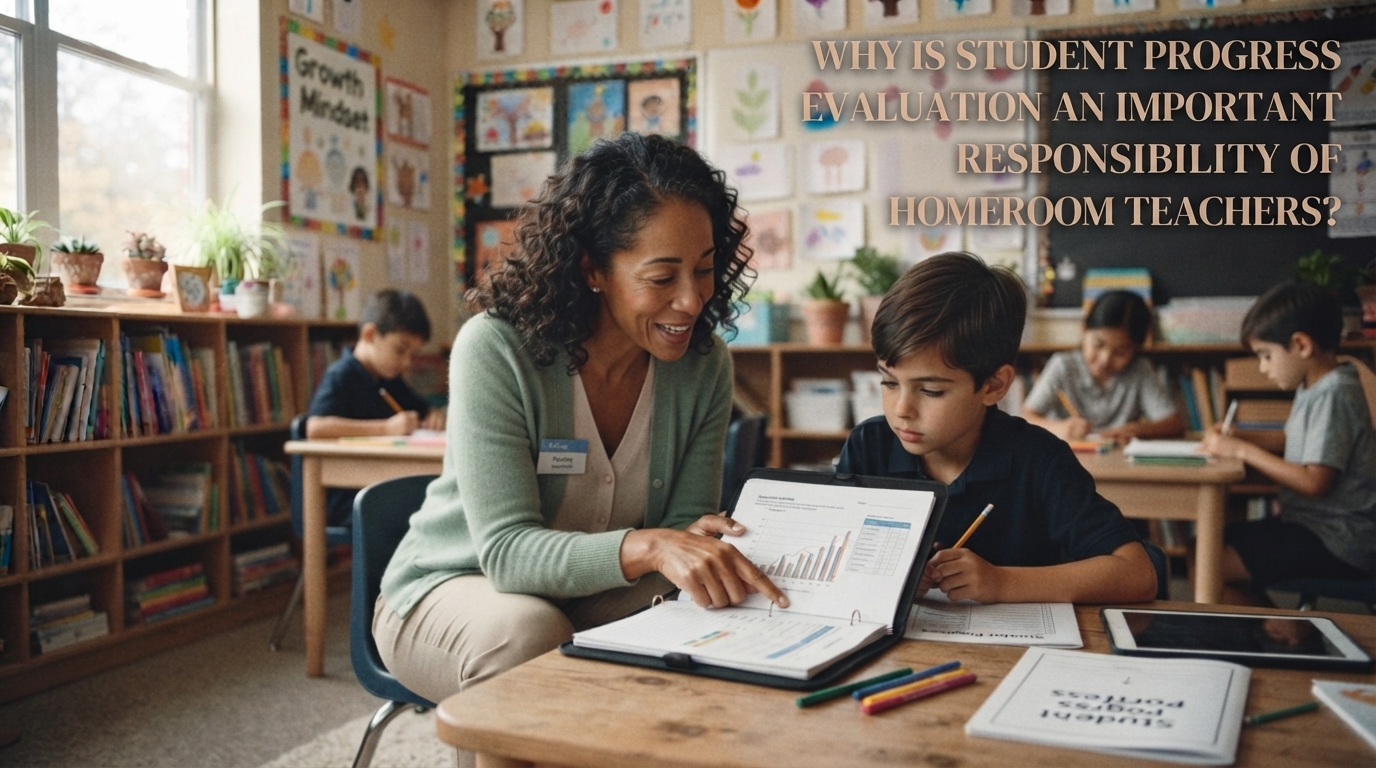
Student progress evaluation is an essential responsibility of homeroom teachers because it helps them understand each student's academic development, behavior, and personal growth. Every student has different abilities, learning styles, challenges, and levels of achievement. Therefore, teachers should not evaluate students only through examination scores but also consider their participation, discipline, communication skills, and daily development.
By conducting regular evaluations, homeroom teachers can identify students' strengths and weaknesses, provide appropriate guidance, and communicate more effectively with parents. Student progress evaluation also helps teachers create a supportive learning environment where every student has an opportunity to improve and reach their potential.
1. MONITORING STUDENTS' ACADEMIC DEVELOPMENT
One of the main purposes of student progress evaluation is to monitor academic development over time. Homeroom teachers can observe students' performance through examination results, assignments, classroom participation, and learning activities. These records help teachers understand whether students are achieving their learning objectives or experiencing difficulties with particular subjects. Regular monitoring also makes it easier to recognize improvements that may not be immediately visible through examination scores alone.
Furthermore, academic evaluation allows teachers to provide appropriate learning support based on each student's needs. Students who experience difficulties can receive additional explanations, encouragement, or recommendations for further assistance. Meanwhile, students who demonstrate strong academic performance can be encouraged to develop their abilities through more challenging activities. This approach helps ensure that every student receives attention according to their individual progress.
2. IDENTIFYING STUDENTS' STRENGTHS AND WEAKNESSES
Every student has different abilities and areas that require improvement. Through regular evaluation, homeroom teachers can identify students' strengths, interests, talents, and learning difficulties. For example, some students may perform well in mathematics but struggle with language subjects, while others may have excellent communication or leadership skills. Understanding these differences helps teachers recognize that student achievement involves more than academic grades.
Identifying weaknesses is equally important because it allows teachers to provide support before learning difficulties become more serious. Teachers can discuss specific challenges with students and help them develop realistic improvement strategies. They can also encourage students to explore their talents through extracurricular activities and classroom projects. By recognizing both strengths and weaknesses, homeroom teachers can support individual student development more effectively.
3. UNDERSTANDING STUDENTS' BEHAVIOR AND PERSONAL DEVELOPMENT
Student progress evaluation should also include behavioral and personal development. Academic achievement alone cannot fully describe a student's growth because attitudes, discipline, responsibility, confidence, and social skills are important parts of education. Homeroom teachers need to observe how students interact with classmates, follow school rules, participate in activities, and respond to different situations. These observations provide valuable information about students' development beyond the classroom.
Through this process, teachers can identify positive behavioral changes as well as problems that may require attention. For instance, a student who becomes less active, frequently misses assignments, or has difficulty communicating with classmates may need additional support. Teachers should approach these situations with empathy and avoid making quick judgments based on limited observations. A supportive evaluation process helps students develop better habits, emotional awareness, and social responsibility.
4. PROVIDING APPROPRIATE GUIDANCE AND SUPPORT
Evaluation becomes meaningful when teachers use the results to provide appropriate guidance. After identifying students' needs, homeroom teachers can offer advice, motivation, and practical suggestions to help them overcome academic or personal challenges. For example, students who struggle with time management can be encouraged to create study schedules and establish consistent learning habits. Students who lack confidence may benefit from positive feedback and opportunities to participate in classroom activities.
Teachers should also ensure that their guidance is realistic and suitable for each student's circumstances. Some problems may require cooperation with subject teachers, school counselors, or parents. If a student's difficulties involve serious emotional, behavioral, or learning concerns, teachers should follow appropriate school procedures and involve qualified professionals when necessary. Personalized guidance makes student evaluation more useful because it connects observations with meaningful actions.
5. IMPROVING COMMUNICATION WITH PARENTS
Homeroom teachers play an important role in connecting schools with students' families. Student progress evaluation provides reliable information that teachers can communicate to parents about academic performance, classroom behavior, attendance, and personal development. Instead of discussing only examination results, teachers can explain students' achievements, challenges, and areas that need improvement. This helps parents gain a more complete understanding of their children's educational experiences.
Effective communication also encourages parental involvement in supporting students' development. Parents can help establish study routines, encourage positive behavior, and provide emotional support at home. Teachers and parents can work together to create consistent strategies when students experience difficulties. Through regular and respectful communication, both parties can build a stronger partnership that benefits students.
6. ENCOURAGING STUDENTS TO BECOME MORE RESPONSIBLE
Student progress evaluation can encourage learners to take greater responsibility for their education. When teachers provide clear feedback, students can understand what they have achieved and which areas require further improvement. This process helps them recognize that learning is not only about receiving grades but also about developing knowledge, skills, discipline, and positive attitudes. Students gradually become more aware of their own learning responsibilities.
Teachers can also involve students in reflecting on their progress by asking them to identify personal goals and evaluate their learning habits. For example, students can review completed assignments, recognize improvements, and determine what they should do differently in the future. Self-evaluation encourages independence, confidence, and a willingness to learn from mistakes. These abilities are valuable not only at school but also in students' future academic and professional lives.
7. DETECTING LEARNING PROBLEMS EARLY
Regular evaluation helps homeroom teachers recognize learning problems before they significantly affect students' achievement. A sudden decline in grades, repeated absences, incomplete assignments, or reduced classroom participation may indicate that a student is experiencing difficulties. These changes do not always mean that a student lacks ability or motivation. Other factors, such as personal circumstances, learning barriers, or problems with the learning environment, may also influence performance.
When teachers identify these signs early, they can communicate with students and investigate the situation carefully. Appropriate assistance may include additional learning support, coordination with subject teachers, communication with parents, or referral to school counseling services. Early identification and intervention can prevent certain difficulties from becoming more complicated. It also demonstrates that teachers pay attention to students' needs rather than waiting until serious problems occur.
8. HELPING TEACHERS IMPROVE LEARNING STRATEGIES
Student evaluation does not only benefit learners; it also helps teachers assess the effectiveness of their educational approaches. If many students struggle with the same topic, teachers may need to review the teaching methods, learning materials, or classroom activities being used. Evaluation results can reveal whether explanations are clear, assignments are appropriate, and learning objectives are being achieved. This information supports better educational planning.
Homeroom teachers can also coordinate with subject teachers to discuss students' overall development and identify suitable improvements. By reviewing evaluation results regularly, teachers can recommend more effective learning strategies and encourage consistent support across subjects. Continuous improvement in teaching helps create a classroom environment that responds to students' actual needs. As a result, evaluation becomes a useful process for both student development and teacher professional growth.
9. CREATING FAIR AND OBJECTIVE STUDENT ASSESSMENTS
Fairness is an important principle in student progress evaluation. Homeroom teachers should use relevant information from different sources rather than judging students based on personal impressions or isolated incidents. Academic records, attendance, classroom observations, assignments, and feedback from subject teachers can provide a broader picture of student development. Evaluation criteria should also be clear and applied consistently.
Teachers must understand that students develop at different rates and have different learning circumstances. Therefore, comparisons between students should not become the main basis for evaluating individual progress. Instead, teachers should focus on each student's development, achievements, and improvement over time. Objective and fair assessment helps students feel respected and encourages them to continue learning without unnecessary pressure.
10. BUILDING A POSITIVE AND SUPPORTIVE LEARNING ENVIRONMENT
Consistent student progress evaluation contributes to a more positive classroom environment. When homeroom teachers understand students' academic and personal needs, they can respond to problems more appropriately and create opportunities for improvement. Students are more likely to feel valued when teachers recognize their efforts, listen to their concerns, and provide constructive feedback. This can strengthen trust and improve relationships between teachers and students.
A supportive environment also encourages students to participate actively, respect differences, and help one another. Teachers can use evaluation findings to develop classroom activities that promote cooperation, discipline, and mutual respect. Positive teacher-student relationships make it easier for students to express their difficulties and seek assistance when necessary. Consequently, student evaluation supports not only individual achievement but also the overall quality of classroom life.
CONCLUSION
Student progress evaluation is an important responsibility of homeroom teachers because it provides a comprehensive understanding of students' academic achievement, behavior, and personal development. Through regular and objective evaluation, teachers can identify strengths and weaknesses, detect learning difficulties early, provide appropriate guidance, and communicate effectively with parents. The process also encourages students to become more responsible and helps teachers improve their learning strategies.
However, evaluation should not focus only on grades or comparisons between students. It must consider individual circumstances, recognize personal improvement, and provide constructive support. When conducted consistently, fairly, and thoughtfully, student progress evaluation becomes an effective way to help every student develop their abilities and achieve better educational outcomes.
Recent Posts

How Does Technology Make Daily Evaluation... 21.11.2026/56 View

Apa Strategi Menghadapi Kesenjangan antara Kompetensi... 21.11.2026/58 View

Mengapa Inventaris Aset Penting bagi Kelancaran... 21.11.2026/52 View

When Should Musicians Join a Record... 21.11.2026/53 View

Daily Evaluation or Daily Planning Which... 21.11.2026/60 View
