

Why Is Teamwork Important in Social Volunteer Activities?
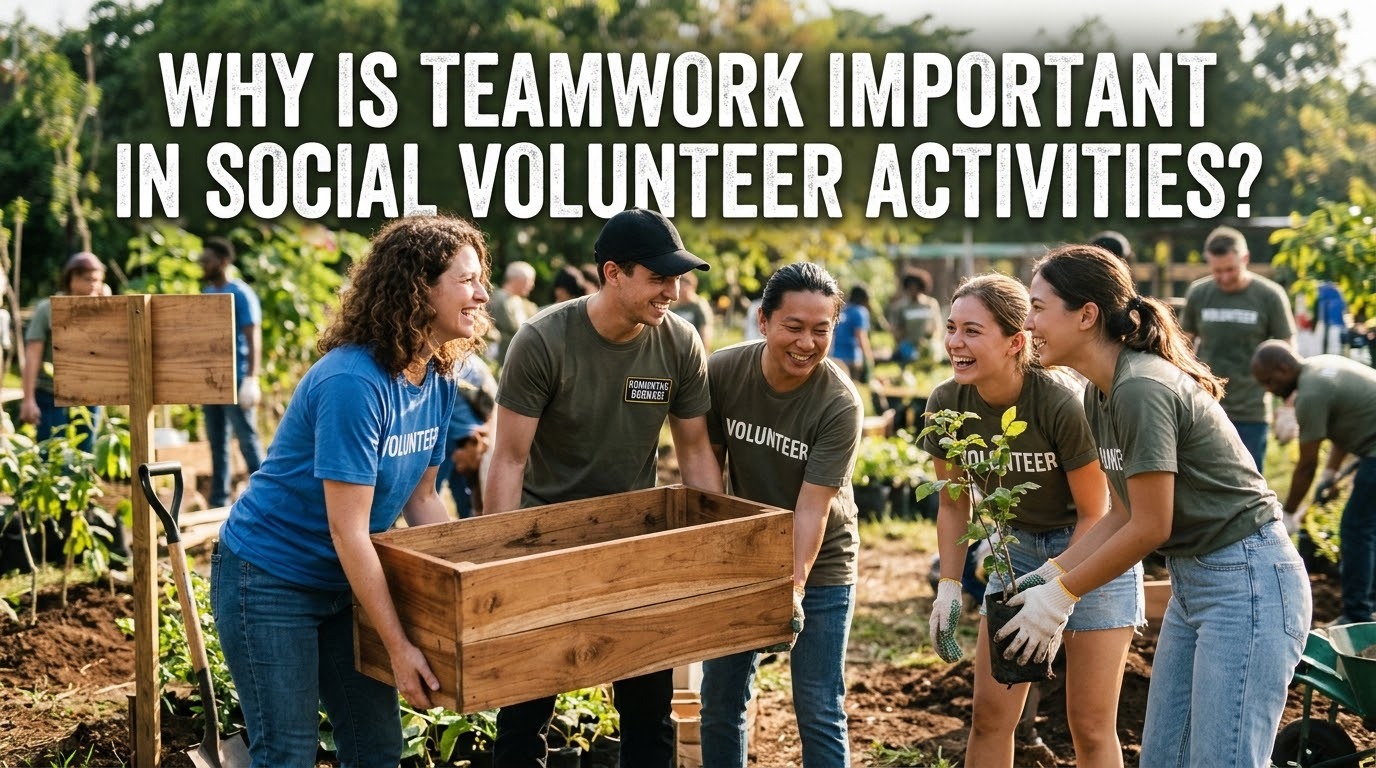
Social volunteer activities often involve helping people, solving community problems, and carrying out various programs. These activities may include distributing food, supporting disaster victims, organizing educational programs, and protecting the environment. Although individual contributions are valuable, many volunteer activities require people to work together to achieve meaningful results. This is why teamwork plays an important role in social volunteering.
Teamwork allows volunteers to share responsibilities, exchange ideas, and support one another while completing tasks. When volunteers cooperate effectively, activities can become more organized, efficient, and beneficial for the community. Understanding the importance of teamwork can also help volunteers develop useful skills and build stronger relationships with others.
WHAT DOES TEAMWORK MEAN IN SOCIAL VOLUNTEER ACTIVITIES?
Teamwork in social volunteer activities refers to the ability of volunteers to cooperate and work toward a shared goal. Each volunteer may have different responsibilities, abilities, and experiences, but everyone contributes to the same purpose. For example, during a food distribution program, some volunteers prepare supplies, others organize transportation, and the rest distribute food to people who need assistance. These responsibilities must be coordinated so that the activity runs smoothly.
Teamwork is not only about dividing tasks but also about communicating, respecting different opinions, and helping other members when necessary. Volunteers need to understand that every contribution has value, regardless of how simple the task may seem. Good cooperation creates a supportive environment where people feel comfortable sharing ideas and asking for help. As a result, volunteers can complete activities more effectively while building a stronger sense of responsibility toward the community.
HOW DOES TEAMWORK MAKE VOLUNTEER ACTIVITIES MORE EFFECTIVE?
Teamwork helps volunteer organizations complete activities more efficiently because responsibilities can be distributed among several people. Instead of expecting one person to handle every task, volunteers can focus on specific duties according to their abilities. This makes it easier to manage time, organize resources, and complete activities within the planned schedule. It also reduces the possibility of excessive workloads for individual volunteers.
Cooperation also helps volunteers respond to unexpected situations. During disaster relief activities, for example, volunteers may need to coordinate the collection, preparation, and distribution of essential supplies. If everyone understands their responsibilities, the team can respond more quickly and avoid unnecessary confusion. Effective teamwork therefore improves coordination and helps ensure that assistance reaches people who need it.
WHY IS COMMUNICATION IMPORTANT FOR VOLUNTEER TEAMWORK?
Communication is one of the most important elements of successful teamwork. Volunteers need to exchange information about schedules, responsibilities, available resources, and the progress of activities. Clear communication helps prevent misunderstandings and ensures that every team member understands what needs to be done. Without proper communication, even a well-planned volunteer program can experience delays and coordination problems.
Good communication also encourages volunteers to express their ideas and concerns. Each member may have a different perspective that can help the team find better solutions to challenges. Listening carefully, giving clear instructions, and providing constructive feedback can strengthen cooperation. When volunteers communicate respectfully, they can build trust and maintain positive relationships throughout their activities.
WHAT BENEFITS CAN VOLUNTEERS GAIN FROM WORKING AS A TEAM?
Working as a team provides valuable opportunities for volunteers to develop personal and professional skills. Through shared responsibilities, they can improve communication, leadership, problem-solving, and time management abilities. Volunteers also learn how to adapt to different working styles and cooperate with people from various backgrounds. These experiences can be useful in education, future employment, and everyday social interactions.
Teamwork can also create a stronger sense of belonging among volunteers. When people support one another and work toward a common purpose, they can develop friendships and mutual respect. Sharing challenges and achievements can make volunteer experiences more meaningful and motivating. In addition, volunteers may become more confident because they know they are part of a group that values their contributions.
HOW CAN SOCIAL VOLUNTEERS BUILD STRONG TEAMWORK?
Strong teamwork can be developed through clear planning, open communication, and mutual respect. Before starting an activity, volunteer coordinators should explain the objectives, assign responsibilities, and ensure that everyone understands their duties. Volunteers should also be willing to listen to suggestions and discuss problems without blaming other members. These habits help create a positive working environment.
Volunteers should also appreciate each member's contribution and offer assistance when someone experiences difficulties. Differences in opinions should be handled through respectful discussion and a focus on shared goals. Regular evaluations after activities can help teams identify what worked well and what needs improvement. By practicing these habits consistently, volunteers can build stronger cooperation and make future social programs more successful.
CONCLUSION
Teamwork is important in social volunteer activities because it helps people cooperate, share responsibilities, and achieve common goals. Effective teamwork improves communication, increases efficiency, and allows volunteers to respond to community needs more effectively. It also provides opportunities to develop valuable skills, build relationships, and strengthen social responsibility. By respecting one another and working together, social volunteers can create a greater positive impact on the communities they serve.
Recent Posts

Bagaimana Sistem SKS pada Program Kuliah... 22.11.2026/25 View

How Does Technology Make Daily Evaluation... 21.11.2026/64 View

Apa Strategi Menghadapi Kesenjangan antara Kompetensi... 21.11.2026/65 View

Mengapa Inventaris Aset Penting bagi Kelancaran... 21.11.2026/62 View

When Should Musicians Join a Record... 21.11.2026/61 View
