

Why Is the Earth's Temperature Rising Every Year?
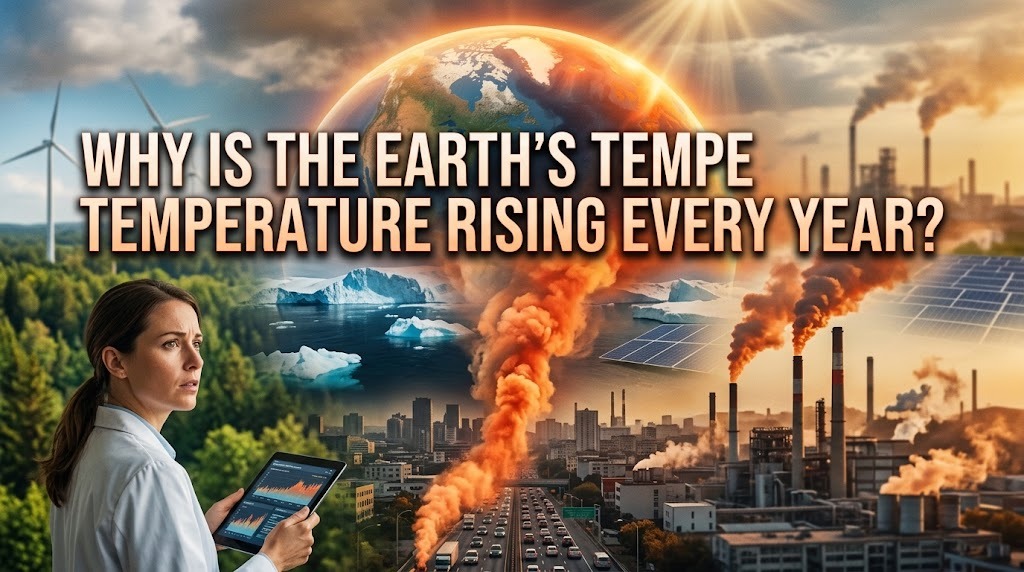
The Earth's temperature has increased over the long term, creating significant changes in the global climate system. Although temperatures naturally fluctuate from year to year, scientific observations show a clear warming trend over recent decades. The primary cause is the growing concentration of greenhouse gases in the atmosphere, largely resulting from human activities such as burning fossil fuels, deforestation, and industrial production.
Understanding why the Earth's temperature is rising every year helps explain the connection between human activities and global warming. The planet's temperature is influenced by the balance between energy received from the Sun and energy released back into space. When greenhouse gases trap more outgoing heat, this balance changes, causing the Earth system to warm over time.
THE INCREASING CONCENTRATION OF GREENHOUSE GASES
One of the main reasons for rising global temperatures is the increasing concentration of greenhouse gases in the atmosphere. These gases include carbon dioxide, methane, and nitrous oxide, which absorb and re-emit heat that would otherwise escape into space. This natural greenhouse effect keeps Earth warm enough to support life, but additional greenhouse gases strengthen the effect and contribute to global warming.
Human activities have significantly increased the amount of these gases in the atmosphere. Carbon dioxide is released mainly through the burning of coal, oil, and natural gas, while methane comes from sources such as livestock, waste management, and fossil fuel production. Nitrous oxide can be released through agricultural practices and certain industrial activities. As these gases accumulate, they alter the planet's energy balance and contribute to long-term warming.
BURNING FOSSIL FUELS FOR ENERGY
The use of fossil fuels is a major source of human-caused global warming. Coal, petroleum, and natural gas are burned to generate electricity, power vehicles, operate machinery, and provide energy for buildings. These activities release carbon dioxide, which can remain in the atmosphere for a long time and continue influencing the climate.
As populations grow and economies develop, energy demand can increase. When that demand is met mainly through fossil fuels, greenhouse gas emissions also rise. Transportation, electricity generation, manufacturing, and heating or cooling systems can all contribute to these emissions. Improving energy efficiency and expanding renewable energy sources such as solar and wind can reduce dependence on fossil fuels and help limit future temperature increases.
DEFORESTATION AND THE LOSS OF CARBON ABSORPTION
Forests help regulate the climate by absorbing carbon dioxide through photosynthesis and storing carbon in trees, vegetation, and soil. When forests are cleared for agriculture, infrastructure, or other land uses, this natural carbon storage capacity can decline. If trees are burned or decompose after being cut down, some of the stored carbon is released into the atmosphere.
Deforestation therefore contributes to global warming in two ways: it can release stored carbon and reduce the amount of carbon dioxide that forests would otherwise absorb. The effects depend on how the land is cleared, what replaces the forest, and how the soil is managed. Protecting existing forests, restoring degraded land, and improving land-use practices can help preserve important carbon sinks while supporting biodiversity and local communities.
INDUSTRIAL ACTIVITIES AND AGRICULTURAL EMISSIONS
Industrial production contributes to climate change through energy use and certain chemical processes. Manufacturing materials such as cement and steel can generate substantial emissions, particularly when production relies on fossil fuels. Some industrial and refrigeration processes can also release greenhouse gases with a high warming potential if those gases escape into the atmosphere.
Agriculture is another source of emissions. Livestock digestion and manure management release methane, while the use of nitrogen-based fertilizers can contribute to nitrous oxide emissions. Rice cultivation can also produce methane under certain water and soil conditions. These sources vary across regions depending on production methods and local practices. More efficient industrial processes, improved fertilizer management, better waste treatment, and lower-emission farming methods can help reduce their contribution to global warming.
NATURAL VARIATIONS AND THE LONG-TERM WARMING TREND
The Earth's temperature does not increase at exactly the same rate every year. Natural factors, including volcanic eruptions, changes in solar activity, and variations in ocean circulation, can temporarily influence global temperatures. For example, some volcanic eruptions release particles that reflect sunlight and cause short-term cooling, while ocean patterns can redistribute heat and affect temperatures from one year to another.
However, these natural variations do not explain the overall warming observed over recent decades. Scientific evidence shows that the dominant cause of modern global warming is the increase in greenhouse gases from human activities. A particular year may be cooler or warmer than the year before, but the long-term trend remains upward. Understanding this distinction helps explain why global warming is assessed using long-term temperature records rather than a single year's weather.
CONCLUSION
The Earth's temperature is rising over the long term mainly because human activities are increasing the concentration of greenhouse gases in the atmosphere. Burning fossil fuels, deforestation, industrial production, and agricultural emissions all contribute to this process. These activities strengthen the greenhouse effect, causing more heat to remain within the Earth system.
Although natural factors influence temperatures from year to year, they do not account for the persistent warming trend observed in recent decades. Reducing greenhouse gas emissions, protecting forests, improving energy efficiency, and adopting cleaner technologies can help limit future warming. Understanding the causes of rising global temperatures is an important step toward making informed decisions and supporting effective climate action.
Recent Posts

Bagaimana Sistem SKS pada Program Kuliah... 22.11.2026/47 View

How Does Technology Make Daily Evaluation... 21.11.2026/75 View

Apa Strategi Menghadapi Kesenjangan antara Kompetensi... 21.11.2026/77 View

Mengapa Inventaris Aset Penting bagi Kelancaran... 21.11.2026/73 View

When Should Musicians Join a Record... 21.11.2026/77 View
