

Why Is The National Assessment Essential For Student Development?
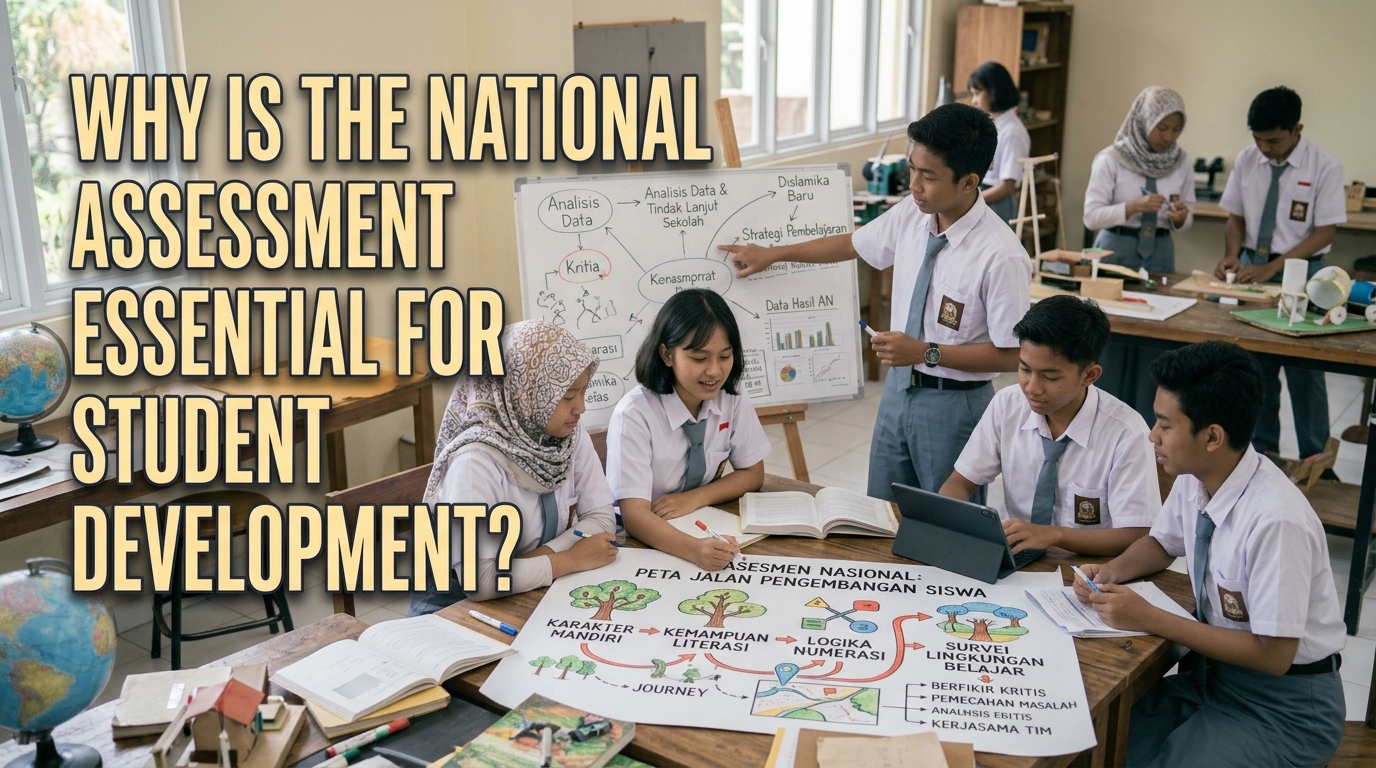
The implementation of the National Assessment has revolutionized how educational systems foster holistic growth among learners. Moving away from traditional high-stakes testing, this modern evaluation framework focuses on deep cognitive abilities and comprehensive well-being. Understanding why this assessment matters helps educators and parents appreciate its profound impact on young minds. This article will explore in detail why the national evaluation is vital for fostering long-term student development.
SHIFTING THE FOCUS TOWARD CRITICAL THINKING
The modern evaluation framework successfully transforms how learners approach everyday academic challenges. Instead of relying on rigid rote memorization, students are encouraged to develop higher-order thinking skills. Educators design dynamic lessons that promote analytical reasoning and independent problem-solving. This cognitive shift ensures that learners can process complex information with absolute clarity. Consequently, intellectual growth becomes the primary driver of classroom success.
Evaluating real-world problem-solving abilities provides a much clearer picture of cognitive readiness than traditional test scores. When students learn how to evaluate information independently, schools demonstrate their ability to nurture intellectual adaptability. This shift ensures that educational progress is measured by cognitive depth rather than simple memorization. Therefore, the assessment framework captures the actual intellectual maturity of students within the learning environment.
STRENGTHENING FOUNDATIONAL LITERACY AND NUMERACY
Core competencies such as reading comprehension and mathematical reasoning form the absolute foundation of lifelong learning. The evaluation system specifically targets these critical areas to measure actual student preparedness and academic baseline. When schools focus heavily on foundational literacies, learners gain the tools needed to interpret complex data accurately. Teachers utilize these targeted insights to modify their instructional approaches for better classroom outcomes. Ultimately, mastering these fundamental skills guarantees enhanced academic and professional readiness.
Strong literacy and numeracy skills enable students to navigate modern digital information landscapes with confidence. Evaluating these competencies regularly helps institutions identify learning gaps before they widen into permanent setbacks. Educators receive clear guidance on which specific subjects require enhanced instructional emphasis during daily classes. Measuring these fundamental skills guarantees that individual progress is judged by tangible student competencies.
NURTURING CHARACTER AND SOCIAL WELL-BEING
Student development extends far beyond academic metrics into the realm of moral and ethical growth. Comprehensive surveys within the assessment framework measure the overall school climate and emotional safety. Educational institutions are held accountable for maintaining inclusive spaces free from harassment and bullying. Fostering strong interpersonal values helps build empathy and emotional resilience in young learners. A positive psychological environment directly contributes to sustained student happiness and motivation.
Cultivating robust character traits aligns directly with the goal of producing well-rounded, responsible citizens. Institutional efforts to promote tolerance, integrity, and cooperation are officially recognized within the evaluation framework. This holistic approach proves that youth development cannot be separated from emotional safety. Consequently, the assessment successfully promotes a balanced environment where student welfare remains paramount.
REDUCING EXAM STRESS AND ANXIETY
Traditional high-stakes testing often inflicted paralyzing psychological pressure on vulnerable young learners. The current assessment model completely eliminates single-exam graduation determinations to protect mental health. Students can now engage with educational materials in a calm and supportive atmosphere. When fear of failure diminishes, genuine curiosity and a love for learning naturally emerge. This stress-free structure supports optimal psychological health and well-being throughout school years.
Lower academic pressure directly enhances both student engagement and overall learning efficiency in class. Learners feel safe to make mistakes and explore new concepts without harsh penalization. Teachers also benefit from this relaxed environment by focusing on holistic student development. Therefore, a calm psychological state allows learners to absorb complex concepts with greater clarity.
PROVIDING DATA-DRIVEN INSIGHTS FOR PERSONALIZED GROWTH
Institutional metrics collected from evaluations offer teachers clear visibility into individual learning patterns. Educators can pinpoint specific academic challenges and deliver timely, personalized support to struggling pupils. This evidence-based approach ensures that no student is left behind due to unrecognized learning gaps. Continuous progress monitoring empowers learners to take charge of their own educational journeys. Systematic feedback loops ultimately maximize the overall long-term student development trajectory.
Access to transparent performance data transforms how educational strategies are planned and executed. Schools can directly address underperforming indicators such as literacy gaps or classroom engagement issues. This data-driven approach ensures that instructional interventions are precisely tailored to solve specific needs. Ultimately, transparent reporting empowers educators to foster continuous progress toward excellence.
CONCLUSION
In conclusion, the National Assessment is essential for student development because it shifts focus toward critical thinking, strengthens foundational literacy, nurtures moral character, reduces academic stress, and provides data-driven growth insights. By prioritizing holistic well-being and analytical competence over high-stakes pressure, the evaluation system successfully prepares learners for future societal challenges and lifelong success.
Recent Posts

Bagaimana Sistem SKS pada Program Kuliah... 22.11.2026/54 View

How Does Technology Make Daily Evaluation... 21.11.2026/83 View

Apa Strategi Menghadapi Kesenjangan antara Kompetensi... 21.11.2026/81 View

Mengapa Inventaris Aset Penting bagi Kelancaran... 21.11.2026/78 View

When Should Musicians Join a Record... 21.11.2026/82 View
