

Why Is the Role of a Homeroom Teacher Important for Student Success?
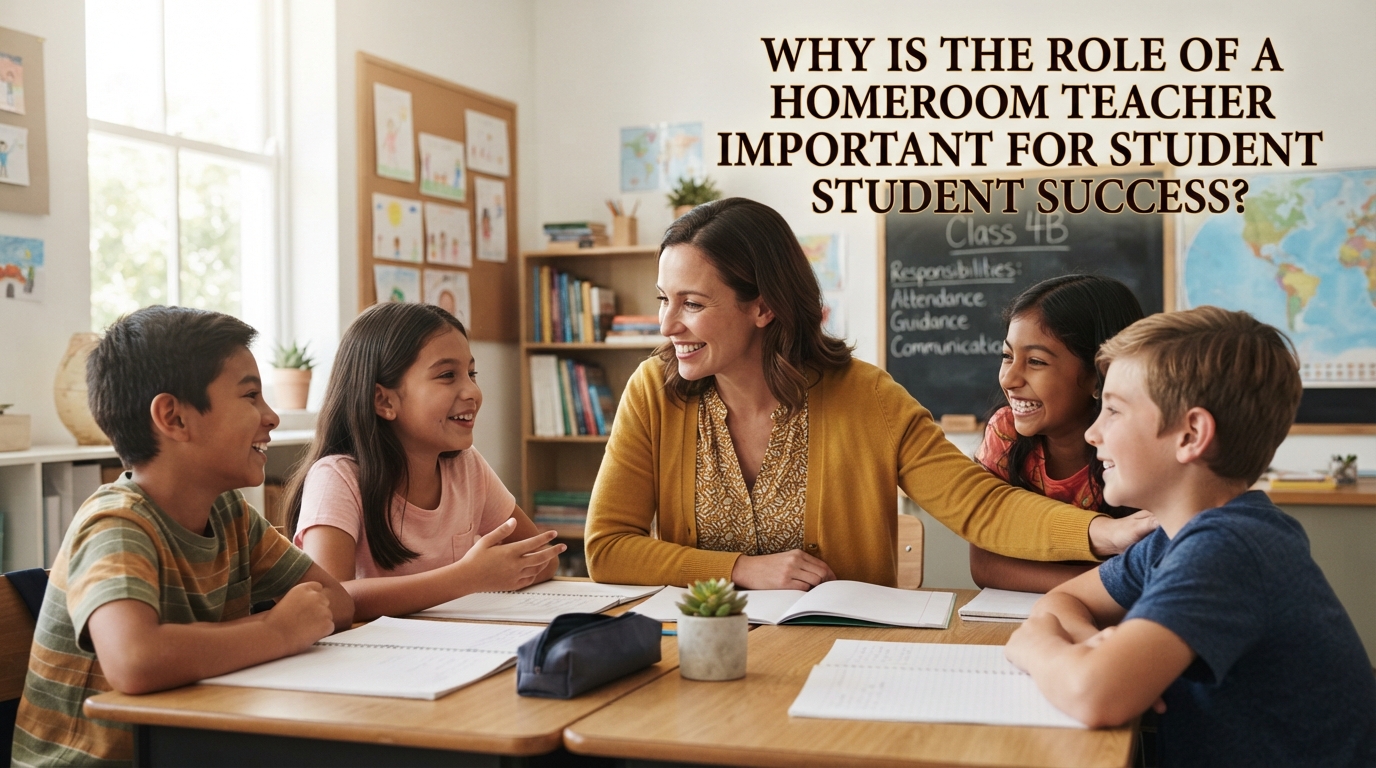
A homeroom teacher plays an important role in supporting students throughout their educational journey. Their responsibilities go beyond managing classroom activities because they also help students develop academically, socially, and emotionally. As the teacher who regularly monitors a particular class, a homeroom teacher can understand students' individual needs, identify learning difficulties, and provide appropriate guidance. Their involvement helps create a positive learning environment where students feel supported, motivated, and encouraged to achieve their goals.
Student success is not determined by academic grades alone. It also involves discipline, confidence, responsibility, communication skills, and positive character development. Through consistent guidance and cooperation with parents and other teachers, homeroom teachers can help students overcome challenges and improve their abilities. Therefore, understanding the importance of a homeroom teacher is essential for recognizing how educators contribute to students' overall success.
SUPPORTING STUDENTS' ACADEMIC ACHIEVEMENT
One of the most important contributions of a homeroom teacher is helping students improve their academic achievement. They monitor students' grades, assignments, examination results, and participation in learning activities. By reviewing this information, teachers can identify students who perform well and those who need additional support. This allows them to provide appropriate suggestions and encourage students to improve their learning habits.
Homeroom teachers can also communicate with subject teachers to understand students' academic progress more comprehensively. When students experience difficulties in particular subjects, teachers can help identify possible causes and recommend suitable learning strategies. They may encourage students to manage their study schedules, complete assignments on time, and participate more actively in class. With continuous monitoring and support, students have better opportunities to achieve their academic goals.
BUILDING STUDENTS' CONFIDENCE AND MOTIVATION
Self-confidence and motivation are essential factors that influence students' learning experiences. Some students may hesitate to ask questions, express opinions, or participate in classroom discussions because they are afraid of making mistakes. A supportive homeroom teacher can help them overcome these feelings by creating a comfortable and respectful learning environment. Teachers can also recognize students' efforts and progress to encourage them to believe in their abilities.
In addition, homeroom teachers can motivate students by setting realistic goals and providing constructive feedback. They should help students understand that academic improvement requires effort, consistency, and patience. When students experience failure, teachers can encourage them to evaluate their mistakes rather than give up. This approach helps students develop a positive mindset and become more confident when facing academic challenges.
DEVELOPING DISCIPLINE AND RESPONSIBILITY
Student success requires more than intelligence and academic knowledge. Discipline and responsibility help students manage their time, complete assignments, follow school regulations, and maintain consistent learning habits. Homeroom teachers play an important role in introducing these values through classroom rules and daily guidance. They encourage students to arrive on time, respect others, and take responsibility for their actions.
Furthermore, teachers can help students understand the consequences of their decisions. Instead of relying entirely on punishment, they should use constructive approaches that encourage students to recognize mistakes and improve their behavior. Giving students classroom responsibilities can also develop independence and accountability. These habits can benefit students not only during their school years but also in higher education and future professional environments.
PROVIDING PERSONAL GUIDANCE AND EMOTIONAL SUPPORT
Students may face various personal challenges that affect their ability to learn effectively. These challenges can include friendship conflicts, family difficulties, academic pressure, or a lack of confidence. A homeroom teacher can provide initial guidance by listening carefully, showing understanding, and helping students identify possible solutions. Feeling supported by a trusted teacher can make students more comfortable discussing difficulties that influence their education.
However, teachers should recognize the boundaries of their professional responsibilities. Serious emotional or psychological concerns may require assistance from qualified school counselors or other professionals. In these situations, homeroom teachers should coordinate appropriately with parents and relevant school staff while respecting students' privacy. Providing the right support helps students maintain their emotional well-being and stay engaged in learning activities.
CREATING A POSITIVE AND INCLUSIVE CLASSROOM ENVIRONMENT
A positive classroom environment helps students feel safe, respected, and motivated to participate in learning activities. Homeroom teachers contribute to this environment by establishing clear rules, encouraging respectful communication, and preventing inappropriate behavior. They should treat students fairly regardless of their academic abilities, backgrounds, or personal differences. This approach helps build a classroom culture based on respect, cooperation, and inclusion.
Teachers can also organize group discussions, collaborative projects, and classroom activities that encourage students to interact with one another. These experiences allow students to develop teamwork, communication, and problem-solving skills. When conflicts occur, homeroom teachers can guide students toward peaceful solutions and mutual understanding. As a result, students can learn in an environment that supports both academic development and healthy social relationships.
STRENGTHENING COMMUNICATION BETWEEN PARENTS AND SCHOOLS
Cooperation between parents and schools is another important factor in student success. Homeroom teachers serve as a communication link between families and educational institutions by sharing information about students' academic performance, attendance, and behavior. Regular communication allows parents to understand their children's progress and recognize areas that may require attention. It also helps teachers gain a better understanding of students' circumstances outside school.
Through parent meetings, telephone calls, and digital communication platforms, homeroom teachers can discuss students' development and possible solutions to educational challenges. Parents can also share observations and concerns that may help teachers provide more appropriate guidance. Effective cooperation creates a consistent support system between home and school. This partnership can improve students' learning experiences and encourage them to become more responsible for their education.
IDENTIFYING STUDENTS' TALENTS AND POTENTIAL
Every student has different abilities, interests, and learning preferences. Some students demonstrate strong academic skills, while others may have potential in sports, arts, leadership, technology, or communication. Homeroom teachers can help identify these abilities by observing students' participation in classroom activities and extracurricular programs. Recognizing individual strengths allows teachers to encourage students to explore their interests and develop their potential.
Furthermore, teachers can recommend suitable school activities, competitions, or learning opportunities that match students' interests. They can also encourage students who have not yet discovered their strengths to try new experiences. This guidance helps students understand that success can take different forms and is not limited to examination results. By supporting individual talents, homeroom teachers contribute to students' personal growth and future development.
PREPARING STUDENTS FOR FUTURE CHALLENGES
The importance of a homeroom teacher also extends beyond students' immediate academic needs. Teachers help students develop essential abilities such as critical thinking, communication, adaptability, teamwork, and problem-solving. These skills are valuable when students continue their education, enter the workplace, or participate in society. By encouraging students to become independent learners, homeroom teachers help prepare them for different situations in the future.
Teachers can introduce positive learning habits, encourage participation in school organizations, and provide opportunities for students to practice leadership. They should also remind students that mistakes are part of the learning process and that improvement requires continuous effort. With consistent guidance, students can become more adaptable and confident when facing new responsibilities. These experiences help build a strong foundation for long-term success.
CONCLUSION
The role of a homeroom teacher is important for student success because it involves supporting academic achievement, building confidence, developing discipline, and providing personal guidance. Homeroom teachers also create positive classroom environments, strengthen communication between parents and schools, and help students recognize their individual talents. These responsibilities contribute to students' development in academic, social, and emotional areas.
Ultimately, student success requires cooperation between teachers, parents, schools, and students themselves. A dedicated homeroom teacher can make a meaningful difference by providing consistent guidance, encouragement, and appropriate support. Through these efforts, students can develop the knowledge, character, and essential skills needed to achieve their educational goals and prepare for a successful future.
Recent Posts

How Does Technology Make Daily Evaluation... 21.11.2026/56 View

Apa Strategi Menghadapi Kesenjangan antara Kompetensi... 21.11.2026/58 View

Mengapa Inventaris Aset Penting bagi Kelancaran... 21.11.2026/53 View

When Should Musicians Join a Record... 21.11.2026/53 View

Daily Evaluation or Daily Planning Which... 21.11.2026/60 View
