

Why Is the Use of Regional Languages Declining Within Families?
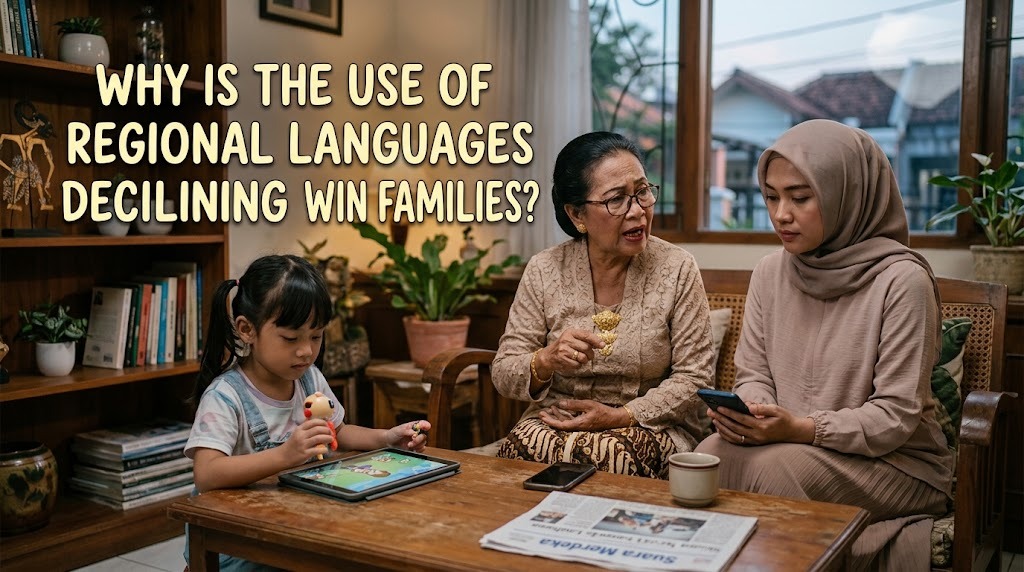
Regional languages have played an important role in family communication and cultural traditions for generations. In Indonesia, many families have traditionally used their regional languages to share stories, express feelings, and teach children about their cultural heritage. However, some families are now using Indonesian more frequently in everyday conversations, causing younger generations to become less familiar with their ancestral languages. This change can affect communication between generations and reduce opportunities to pass local traditions to children. Understanding why the use of regional languages is declining within families is an important step toward finding practical ways to preserve them.
WHY ARE FAMILIES USING INDONESIAN MORE OFTEN AT HOME?
One major reason regional languages are becoming less common within families is the widespread use of Indonesian as the national language. Indonesian is used in schools, workplaces, public services, and communication between people from different regions. As children become more familiar with Indonesian through education and entertainment, they may naturally use it more frequently at home. Parents may also choose Indonesian because they believe it will help their children communicate confidently in academic and professional environments. Over time, this preference can reduce the amount of daily practice children receive in their regional languages.
Using Indonesian at home is not necessarily harmful to regional languages, because both languages can coexist within the same family. The problem arises when regional languages are rarely spoken and children have few opportunities to learn them naturally. For example, parents may understand their regional language but consistently respond to their children in Indonesian. Children may eventually understand some familiar expressions without developing the confidence to speak the language themselves. Regular communication in a regional language is essential for helping children develop active speaking skills.
HOW DOES PARENTAL LANGUAGE CHOICE AFFECT CHILDREN?
Parents have a major influence on the languages children learn during their early years. Children often acquire language through listening to family members, participating in conversations, and repeating expressions they hear every day. When parents rarely use their regional language, children may have fewer opportunities to develop their vocabulary and pronunciation. They may also become unfamiliar with traditional expressions that are commonly used by older relatives. As a result, the language can gradually become less common among younger family members.
Some parents intentionally choose Indonesian because they worry that learning a regional language might confuse their children or interfere with their school performance. However, learning a regional language alongside Indonesian does not automatically cause language confusion or academic difficulties. Children can develop skills in multiple languages when they receive sufficient exposure and opportunities to practice. Parents can support this process by speaking regional languages during everyday activities while continuing to use Indonesian when appropriate. A supportive multilingual environment allows children to maintain their regional language skills without sacrificing their ability to communicate in Indonesian.
HOW DO URBANIZATION AND MIGRATION INFLUENCE REGIONAL LANGUAGE USE?
Urbanization and migration can change the way families communicate. When families move from their home regions to cities or areas with diverse populations, they may use Indonesian as a common language with neighbors, colleagues, and friends. Children growing up in these environments may have fewer opportunities to hear their regional languages outside the home. Parents may also adjust their communication habits to match the language used by schools and local communities. These circumstances can make Indonesian the family's most convenient everyday language.
Mixed-language families may face additional challenges when parents speak different regional languages. In these households, parents may choose Indonesian so that everyone can understand one another. This can be a practical solution, but children may receive less exposure to each parent's ancestral language. Families can address this challenge by creating regular opportunities for children to interact with relatives and fluent speakers. Migration does not automatically lead to language loss, but maintaining a regional language often requires deliberate effort when families live outside their traditional communities.
WHY DO YOUNG PEOPLE SOMETIMES PREFER OTHER LANGUAGES?
Young people are influenced by their schools, friendship groups, entertainment choices, and online activities. Indonesian is widely used in formal education and communication across regions, while English and other international languages appear frequently in films, music, games, and digital content. Consequently, regional languages may receive less attention in young people's daily routines. Some young people may also believe that speaking a regional language is old-fashioned or less useful in modern society. These perceptions can discourage them from practicing the language with their parents and relatives.
Social pressure can also influence language choices. If friends mainly communicate in Indonesian, young people may feel more comfortable using the same language, even when they understand their regional language. In some communities, differences in accent or fluency may make young speakers afraid of being corrected or laughed at. Families can help by presenting regional languages as valuable communication skills rather than obligations that young people must follow without understanding their purpose. Positive attitudes and enjoyable learning experiences can encourage younger generations to use their regional languages with confidence.
WHAT HAPPENS WHEN REGIONAL LANGUAGES ARE NO LONGER USED WITHIN FAMILIES?
When families stop using their regional languages, children may lose opportunities to learn traditional vocabulary, expressions, and cultural knowledge. Stories told by grandparents, local proverbs, and family histories may become harder for younger generations to understand. Although some cultural information can be translated into Indonesian, certain expressions may carry meanings that are difficult to communicate fully in another language. The decline of family language transmission can therefore weaken connections between children and their cultural heritage. In serious cases, fewer fluent speakers may remain to pass the language to future generations.
Language loss can also affect community identity and the continuity of oral traditions. Traditional songs, folktales, customary expressions, and local knowledge are often passed down through conversations between family members. When children cannot understand the language used in these traditions, they may become less involved in cultural activities. However, language decline does not mean that recovery is impossible. Families can rebuild language use through conversations, storytelling, recordings, and regular interactions with fluent speakers. Maintaining regional languages within families helps protect both communication skills and the cultural knowledge carried by those languages.
HOW CAN FAMILIES REVIVE THE USE OF REGIONAL LANGUAGES AT HOME?
Families can begin preserving their regional languages by incorporating them into simple daily activities. Parents can use regional languages when greeting children, preparing meals, discussing household tasks, or telling bedtime stories. Grandparents and other relatives can share traditional songs, expressions, and personal experiences that help children understand how the language is used naturally. Parents should encourage children to try speaking without feeling embarrassed about mistakes. Consistent practice and positive encouragement can make regional languages a natural part of family life again.
Technology can provide additional support through regional-language videos, digital dictionaries, audio recordings, and educational applications. Families can watch suitable videos together, record conversations with older relatives—with their permission—or create simple vocabulary lists for regular practice. Schools and local communities can also organize storytelling events, cultural activities, and language classes that provide opportunities to communicate with other speakers. These efforts work best when regional languages are used in real conversations rather than limited to occasional lessons or celebrations. By combining family participation, community support, and accessible learning resources, families can help ensure that regional languages continue to be spoken across generations.
CONCLUSION
The use of regional languages is declining within some families because of the widespread use of Indonesian, parental language choices, migration, urbanization, and changing preferences among young people. When children have limited opportunities to hear and speak their ancestral languages, they may gradually lose their ability to communicate in them. This change can weaken family connections and make traditional knowledge more difficult to pass on. Families can respond by using regional languages in daily conversations, encouraging children without pressure, and creating opportunities to interact with fluent speakers. Preserving regional languages at home is an important way to protect Indonesia's cultural identity and linguistic diversity for future generations.
Recent Posts

Bagaimana Sistem SKS pada Program Kuliah... 22.11.2026/49 View

How Does Technology Make Daily Evaluation... 21.11.2026/76 View

Apa Strategi Menghadapi Kesenjangan antara Kompetensi... 21.11.2026/78 View

Mengapa Inventaris Aset Penting bagi Kelancaran... 21.11.2026/74 View

When Should Musicians Join a Record... 21.11.2026/78 View
