

Why Is Time Management Crucial During Numerical Assessments?
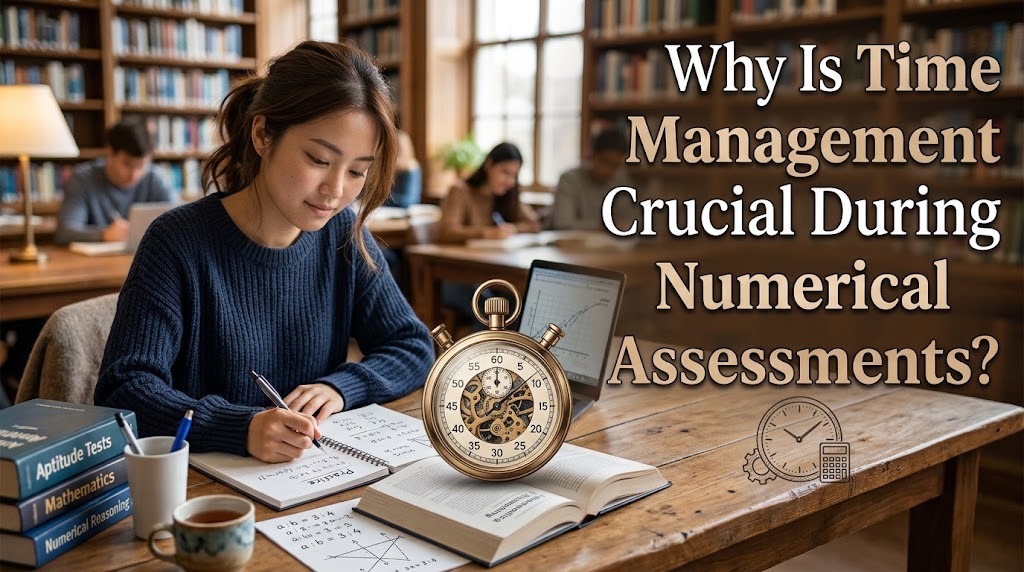
Time management is an important factor in numerical assessments because candidates often need to solve multiple questions within a limited period. These tests may include calculations involving percentages, ratios, averages, number sequences, and data interpretation. Without an effective strategy for managing time, candidates may struggle to complete all the questions, even when they understand the mathematical concepts.
Managing time effectively does not simply mean answering questions as quickly as possible. Candidates must balance speed, accuracy, and concentration to achieve reliable results. By developing appropriate time management strategies, they can use the available time more efficiently and improve their performance during numerical assessments.
HELPING CANDIDATES COMPLETE MORE QUESTIONS
One of the main benefits of time management is that it helps candidates distribute their time across the entire assessment. Spending too long on one difficult question can prevent them from answering other questions that may be easier.
For example, a numerical test may contain 30 questions that must be completed within 30 minutes. Candidates need to maintain a reasonable pace instead of spending several minutes on a single problem. Allocating time carefully increases their opportunity to attempt the entire assessment.
REDUCING PRESSURE DURING THE TEST
Time limitations can create pressure, especially when candidates encounter complicated calculations or unfamiliar question formats. Without a clear strategy, they may become anxious and lose concentration.
Effective time management helps candidates maintain a more organized approach. By knowing when to continue working and when to move to another question, they can avoid becoming stuck on difficult problems. This can make the assessment feel more manageable and help them maintain focus.
MAINTAINING CALCULATION ACCURACY
Speed is important in numerical assessments, but accuracy should not be overlooked. Candidates who rush through calculations may misunderstand the question, select incorrect figures, or make simple arithmetic mistakes.
Managing time properly allows individuals to work efficiently while leaving enough time to check important calculations. For example, when solving percentage questions, they should identify the original value and apply the correct calculation method before selecting an answer. A balanced approach helps reduce careless errors.
PRIORITIZING EASIER QUESTIONS
Not all numerical questions require the same amount of time or effort. Some involve straightforward calculations, while others require several steps of analysis.
Candidates can improve their efficiency by answering familiar questions first. For example, they may complete simple addition, percentage, or ratio problems before returning to more complicated data interpretation questions. This strategy helps them secure answers to questions they can solve confidently without allowing difficult problems to consume too much time.
IMPROVING DECISION-MAKING UNDER PRESSURE
Numerical assessments often require candidates to make quick decisions based on limited information. They must identify the relevant figures, choose an appropriate calculation method, and determine whether their answers are reasonable.
Time management encourages candidates to make these decisions systematically. Instead of repeatedly considering the same problem, they can establish a clear approach and move forward once they have completed the necessary steps. This ability is useful in both assessments and professional environments.
PREVENTING UNNECESSARY CALCULATIONS
Some numerical questions contain additional information that is not needed to find the answer. Candidates who do not read questions carefully may spend valuable time calculating figures that are irrelevant to the problem.
Effective time management begins with understanding what each question requires. Candidates should identify the specific information needed before performing calculations. This approach reduces unnecessary work and allows them to focus on the most relevant numerical details.
ALLOWING TIME TO REVIEW ANSWERS
Leaving time for reviewing answers is another important part of numerical assessment preparation. Candidates may occasionally make mistakes when reading figures, applying formulas, or selecting answer options.
A brief review can help identify these errors before the assessment ends. For example, candidates can check whether they used the correct units, interpreted percentages properly, and selected an answer that matches the question. Reviewing completed work can improve overall accuracy when the test format allows changes to previous answers.
DEVELOPING EFFECTIVE TIME MANAGEMENT STRATEGIES
Candidates can improve their time management by practicing different numerical question formats and learning how long particular tasks usually take. Developing a consistent strategy makes it easier to maintain an appropriate pace during the assessment.
Some practical techniques include:
- Set a time target: Estimate how much time can be spent on each question based on the total test duration.
- Answer familiar questions first: Complete straightforward problems before spending time on more challenging ones.
- Recognize common patterns: Practice percentages, ratios, averages, and number sequences to reduce calculation time.
- Avoid unnecessary repetition: Choose a suitable calculation method and avoid repeatedly reconsidering the same steps.
- Monitor remaining time: Check the available time periodically without interrupting concentration.
- Review important answers: Use any remaining time to identify calculation or interpretation errors.
These strategies can help candidates develop a more consistent approach to numerical assessments.
PRACTICING UNDER REALISTIC TIME LIMITS
Regular practice under timed conditions helps candidates become familiar with the pressure of numerical assessments. Instead of solving questions without a deadline, they should occasionally complete practice tests within a fixed period.
After each session, candidates can evaluate how many questions they completed, how many answers were correct, and which question types required the most time. This information helps them identify areas that need improvement.
Practicing consistently can also increase familiarity with common numerical problems. As candidates become more comfortable with different calculation methods, they may be able to solve questions more efficiently without sacrificing accuracy.
CONCLUSION
Time management is crucial during numerical assessments because it helps candidates complete questions efficiently, maintain calculation accuracy, and manage pressure. Prioritizing easier questions, avoiding unnecessary calculations, and reviewing answers can make better use of the available time. With regular practice under realistic conditions, candidates can develop effective strategies and improve their confidence when completing numerical tests.
Recent Posts

Bagaimana Sistem SKS pada Program Kuliah... 22.11.2026/40 View

How Does Technology Make Daily Evaluation... 21.11.2026/71 View

Apa Strategi Menghadapi Kesenjangan antara Kompetensi... 21.11.2026/73 View

Mengapa Inventaris Aset Penting bagi Kelancaran... 21.11.2026/69 View

When Should Musicians Join a Record... 21.11.2026/73 View
