

Why Is Time Management Important in Science Olympiad Exams?
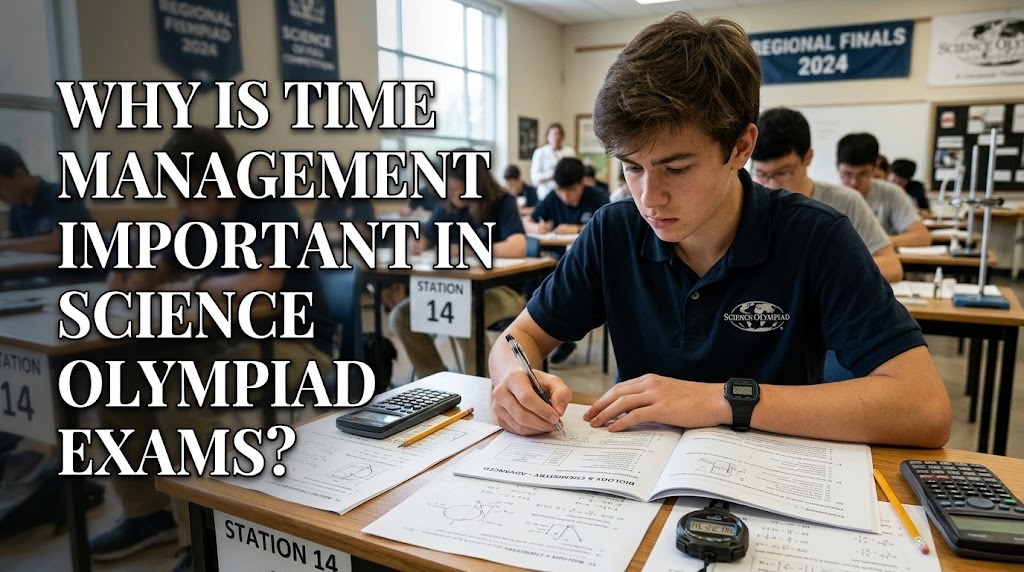
Science Olympiad exams challenge students to apply scientific knowledge, analyze complex problems, and develop accurate answers within a limited amount of time. Participants may encounter questions involving calculations, scientific concepts, data interpretation, and logical reasoning. Even students with strong academic abilities can struggle to complete an examination if they do not manage their time effectively.
Time management is therefore an important part of Science Olympiad preparation and examination strategy. It helps students organize their work, maintain concentration, and use the available examination time efficiently. By developing good time management habits, participants can improve their ability to approach questions systematically and avoid unnecessary pressure.
HELPING STUDENTS COMPLETE MORE QUESTIONS
One major reason time management is important is that it helps students make better use of the examination period. Science Olympiad exams may contain many questions with different levels of difficulty, so spending too much time on one problem can prevent students from answering others.
Students who manage their time effectively can allocate an appropriate amount of time to each question. They can begin with questions they understand before moving to more challenging problems.
This approach helps participants avoid leaving too many unanswered questions. It also gives them a clearer sense of progress throughout the examination.
PRIORITIZING QUESTIONS BASED ON DIFFICULTY
Not every Science Olympiad question requires the same amount of effort. Some questions can be answered through basic scientific understanding, while others involve complex calculations or several stages of reasoning.
Time management encourages students to identify which questions should be answered first. They can complete relatively straightforward questions before spending additional time on problems that require deeper analysis.
Prioritizing questions does not mean ignoring difficult topics. Instead, it allows students to distribute their attention more strategically and return to challenging questions when sufficient time remains.
REDUCING EXAMINATION STRESS
Limited examination time can create pressure, especially when students encounter unfamiliar or complicated questions. Without a clear strategy, they may become anxious and struggle to concentrate.
A time management plan can reduce this pressure by giving students a structured approach to the examination. Knowing how long to spend on different sections helps them feel more prepared and organized.
Regular practice under timed conditions can also make students more comfortable with examination situations. Over time, they can learn to maintain concentration even when facing challenging problems.
IMPROVING ACCURACY AND ANSWER QUALITY
Answering questions quickly is not enough if students make avoidable mistakes. Science Olympiad exams often require careful calculations, accurate interpretations, and logical explanations.
Effective time management provides a balance between speed and accuracy. Students can reserve enough time to understand each question, check important calculations, and review their answers.
Rushing through an examination may lead to incorrect formula selection, calculation errors, or misunderstood instructions. A well-organized approach helps reduce these mistakes without spending too much time on individual questions.
DEVELOPING BETTER DECISION-MAKING SKILLS
During an examination, students must decide which questions deserve immediate attention and which ones should be postponed. These decisions can influence how effectively they use their available time.
For example, a student may recognize that a physics problem requires several calculations. If the solution is not immediately clear, moving to another question may be more practical than continuing without a clear direction.
This ability to make decisions under time constraints develops strategic thinking. Students learn to evaluate situations, consider available options, and choose actions that support their overall examination goals.
PROVIDING ENOUGH TIME FOR ANSWER REVIEW
Reviewing answers is an important part of completing a Science Olympiad examination. Students may overlook calculation mistakes, forget to include units, or misunderstand certain instructions when working quickly.
By managing their time carefully, participants can reserve a portion of the examination period for checking their responses. This final review can help them identify errors that may otherwise remain unnoticed.
Students should prioritize reviewing calculations, scientific terminology, answer choices, and incomplete responses. Even a brief review can improve the quality of their submitted work.
BUILDING DISCIPLINE AND CONSISTENCY
Time management is not only useful during examinations but also supports students throughout their preparation. Creating study schedules and following regular practice sessions can develop discipline and consistency.
Students who prepare systematically are more likely to understand the competition material gradually. They can divide difficult subjects into smaller learning targets and avoid depending entirely on last-minute study sessions.
These habits also encourage responsibility. Participants learn to balance academic activities, competition training, and personal commitments more effectively.
IMPROVING PERFORMANCE THROUGH TIMED PRACTICE
Practicing with a time limit helps students understand how they perform under examination conditions. It allows them to recognize which types of questions take the longest and where they frequently lose time.
Students can use previous competition questions, practice tests, and mock examinations to develop their timing strategies. After completing each exercise, they should review both their answers and the amount of time spent on individual questions.
This process helps them identify areas that need improvement. With consistent practice, students can become more familiar with examination formats and make better decisions about how to distribute their time.
DEVELOPING A PRACTICAL TIME MANAGEMENT STRATEGY
Students can improve their examination performance by following a clear and realistic time management strategy. The exact approach may depend on the number of questions, examination duration, and scoring system.
Several practical methods can help participants manage their time:
- Read the Instructions: Understand the examination rules, question formats, and scoring requirements before starting.
- Check the Time Limit: Identify the total examination duration and estimate how much time is available for each section.
- Answer Familiar Questions First: Complete questions that can be solved confidently before moving to more complicated problems.
- Avoid Getting Stuck: Move on when a question takes too long and return to it later if time permits.
- Monitor Progress: Check the remaining time periodically to avoid spending too much time on one section.
- Review Important Answers: Reserve time to check calculations, instructions, and incomplete responses.
Applying these methods consistently can help students develop a more organized approach to Science Olympiad examinations.
CONCLUSION
Time management is important in Science Olympiad exams because it helps students complete questions efficiently, prioritize difficult problems, reduce examination stress, and maintain answer accuracy. It also supports better decision-making and provides opportunities to review responses before submitting them.
Developing these skills requires consistent preparation and timed practice. By learning how to distribute their time effectively, students can approach Science Olympiad examinations with greater confidence, discipline, and focus.
Recent Posts

Bagaimana Sistem SKS pada Program Kuliah... 22.11.2026/48 View

How Does Technology Make Daily Evaluation... 21.11.2026/76 View

Apa Strategi Menghadapi Kesenjangan antara Kompetensi... 21.11.2026/78 View

Mengapa Inventaris Aset Penting bagi Kelancaran... 21.11.2026/73 View

When Should Musicians Join a Record... 21.11.2026/78 View
