

Why Is Uneven Population Distribution a Major Problem in Indonesia?
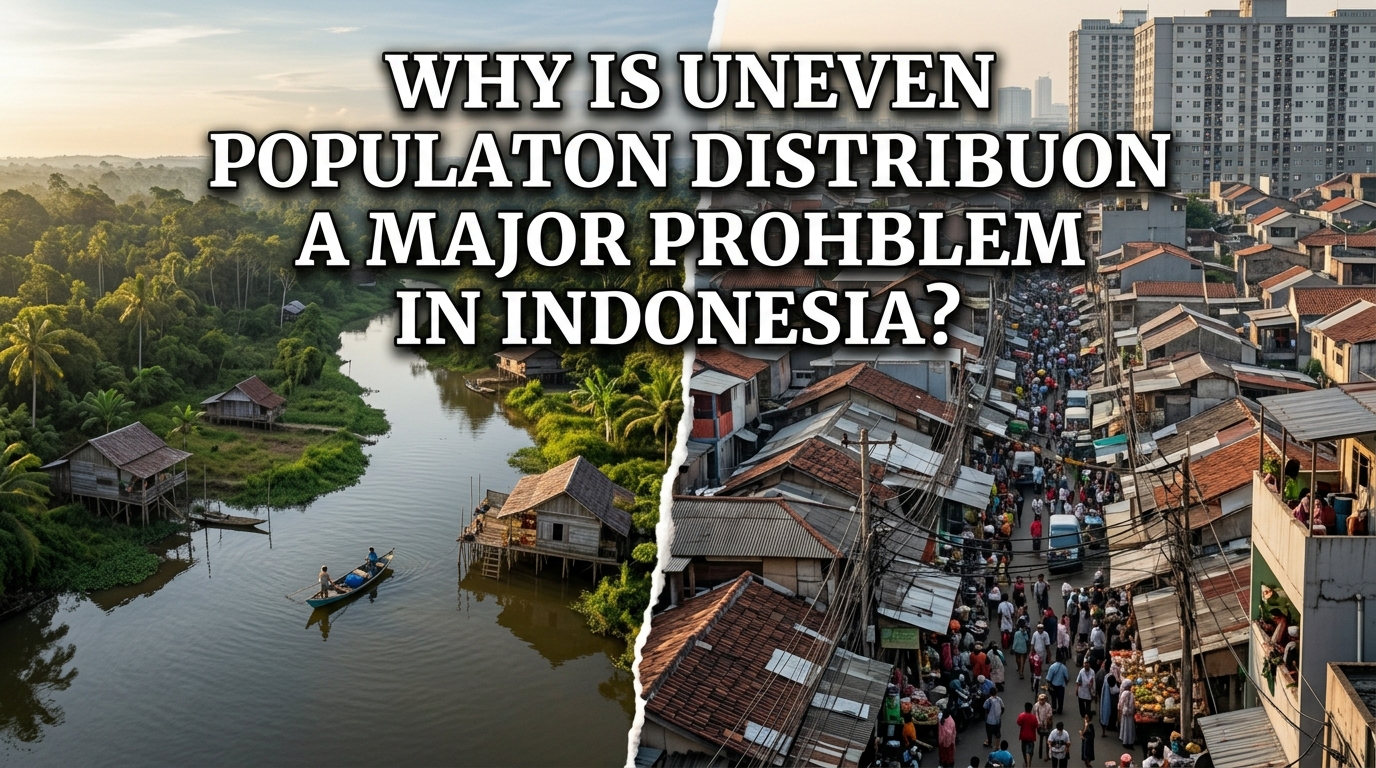
Indonesia is an archipelagic country with thousands of islands and a population spread across different geographical regions. However, its population is not distributed evenly. A large proportion of Indonesians live on Java, while many other regions, particularly in parts of eastern Indonesia, have much lower population concentrations. This imbalance creates challenges for economic development, infrastructure distribution, public services, and environmental sustainability.
Uneven population distribution becomes a major problem when certain regions experience excessive population concentration while other areas have limited human resources and economic activities. Highly populated cities may face housing shortages, traffic congestion, unemployment, and pressure on public facilities. Meanwhile, less populated regions may struggle to attract investment, develop infrastructure, and provide adequate services. Understanding this issue is essential for creating more balanced development and reducing regional inequality across Indonesia.
UNDERSTANDING UNEVEN POPULATION DISTRIBUTION IN INDONESIA
Uneven population distribution refers to a situation in which people are not spread equally across different geographical areas. Some regions have large populations within relatively small territories, while others have extensive land areas with fewer residents. In Indonesia, this condition is particularly visible between Java and several provinces outside Java. Differences in geographical conditions, economic opportunities, transportation, and access to public facilities influence where people choose to live.
Java has historically become the country's main center of government, industry, education, and economic activities. Major cities such as Jakarta, Bandung, Surabaya, and Semarang attract people seeking employment, education, and better living conditions. In contrast, some regions in Kalimantan, Maluku, and Papua have lower population densities because of geographical conditions, settlement patterns, and more limited access to certain economic and public services. This situation creates significant differences in population concentration and development across the country.
WHY IS POPULATION DISTRIBUTION UNEVEN IN INDONESIA?
One major reason for uneven population distribution is the unequal availability of economic opportunities. Regions with developed industries, commercial centers, and large labor markets generally attract more residents. Java offers a wide range of employment opportunities in manufacturing, trade, finance, tourism, and services. As a result, many people from other islands migrate to Java to pursue better economic prospects.
Another important factor is the difference in infrastructure and public facilities. Regions with better roads, transportation networks, schools, hospitals, and communication systems are generally more attractive places to live and work. Geographical conditions also influence settlement patterns because mountainous areas, dense forests, and remote islands can make infrastructure development more difficult. In addition, historical settlement patterns and government development policies have contributed to the concentration of population and economic activities in certain regions.
THE IMPACT OF OVERPOPULATION IN MAJOR CITIES
One of the most visible consequences of uneven population distribution is overpopulation in major urban areas. When large numbers of people move to cities, the demand for housing, transportation, clean water, and public services increases. If urban infrastructure cannot accommodate this growth, residents may experience traffic congestion, overcrowded public transportation, and housing shortages. These problems are especially challenging in metropolitan areas where residential and commercial activities are highly concentrated.
High population concentration can also increase pressure on employment opportunities and natural resources. More people competing for available jobs may lead to unemployment or informal employment, particularly among workers with limited qualifications. Rising demand for land and housing can also increase property prices and rental costs. Without effective urban planning, these conditions may reduce living standards and create environmental problems such as air pollution and poor waste management.
THE IMPACT ON LESS POPULATED REGIONS
While major cities experience excessive population concentration, less populated regions may face a different set of development challenges. A smaller population can limit the availability of workers, consumers, and skilled professionals needed to support local economic activities. Businesses may be less interested in investing in areas where markets are relatively small or transportation costs are high. This can slow industrial development and limit employment opportunities for local communities.
Limited population concentration can also make public service delivery more difficult and expensive. Residents in remote areas may need to travel long distances to reach hospitals, schools, government offices, and other essential facilities. Some communities also face difficulties accessing reliable internet, electricity, and transportation. Therefore, low population density does not automatically mean better living conditions, especially when infrastructure and public services remain inadequate.
REGIONAL ECONOMIC INEQUALITY AND DEVELOPMENT GAPS
Uneven population distribution can contribute to regional economic inequality because investment and economic activities tend to concentrate in areas with larger markets and better infrastructure. Regions with strong industrial and commercial sectors often experience faster economic growth. Meanwhile, less developed areas may struggle to attract businesses and create sufficient employment opportunities. Over time, these differences can widen income gaps and development disparities between provinces.
This imbalance can also affect the distribution of human resources. Highly populated regions may have a larger supply of workers, but competition for employment can become intense. In less populated areas, businesses and public institutions may struggle to find qualified professionals. Unequal access to education, healthcare, and economic opportunities can make these regional differences even more difficult to overcome. Balanced development is therefore necessary to ensure that people across Indonesia have fair opportunities to improve their living conditions.
THE EFFECTS ON PUBLIC FACILITIES AND INFRASTRUCTURE
Uneven population distribution creates different infrastructure demands across Indonesian regions. Highly populated cities need larger capacities for roads, public transportation, schools, hospitals, drainage systems, and water supplies. When facilities cannot keep up with population growth, overcrowding and service shortages may occur. Residents may experience longer waiting times at healthcare centers, crowded classrooms, and unreliable transportation services.
In less populated regions, the main challenge is often the limited availability and accessibility of infrastructure. Building roads, hospitals, schools, and electricity networks across remote islands or difficult geographical areas can require substantial investment. The low concentration of residents may also make some public facilities more expensive to operate. Fair infrastructure development is important to ensure that both densely and sparsely populated regions receive adequate public services.
ENVIRONMENTAL PROBLEMS CAUSED BY UNEVEN POPULATION DISTRIBUTION
High population concentration can increase environmental pressure in urban areas. More residents generate larger amounts of household waste, wastewater, and demand for clean water and electricity. If waste management and sanitation systems are inadequate, rivers, soil, and surrounding environments may become polluted. Excessive construction can also reduce green spaces and increase urban temperatures.
Meanwhile, efforts to develop less populated regions must consider environmental protection. Expanding settlements, industrial activities, and infrastructure projects can affect forests, biodiversity, and natural resources if they are not properly managed. In regions with sensitive ecosystems, uncontrolled development may cause deforestation and habitat destruction. Therefore, sustainable regional planning must balance population needs, economic development, and environmental conservation.
HOW CAN INDONESIA REDUCE UNEVEN POPULATION DISTRIBUTION?
Reducing uneven population distribution requires long-term development strategies that create more attractive living and working conditions outside major metropolitan areas. One important approach is equitable regional development. Governments can encourage investment in smaller cities and less developed provinces by improving transportation, electricity, telecommunications, and other essential infrastructure. These improvements can support local businesses and create more employment opportunities.
Another strategy is improving education, healthcare, and vocational training in regions outside Java. When residents have access to better education and professional development, they can contribute more effectively to local economic activities. Governments can also strengthen agriculture, fisheries, tourism, manufacturing, and other industries based on regional potential. Rather than simply moving people from one island to another, development policies should create opportunities that encourage people to remain and build sustainable livelihoods in their home regions.
THE ROLE OF TRANSMIGRATION AND REGIONAL DEVELOPMENT POLICIES
Transmigration has historically been one of Indonesia's government approaches to addressing population concentration. The program involved relocating people from densely populated areas to less populated regions to support settlement development and economic activities. However, population relocation alone cannot solve regional inequality. Successful implementation requires proper infrastructure, access to employment, environmental protection, and respect for local communities and customary rights.
Modern regional development policies need to focus on improving the economic potential of each area. Governments should support local industries, strengthen regional connectivity, and ensure that development benefits existing communities. Investment decisions must also consider land rights, cultural differences, and environmental conditions. Sustainable and inclusive development is more effective than relying solely on population relocation to address uneven population distribution.
CONCLUSION
Uneven population distribution is a major problem in Indonesia because it creates significant differences in economic opportunities, infrastructure, public services, and environmental conditions. While major cities experience population concentration, traffic congestion, housing shortages, and pressure on public facilities, less populated regions may face limited investment, inadequate infrastructure, and fewer employment opportunities. These conditions can contribute to regional inequality and slow down national development.
Addressing this challenge requires balanced regional development, improved infrastructure, stronger local economies, and equal access to essential services. Governments must create opportunities across different islands so that economic activities and population growth are not concentrated in only a few areas. With sustainable planning and inclusive development policies, Indonesia can reduce regional disparities and build a more balanced and prosperous society.
Recent Posts

Bagaimana Sistem SKS pada Program Kuliah... 22.11.2026/30 View

How Does Technology Make Daily Evaluation... 21.11.2026/66 View

Apa Strategi Menghadapi Kesenjangan antara Kompetensi... 21.11.2026/65 View

Mengapa Inventaris Aset Penting bagi Kelancaran... 21.11.2026/64 View

When Should Musicians Join a Record... 21.11.2026/64 View
