

Why Must Production Staff Understand Factory Workflows?
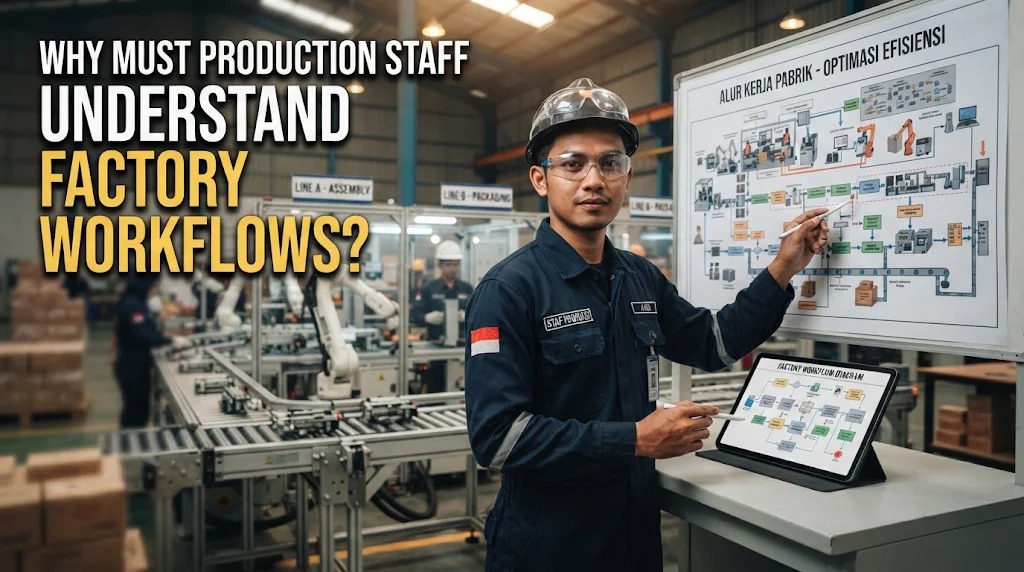
Understanding factory workflows is essential for production staff because it helps them perform their duties efficiently and maintain smooth manufacturing operations. A factory workflow describes the sequence of activities involved in producing goods, starting from raw material preparation to the final packaging and distribution stages. When employees understand how each process is connected, they can complete their responsibilities more effectively and avoid unnecessary mistakes. This knowledge also helps companies maintain product quality, meet production targets, and reduce operational costs.
UNDERSTANDING THE SEQUENCE OF PRODUCTION ACTIVITIES
Factory workflows consist of several connected stages that must be completed in the correct order. Production staff need to understand each stage so they know what tasks must be performed and when they should be completed. This knowledge helps employees avoid skipping important steps or performing activities incorrectly.
For example, manufacturing may involve preparing raw materials, operating machines, assembling components, inspecting products, and packaging finished goods. Each stage depends on the previous one to ensure that the final product meets company standards. Understanding this sequence allows production staff to work more systematically.
IMPROVING WORK EFFICIENCY
Knowledge of factory workflows helps production staff complete tasks more efficiently. When employees understand their responsibilities and the overall production sequence, they can organize their work without wasting unnecessary time. This also reduces confusion when moving from one manufacturing activity to another.
Efficient workflows help companies maintain a consistent production pace and achieve daily targets. Employees can prepare the necessary materials and equipment before starting their tasks. As a result, production activities become more organized and less likely to experience avoidable delays.
REDUCING PRODUCTION ERRORS
A lack of understanding about factory workflows can lead to mistakes during manufacturing. Employees may use incorrect materials, perform tasks in the wrong order, or overlook important inspection procedures. These errors can affect product quality and increase production costs.
By understanding the workflow, production staff can recognize the correct procedures and identify potential problems earlier. They can also follow work instructions more carefully and communicate with supervisors when something does not match the established process. This knowledge helps prevent repeated mistakes and supports consistent manufacturing results.
MAINTAINING PRODUCT QUALITY
Product quality depends on how well each stage of the manufacturing process is performed. Production staff who understand factory workflows can recognize which activities directly influence the final product. They become more aware of the importance of accurate measurements, proper machine operation, and careful product inspection.
Understanding the workflow also helps employees identify where defects may occur. For example, incorrect material preparation can affect the assembly stage and reduce the quality of finished goods. By following every stage correctly, production staff help companies maintain consistent product standards.
SUPPORTING TEAMWORK AND COMMUNICATION
Factory workflows usually involve several employees and departments working together. Production staff must understand how their responsibilities connect with the work of other teams. This knowledge makes it easier to coordinate activities and share important information.
For example, production employees may need to communicate with warehouse staff about material availability or coordinate with quality control teams during product inspections. Clear communication prevents misunderstandings and helps avoid interruptions. Good teamwork ensures that every department can complete its responsibilities effectively.
PREVENTING PRODUCTION DELAYS
Production delays can happen when materials, equipment, or employees are not ready at the required time. Understanding factory workflows helps production staff recognize the activities that must be completed before the next stage can begin. This allows them to prepare their work and identify possible obstacles earlier.
Employees can also report shortages, machine problems, or incomplete tasks before they affect the entire production schedule. Early communication gives supervisors more time to find solutions. As a result, companies can maintain smoother operations and complete orders according to deadlines.
IMPROVING WORKPLACE SAFETY
Factory workflows often involve machines, electrical equipment, chemicals, and materials that require careful handling. Production staff must understand the correct procedures for performing each activity safely. Knowing the workflow helps them recognize potential hazards and avoid actions that could cause accidents.
Employees should follow safety instructions, use appropriate personal protective equipment, and operate machines only according to their training. They must also understand when equipment should be stopped or when assistance from supervisors is needed. Proper workflow knowledge helps create a safer manufacturing environment.
SUPPORTING CONTINUOUS IMPROVEMENT
Understanding factory workflows allows production staff to recognize activities that may be inefficient or require improvement. Because they work directly with manufacturing processes, employees can often identify repeated problems, unnecessary movements, or delays. Sharing these observations can help supervisors evaluate existing procedures.
Companies can use employee feedback and production data to improve workflow arrangements. Changes may include reorganizing workstations, improving material handling, or adjusting production schedules. Continuous improvement helps businesses increase productivity while maintaining product quality.
CONCLUSION
Production staff must understand factory workflows because this knowledge helps improve efficiency, reduce errors, maintain product quality, and prevent production delays. It also supports teamwork, workplace safety, and continuous improvement. By understanding how each manufacturing stage is connected, employees can perform their responsibilities more effectively and contribute to the company's overall success.
Recent Posts

Mengapa Surat Lamaran Kerja yang Personal... 20.11.2026/37 View

Apa Saja Kesalahan Mahasiswa dalam Membangun... 20.11.2026/37 View

Bagaimana Cara Menunjukkan Kemampuan Diri agar... 20.11.2026/44 View

Apa Saja Kesalahan yang Harus Dihindari... 20.11.2026/42 View

Apa yang Dimaksud dengan Evaluasi Harian... 20.11.2026/44 View
