

Why Should a School Committee Respect the School's Internal Management?
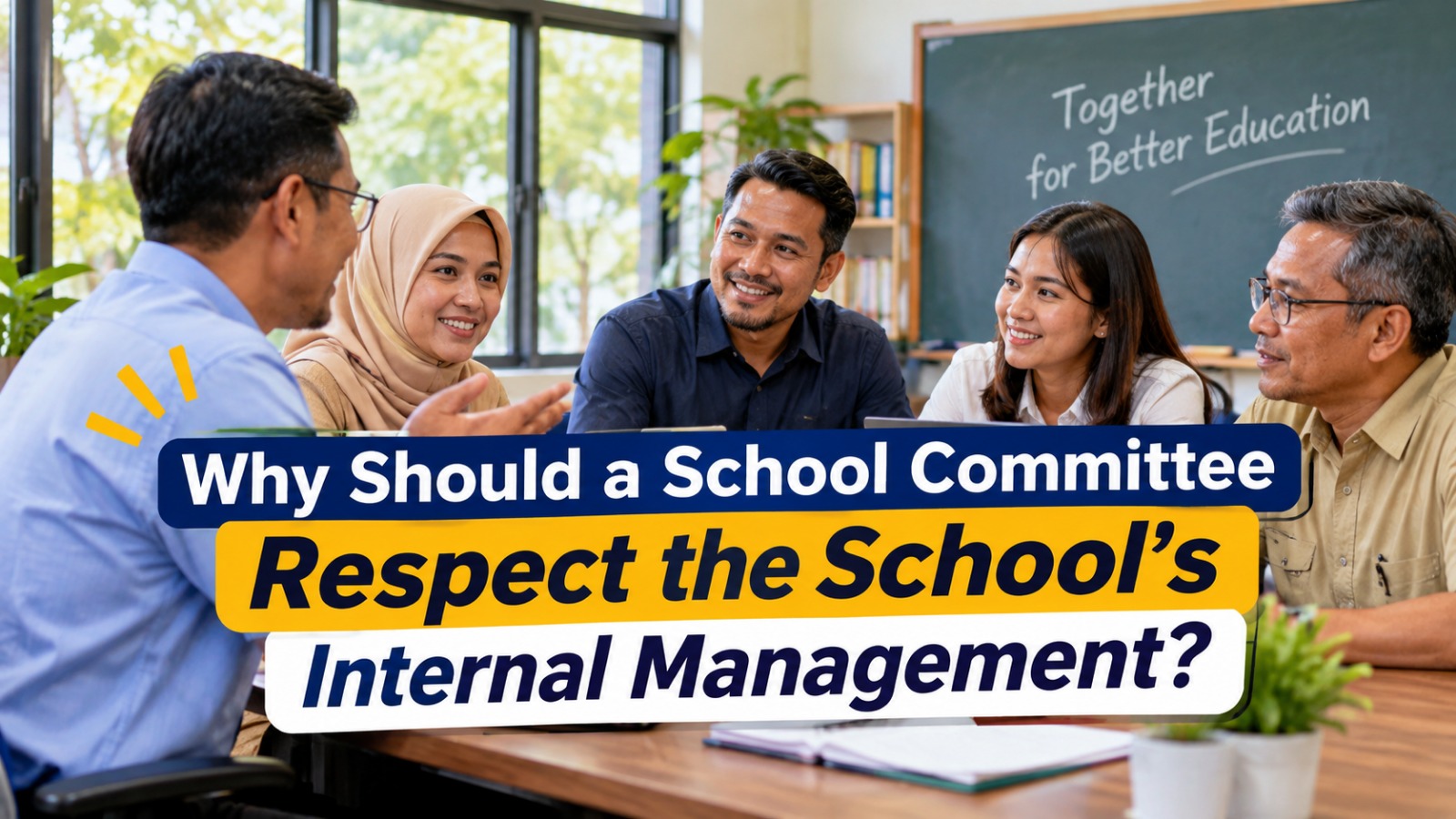
A school committee plays an important role in supporting educational development and building cooperation between schools, parents, and the community. However, its role must be carried out within clear boundaries. A school has its own internal management structure responsible for organizing daily activities, managing staff, implementing policies, and maintaining the learning environment. Respecting the school's internal management helps ensure that every party understands its responsibilities and works toward the same educational goals.
When a school committee respects the authority of school management, cooperation can become more effective and professional. The committee can provide suggestions, support programs, and communicate parents' concerns without interfering with daily operational decisions. This balance is important for maintaining trust, accountability, and a healthy relationship between the school and its community.
UNDERSTANDING THE ROLES AND RESPONSIBILITIES OF EACH PARTY
A school committee and school management have different responsibilities, even though they share the same goal of improving education. School management, led by the principal and supported by teachers and administrative staff, is responsible for managing the school's daily operations. These responsibilities include organizing learning activities, supervising staff, managing school programs, and maintaining educational standards. Meanwhile, the school committee generally serves as a partner that provides advice, support, and consideration. Understanding these different roles prevents misunderstandings and unnecessary conflicts.
When each party understands its responsibilities, decisions can be made more effectively. The committee can focus on representing community concerns and supporting school development, while school management handles operational matters according to applicable rules. This division of responsibilities also helps prevent overlapping authority. Clear boundaries allow both parties to contribute without disrupting each other's work.
PREVENTING CONFLICTS AND MISUNDERSTANDINGS
Respecting internal management helps prevent conflicts between school committees and school leaders. Problems can arise when committee members attempt to control decisions that belong to the principal or interfere with teachers' professional responsibilities. Such actions may create confusion, reduce trust, and disrupt school activities. Respect for authority and responsibilities helps maintain a professional relationship. It also allows disagreements to be handled through appropriate communication channels.
When differences of opinion occur, both parties should discuss them openly and respectfully. The committee can present suggestions based on parents' feedback, while school management can explain operational considerations and existing policies. Decisions should be discussed according to each party's authority and relevant regulations. This approach encourages problem-solving through cooperation rather than personal disagreement.
MAINTAINING EFFECTIVE SCHOOL OPERATIONS
School management needs sufficient authority to organize daily activities and respond to educational needs. Principals and teachers are responsible for making operational decisions based on school conditions, professional knowledge, and applicable education policies. If the committee frequently interferes with these responsibilities, school programs may become less efficient. It can also make staff uncertain about whose instructions they should follow. Respecting management authority helps schools maintain an organized working environment.
A school committee can still contribute without taking control of operational activities. For example, it can provide feedback about school facilities, encourage parent participation, and support educational programs. The committee can also help communicate community expectations to school leaders. By focusing on its proper role, it can strengthen school development while allowing staff to perform their duties effectively.
BUILDING TRUST AND PROFESSIONAL RELATIONSHIPS
Trust is an essential foundation for cooperation between school committees and school management. When committee members respect the school's internal structure, principals, teachers, and staff are more likely to feel supported. This creates a positive environment where different parties can exchange ideas without feeling threatened or controlled. Mutual respect also encourages transparency and open communication. As a result, discussions about school improvement can become more productive.
Professional relationships require every party to listen, communicate politely, and respect agreed procedures. The committee should avoid spreading unverified information or making decisions on behalf of school management without proper authority. Similarly, school leaders should take reasonable community feedback seriously and provide clear explanations when needed. Two-way trust allows the school and its community to work together more confidently.
SUPPORTING TRANSPARENT AND ACCOUNTABLE DECISION-MAKING
Respecting internal management does not mean that a school committee must remain silent about school decisions. The committee can encourage transparency and accountability by asking appropriate questions, providing constructive suggestions, and supporting responsible school governance. It can help ensure that parents and the community receive relevant information about school programs and the use of resources. However, these activities should follow applicable regulations and respect the responsibilities of school management. Oversight and support should not become unauthorized control.
Good decision-making requires clear information and responsible communication. School management should explain relevant plans and activities, while the committee should convey community feedback objectively. If concerns arise, they should be addressed through established procedures. This balance helps maintain public confidence while protecting the school's ability to operate effectively.
IMPROVING EDUCATIONAL QUALITY THROUGH COOPERATION
The main purpose of a school committee and school management is to support better educational outcomes. When both parties respect each other's roles, they can focus on important priorities such as learning quality, student development, teacher support, and school facilities. The committee can identify community needs, while school management can determine suitable actions based on professional considerations and available resources. Coordinated cooperation helps ensure that improvement programs are relevant and realistic.
For example, parents may report that students need better access to reading materials or learning facilities. The committee can communicate this concern and help explore possible community support. School management can then assess the school's needs and decide how to address them. Through this process, shared goals and clear responsibilities can turn community suggestions into useful improvements.
FOLLOWING EDUCATIONAL REGULATIONS AND SCHOOL POLICIES
School committees and internal management must carry out their responsibilities according to applicable laws, regulations, and school policies. These rules help define the authority, duties, and limitations of each party. In Indonesia, for example, school committees are generally expected to function as independent partners that provide consideration, support, oversight, and mediation in accordance with relevant regulations. Their role does not automatically give them authority to manage the school's daily operations. Compliance with educational regulations helps prevent misuse of authority.
Understanding the rules also protects the interests of students, parents, teachers, and the wider school community. Committee members should learn about their responsibilities before proposing or carrying out activities. School leaders should also communicate relevant procedures so cooperation can take place properly. When everyone follows established rules, the school can maintain responsible and professional governance.
CONCLUSION
A school committee should respect the school's internal management because each party has different responsibilities that support the same educational goals. Respecting these boundaries helps prevent conflicts, maintain effective operations, build trust, and encourage transparent decision-making. It also allows school leaders and teachers to carry out their professional duties while receiving constructive support from parents and the community.
Respect does not mean a lack of involvement or oversight. Instead, it means contributing through appropriate communication, responsible suggestions, and cooperation based on established rules. When school committees and internal management respect one another, they can create a more organized, accountable, and supportive environment for improving educational quality.
Recent Posts

Bagaimana Sistem SKS pada Program Kuliah... 22.11.2026/27 View

How Does Technology Make Daily Evaluation... 21.11.2026/65 View

Apa Strategi Menghadapi Kesenjangan antara Kompetensi... 21.11.2026/65 View

Mengapa Inventaris Aset Penting bagi Kelancaran... 21.11.2026/62 View

When Should Musicians Join a Record... 21.11.2026/63 View
