

Why Should Character Education Be Taught From An Early Age?
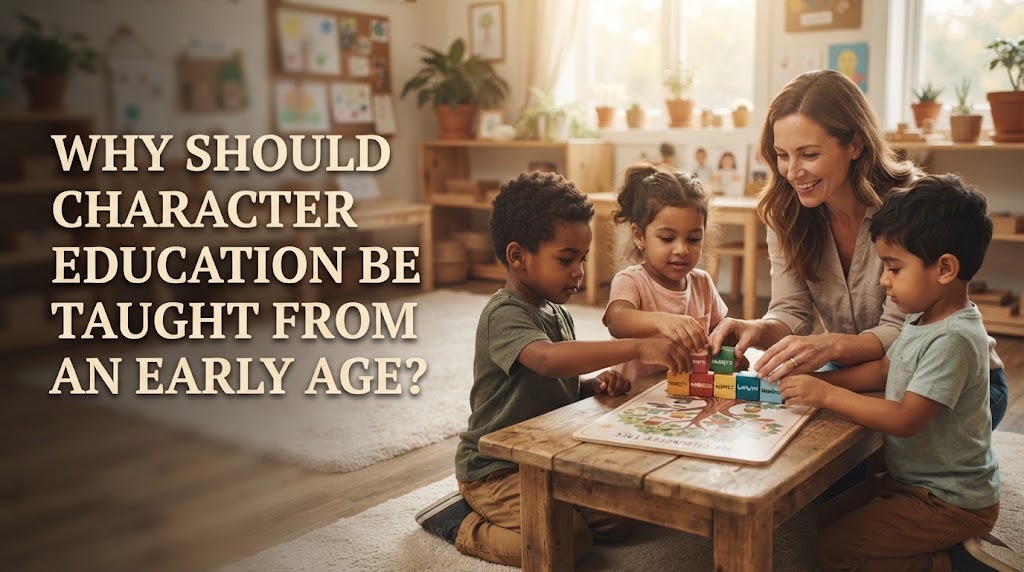
Character education is an important part of a child's development because early childhood is a period when many habits, attitudes, and social behaviors begin to form. Children learn not only from formal lessons but also from their parents, teachers, friends, and surroundings. Teaching values such as honesty, kindness, responsibility, respect, and discipline from an early age can help children understand how to behave appropriately. These values can become a foundation for their relationships and decisions as they grow. Therefore, character education should begin early and be practiced consistently in everyday life.
BUILDING GOOD HABITS FROM CHILDHOOD
One major reason to teach character education early is that children learn through repeated habits. Simple activities such as saying thank you, keeping promises, sharing, cleaning up toys, and waiting for their turn can introduce important values. When these behaviors are practiced regularly, children can gradually understand that positive actions are part of everyday life. Parents and teachers can guide children by giving clear examples and simple explanations. Repetition helps children remember and apply these values in different situations.
Early habits can influence behavior as children grow older. This does not mean that a child's character is permanently fixed in childhood, but early experiences provide an important foundation for later development. Children can continue improving their behavior as they gain new experiences and understand more complex situations. Consistent guidance can make positive habits easier to maintain. This is why character education should be introduced as part of normal daily activities rather than treated as a separate lesson only.
DEVELOPING RESPONSIBILITY AND INDEPENDENCE
Character education from an early age can teach children to become responsible for simple tasks. They can learn to organize their belongings, complete age-appropriate duties, and take care of shared spaces. These activities may seem small, but they help children understand that everyone has responsibilities. Parents and teachers can gradually increase responsibilities as children become more capable. This process can support the development of independence.
Children also need opportunities to solve simple problems by themselves. Adults can provide guidance without immediately doing everything for them. Allowing children to experience the results of their choices can help them understand responsibility in a practical way. When children make mistakes, adults can explain what happened and encourage them to find a better solution. This approach can help children become more confident and accountable.
TEACHING HONESTY AND INTEGRITY
Early character education can help children understand the importance of honesty and integrity. Children may sometimes hide mistakes because they are afraid of punishment or disappointing adults. Parents and teachers can create an environment where children feel safe telling the truth while still learning that actions have consequences. For example, when a child admits breaking something, adults can appreciate the honesty and then discuss how to handle the situation responsibly. This teaches children that telling the truth is valuable even when they have made a mistake.
Integrity also means trying to do what is right even when no one is watching. Children can practice this value through simple situations such as returning items they find or following rules when adults are not present. Consistent examples from adults are especially important because children often learn by observing behavior. When parents and teachers demonstrate honesty, children can see how the value works in real life. These experiences can help establish ethical habits that remain useful as children mature.
DEVELOPING EMPATHY AND RESPECT
Teaching character from an early age can help children understand empathy and respect. Young children are still developing their ability to recognize and respond to other people's emotions. Adults can help by asking questions such as how another person might feel in a particular situation. Stories, role-playing, and cooperative games can also help children see situations from different perspectives. These activities can gradually strengthen their ability to care about others.
Respect can be practiced through everyday interactions. Children can learn to listen when someone is speaking, use polite language, respect personal space, and accept differences. They can also learn that disagreeing with someone does not mean they should insult or hurt that person. These lessons can help children build healthier friendships and communicate more effectively. Over time, empathy and respect can become important parts of their social behavior.
IMPROVING EMOTIONAL CONTROL
Children experience many emotions, including happiness, anger, sadness, fear, and disappointment. Character education can help them learn how to recognize and manage their emotions appropriately. Adults can teach children to name their feelings and use healthy ways to express them. For example, children can learn to talk about a problem instead of hitting or shouting at someone. These skills can help them respond to difficult situations more calmly.
Emotional control does not mean that children should hide their feelings. Instead, they need to understand that all feelings are valid, but not every action is appropriate. Parents and teachers can model calm communication and help children practice simple strategies such as taking a short break or asking for help. With repeated guidance, children can gradually improve their self-control. This can support better relationships and learning experiences.
PREPARING CHILDREN FOR SOCIAL LIFE
Children interact with many people as they grow, including family members, teachers, classmates, and community members. Character education helps them develop social skills that support positive relationships. They can learn to cooperate, share responsibilities, communicate clearly, and solve disagreements peacefully. These skills are useful at school and in many other social situations. Early practice can make children more prepared to interact with different people.
Social development is also connected to understanding boundaries. Children need to know that they have rights and responsibilities when interacting with others. They can learn to respect other people's belongings, listen to different opinions, and ask for help when necessary. Healthy social habits can reduce conflicts and encourage cooperation. These skills can become increasingly important as children enter more complex social environments.
SUPPORTING FUTURE DECISION MAKING
Character education can give children a foundation for making responsible decisions later in life. Even young children can learn to think about whether an action is helpful or harmful. Adults can present simple situations and ask children what they think should happen next. This encourages them to consider consequences instead of acting without thinking. As children grow, these decision-making skills can become more complex.
Early lessons about values can also help children develop a clear understanding of right and wrong. They can learn that good decisions should consider both their own needs and the effects on others. Teachers and parents can encourage children to explain their choices rather than simply telling them whether an answer is correct. This builds reflection and critical thinking in an age-appropriate way. Such skills can support children when they face more difficult choices in adolescence and adulthood.
CREATING A STRONG FOUNDATION FOR THE FUTURE
Character education is not only about helping children behave well today. It also provides a foundation for future personal, academic, and social development. Children who practice responsibility, respect, honesty, and cooperation can carry these values into later stages of education. These qualities can also support their relationships and future participation in the community. Character development therefore has value beyond the classroom.
However, character education should be age-appropriate, consistent, and supported by positive examples. Children need guidance that matches their level of understanding rather than complicated moral explanations. Parents, teachers, and caregivers can work together to reinforce similar values in different environments. When children receive consistent messages and opportunities to practice positive behavior, learning becomes more meaningful. This creates a supportive environment for long-term character development.
CONCLUSION
Character education should be taught from an early age because childhood provides an important opportunity to develop positive habits, values, and social skills. Early education can help children learn responsibility, honesty, empathy, respect, emotional control, and independence through simple daily experiences. These values are not formed instantly, so children need consistent guidance and positive examples from the adults around them. Teaching character early can also prepare children to make responsible decisions and build healthy relationships as they grow. With supportive families, schools, and communities, children can develop strong character that becomes a valuable foundation for their future.
Recent Posts

Bagaimana Sistem SKS pada Program Kuliah... 22.11.2026/35 View

How Does Technology Make Daily Evaluation... 21.11.2026/69 View

Apa Strategi Menghadapi Kesenjangan antara Kompetensi... 21.11.2026/69 View

Mengapa Inventaris Aset Penting bagi Kelancaran... 21.11.2026/67 View

When Should Musicians Join a Record... 21.11.2026/68 View
