

Why Should Children Develop Reading Interest From An Early Age?
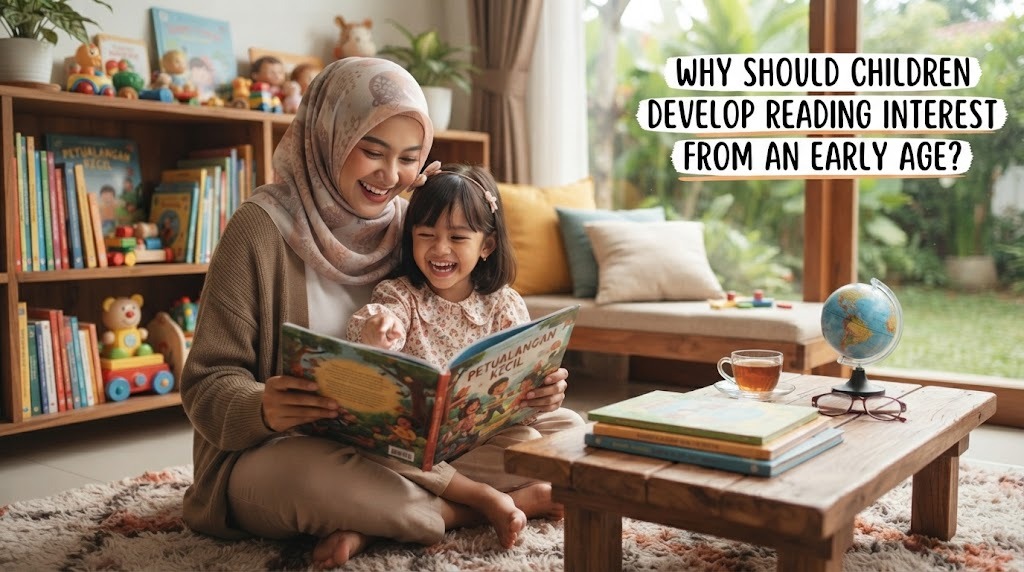
Reading interest is an important habit that can support children's learning and development. When children enjoy reading from an early age, they have more opportunities to discover new words, ideas, stories, and information. Reading can also become a positive activity that children choose to do without always being told by adults. Developing this interest early can make it easier for children to build consistent reading habits as they grow. Therefore, parents and educators have an important role in creating positive reading experiences for children.
WHAT IS READING INTEREST IN CHILDREN?
Reading interest refers to a child's willingness, curiosity, and enjoyment when interacting with reading materials. It can appear when children voluntarily look at picture books, listen to stories, explore simple texts, or ask questions about written words. Reading interest does not mean that children must already be able to read independently. Young children can develop an interest in books through storytelling, illustrations, and shared reading with adults. These early experiences can create a positive relationship between children and reading.
Every child develops reading interest differently. Some children may enjoy stories about animals, while others may prefer vehicles, nature, fantasy, or everyday experiences. Allowing children to explore different topics can help parents discover what types of materials attract their attention. When children enjoy the content, they are more likely to spend time with books and participate actively during reading activities. This can provide a strong starting point for developing long-term reading habits.
WHY IS EARLY READING INTEREST IMPORTANT?
Developing reading interest early can provide children with more opportunities to build language and literacy skills. Children who regularly hear stories and interact with books can become familiar with vocabulary, sentence patterns, and the basic structure of stories. They can also learn that written words communicate meaning. These experiences help prepare children for more formal reading instruction when they enter school. Early exposure therefore supports the gradual development of literacy.
Reading at an early age can also encourage curiosity and exploration. Children naturally ask questions about things they do not understand, and books can provide many opportunities to explore those questions. Stories and informational materials can introduce children to people, places, animals, cultures, and ideas that they may not encounter in their daily lives. This can help expand their understanding of the world. A child who becomes curious through reading may also become more motivated to learn independently.
HOW DOES READING SUPPORT LANGUAGE DEVELOPMENT?
Reading and storytelling provide children with repeated exposure to new vocabulary. Children may encounter words that are not commonly used in everyday conversations. When adults explain unfamiliar words and connect them with pictures or real experiences, children can understand and remember them more easily. Over time, a wider vocabulary can help children communicate their thoughts and needs more clearly. This makes reading a valuable activity for early language development.
Shared reading also encourages children to listen and respond. Parents can ask simple questions about a story, invite children to describe pictures, or ask what they think might happen next. Conversation during reading helps children practice speaking, listening, and expressing ideas. These skills are useful not only for reading but also for communication in school and daily life. Regular interaction with language can give children greater confidence in using new words.
HOW CAN READING IMPROVE CHILDREN'S THINKING SKILLS?
Books can introduce children to different situations, problems, and ideas. When children follow a story, they need to remember characters, events, and relationships between different parts of the text. This can provide practice for memory, attention, and understanding. Informational books can also encourage children to observe facts and ask questions about the world. Reading therefore offers many opportunities for children to develop their thinking skills in an enjoyable way.
Parents and teachers can make reading more active by encouraging children to predict, compare, and explain. For example, they can ask why a character made a particular decision or what might happen next. Simple questions can encourage children to think beyond the words on the page. These activities can gradually support reasoning and early problem-solving abilities. The goal is not to make reading difficult but to help children become active participants in the experience.
DOES READING HELP CHILDREN DEVELOP IMAGINATION?
Reading stories can stimulate children's imagination and creativity. Unlike videos, books often require children to create mental pictures of characters, places, and events. Children can imagine what a fictional world looks like based on the words and illustrations they encounter. This process allows them to explore ideas and situations beyond their everyday experiences. Creative thinking developed through stories can also support activities such as drawing, writing, playing, and storytelling.
Different types of books can provide different imaginative experiences. Fiction can introduce children to imaginary characters and adventures, while nonfiction can encourage them to imagine real places, animals, scientific processes, or historical events. Creative reading experiences can make books more memorable and enjoyable. When children are encouraged to discuss or recreate what they read, they can express their own ideas in creative ways. This can strengthen their connection with reading.
HOW DOES READING BUILD ACADEMIC READINESS?
Children who develop reading interest early can become more familiar with books, letters, words, and written language before formal schooling begins. Shared reading can help children understand how books are held, how pages are turned, and how stories progress from beginning to end. These early experiences are part of becoming familiar with literacy. They do not guarantee future academic success, but they can provide useful preparation for school. Children can enter formal learning with greater familiarity and comfort around reading materials.
Reading interest can also support children's motivation to learn. When children already associate books with enjoyable experiences, they may be more willing to participate in reading activities at school. Positive attitudes toward learning can be valuable when children encounter more challenging academic materials later. Parents should focus on encouraging curiosity rather than forcing children to read beyond their developmental level. A supportive approach can make the transition to formal education more comfortable.
HOW CAN PARENTS DEVELOP READING INTEREST?
Parents can encourage reading interest by making shared reading a regular and enjoyable activity. They can read stories aloud, discuss pictures, and allow children to choose books that attract their attention. Short reading sessions can be enough for young children, especially when their attention spans are limited. Parents should avoid turning every reading session into a test or demanding that children remember every detail. The main goal is to create positive associations with books and learning.
Parents can also provide books in places where children can easily reach them. Visiting a library or bookstore, exchanging books with other families, and exploring age-appropriate digital reading materials can provide variety. Praise for effort and curiosity can encourage children without making them feel pressured. Parents should also demonstrate positive reading habits because children often learn by observing adults. With patience and consistency, reading can become a natural part of family life.
HOW CAN SCHOOLS SUPPORT EARLY READING INTEREST?
Schools can strengthen children's reading interest by creating welcoming literacy environments. Classrooms can include age-appropriate books, reading corners, storytelling activities, and opportunities for children to talk about what they read. Teachers can introduce different genres and subjects so children can discover materials that match their interests. Reading activities should be appropriate for children's developmental levels and abilities. A positive classroom environment can help children view reading as an enjoyable part of learning.
Teachers can also combine reading with creative and interactive activities. Children might draw a favorite character, act out a story, answer simple questions, or create their own ending. Interactive reading activities can help children stay engaged and understand what they read or hear. Teachers can also work with parents to encourage consistent reading habits at home. When school and home provide similar positive support, children can receive more opportunities to develop their reading interest.
CONCLUSION
Developing reading interest from an early age can support children's language, thinking, imagination, and literacy development. Early reading experiences can introduce children to new vocabulary, encourage curiosity, and help them become familiar with books and written language. Parents and teachers can support this process by providing interesting materials, reading together, asking simple questions, and avoiding excessive pressure. The most important goal is to make reading feel enjoyable, meaningful, and accessible. When children develop a positive relationship with reading early, they have a stronger foundation for continued learning as they grow.
Recent Posts

Bagaimana Sistem SKS pada Program Kuliah... 22.11.2026/35 View

How Does Technology Make Daily Evaluation... 21.11.2026/69 View

Apa Strategi Menghadapi Kesenjangan antara Kompetensi... 21.11.2026/69 View

Mengapa Inventaris Aset Penting bagi Kelancaran... 21.11.2026/67 View

When Should Musicians Join a Record... 21.11.2026/68 View
