

Why Should Children Learn Standard Language Early?
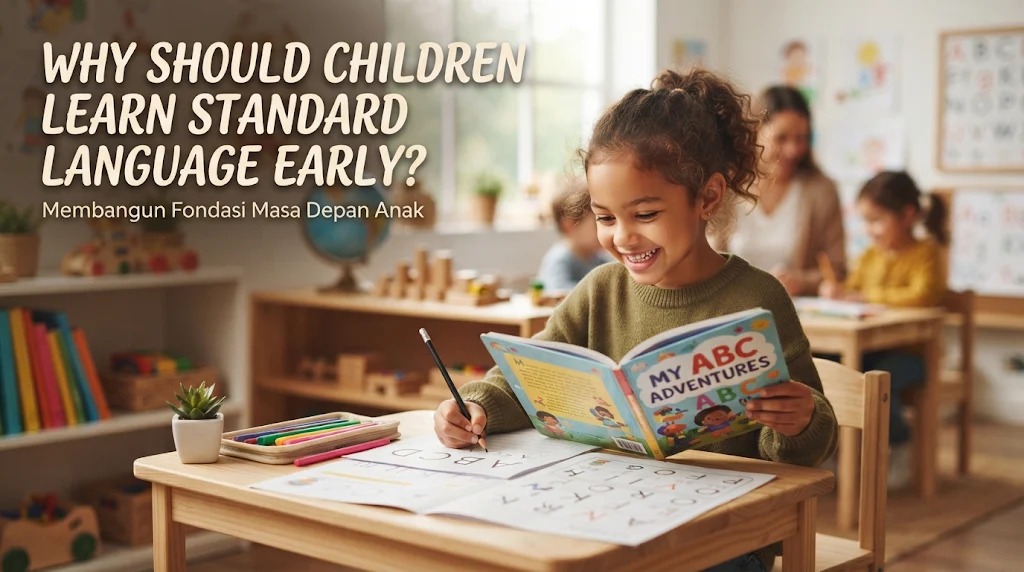
Language development begins during childhood, when children gradually learn to understand words, form sentences, and communicate with people around them. The language they learn influences how they express feelings, share ideas, and interact with their environment. Introducing standard language at an early age can help children develop communication skills that support their education and social development.
Standard language follows recognized conventions of vocabulary, grammar, spelling, and pronunciation. Teaching these conventions early gives children a foundation for communicating clearly in different situations. It also helps them become familiar with the language used in schools, educational materials, and formal environments while allowing them to maintain their everyday language and cultural identity.
BUILDS STRONG COMMUNICATION SKILLS
Learning standard language early helps children develop the ability to express their thoughts clearly. They become familiar with appropriate vocabulary and sentence structures that make their messages easier for others to understand.
These skills are useful when children ask questions, describe experiences, or explain their needs. With regular practice, they can become more confident when communicating with family members, teachers, and other people.
SUPPORTS EARLY LITERACY DEVELOPMENT
Standard language provides an important foundation for learning to read and write. Children who become familiar with correct word forms, spelling, and sentence structures may find it easier to understand written materials and create their own sentences.
Reading stories, practicing writing, and learning new vocabulary can strengthen these abilities. Early exposure to standard language also prepares children for more complex literacy activities as they progress through school.
PREPARES CHILDREN FOR SCHOOL
Schools use standard language in textbooks, classroom instructions, examinations, and many learning activities. Children who are familiar with its basic conventions may find it easier to understand lessons and follow directions.
They can also participate more confidently in discussions, answer questions, and complete assignments. This familiarity helps create a smoother transition into formal learning environments.
EXPANDS VOCABULARY KNOWLEDGE
Learning standard language introduces children to a wider range of words and expressions. They can discover vocabulary used to describe objects, emotions, activities, and different academic subjects.
A broader vocabulary allows children to explain ideas more precisely and understand information from various sources. Parents and teachers can support this development through storytelling, reading activities, conversations, and simple language games.
ENCOURAGES CONFIDENCE IN SPEAKING
Children who regularly practice standard language have more opportunities to become comfortable expressing themselves in different situations. They can learn how to introduce themselves, share opinions, and speak during classroom activities.
Positive encouragement is important during this process. Parents and teachers should correct mistakes gently and allow children to practice without feeling embarrassed. This supportive approach can help them develop confidence and a positive attitude toward learning.
IMPROVES SOCIAL INTERACTION
Standard language can help children communicate with people from different backgrounds. They may encounter classmates, teachers, or community members who use different regional expressions and communication habits.
Having a shared language reference makes it easier for children to understand one another. At the same time, learning standard language should not discourage them from using regional languages or appreciating cultural differences.
DEVELOPS LANGUAGE AWARENESS
Early language learning helps children recognize that different situations may require different communication styles. They can gradually understand why certain expressions are suitable for formal activities while others are more appropriate for casual conversations.
This awareness encourages children to think about their audience and communication purpose. As they grow older, they can become more flexible in choosing words and adjusting their language to different environments.
SUPPORTS FUTURE ACADEMIC DEVELOPMENT
As children advance through school, they encounter increasingly complex reading materials, written assignments, and academic discussions. A strong foundation in standard language can help them understand these materials and communicate their knowledge effectively.
They may also find it easier to prepare reports, write essays, and deliver presentations. These abilities provide useful support for future educational opportunities.
STRENGTHENS FAMILY AND SCHOOL COLLABORATION
Parents and teachers both play important roles in children's language development. When children receive consistent guidance at home and school, they have more opportunities to practice appropriate vocabulary and sentence structures.
Families can encourage language development through everyday conversations and reading activities. Meanwhile, teachers can provide structured exercises, storytelling sessions, and classroom discussions. Cooperation between both environments helps children develop language skills through meaningful experiences.
CONCLUSION
Children should learn standard language early because it builds communication skills, supports literacy development, expands vocabulary, and prepares them for formal education. Early exposure also encourages confidence, improves social interaction, and develops awareness of different communication situations. With guidance from parents and teachers, children can master standard language while continuing to appreciate informal expressions and regional languages as important parts of everyday communication.
Recent Posts

How Does Technology Make Daily Evaluation... 21.11.2026/62 View

Apa Strategi Menghadapi Kesenjangan antara Kompetensi... 21.11.2026/63 View

Mengapa Inventaris Aset Penting bagi Kelancaran... 21.11.2026/59 View

When Should Musicians Join a Record... 21.11.2026/58 View

Daily Evaluation or Daily Planning Which... 21.11.2026/66 View
