

Why Should Folktales Be Preserved as Cultural Heritage?
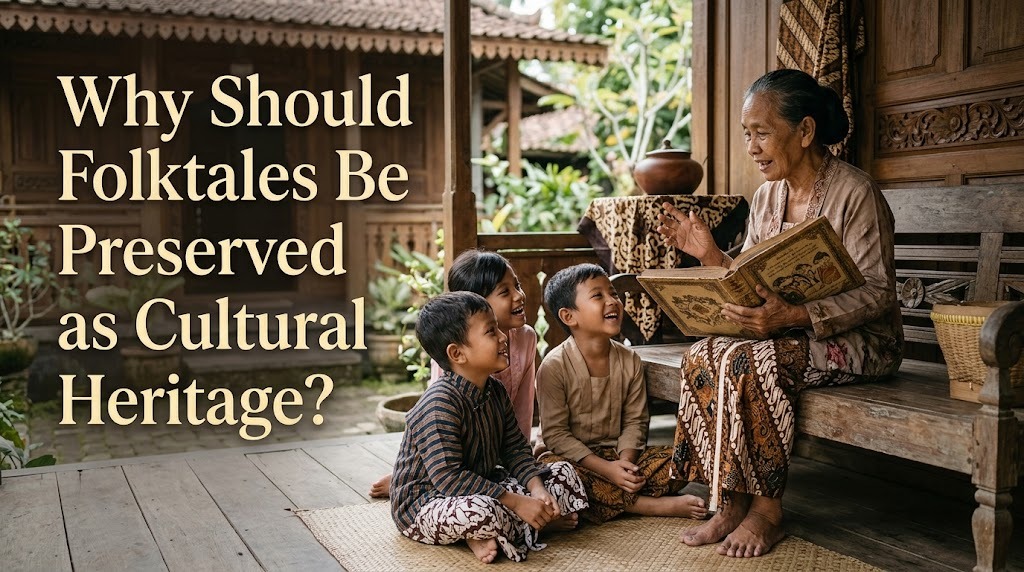
Folktales are an important part of cultural heritage because they carry the history, beliefs, values, and traditions of a community. Passed down from one generation to another, these stories often feature local heroes, mythical creatures, moral lessons, and explanations of natural events. In Indonesia, many regions have folktales that reflect local customs and cultural identity. Preserving these stories helps communities maintain their connection to the past while introducing younger generations to their heritage. Folktales are not only a form of entertainment but also a valuable source of cultural knowledge.
PRESERVING CULTURAL IDENTITY
Folktales help preserve the unique identity of a community by reflecting its traditions, beliefs, and way of life. Stories often describe local environments, traditional occupations, family relationships, and community values. These details help people understand how earlier generations viewed the world around them. For example, Indonesian folktales such as Malin Kundang, Sangkuriang, and Timun Mas reflect different regional storytelling traditions. Preserving these stories allows communities to maintain a connection with their cultural roots.
Cultural identity can become less visible when traditional practices receive less attention in modern society. Folktales offer a way to keep regional knowledge accessible even when daily lifestyles change. Families, schools, libraries, and cultural organizations can introduce these stories through reading sessions, performances, and educational activities. When people learn about folktales from their own regions, they may develop greater appreciation for their heritage. This appreciation can encourage them to protect other cultural traditions as well.
TEACHING MORAL VALUES AND LIFE LESSONS
Many folktales contain moral lessons about honesty, kindness, courage, responsibility, humility, and respect for others. Characters often experience the consequences of their choices, helping listeners understand the difference between helpful and harmful behavior. These lessons can be discussed by parents and teachers to encourage thoughtful conversations with children. For example, the story of Malin Kundang is commonly interpreted as a warning against disrespecting one's parents. Such stories can make abstract values easier to understand through memorable characters and events.
However, folktales may have different interpretations depending on the community and the context in which they are told. Their lessons should therefore be discussed thoughtfully rather than treated as universal rules for every situation. Adults can help children examine characters' decisions and consider how the stories relate to modern life. This approach allows traditional stories to remain educational while encouraging critical thinking. Preserving folktales also protects the ways communities have historically shared their ideas about right and wrong.
PASSING TRADITIONS TO YOUNGER GENERATIONS
Folktales are often passed down orally, with parents, grandparents, and community elders telling stories to younger family members. This process creates opportunities for people of different generations to spend time together and share cultural knowledge. Children can learn regional expressions, traditional names, local customs, and stories connected to particular places. Listening to experienced storytellers also helps them understand how stories are performed and remembered. These experiences make cultural learning more personal and meaningful.
When oral storytelling becomes less common, some stories may gradually disappear from community life. Recording folktales in books, audio recordings, videos, or digital archives can help protect them from being forgotten. However, written and digital records should complement the living tradition of storytelling rather than replace it entirely. Communities can organize storytelling events at schools, libraries, and cultural festivals to encourage participation. In this way, younger generations can continue learning, retelling, and adapting folktales while respecting their origins.
PROTECTING REGIONAL LANGUAGES AND ORAL TRADITIONS
Folktales often contain regional languages, expressions, idioms, and storytelling styles that may be difficult to translate fully. These linguistic features reveal how people communicate ideas and describe their surroundings. Preserving folktales in their original languages can help maintain valuable vocabulary and cultural expressions. It can also encourage younger speakers to learn or practice languages used by their families and communities. This is especially important for languages that have fewer speakers or limited written documentation.
Translations can introduce folktales to wider audiences, but the original versions should also be documented whenever possible. Some words, cultural references, and symbolic meanings may not have exact equivalents in another language. Working with local storytellers and language experts can help ensure that translations remain accurate and respectful. Community-led documentation can preserve variations of the same story without assuming that only one version is correct. Protecting folktales therefore contributes to the preservation of both language and cultural diversity.
SUPPORTING EDUCATION AND CREATIVITY
Folktales can support learning by introducing students to literature, history, language, and cultural studies. Teachers can use these stories to develop reading comprehension, vocabulary, listening skills, and creative writing. Students may compare stories from different regions to identify similarities and differences in their themes, characters, and cultural settings. These activities help them recognize how stories reflect the experiences and beliefs of different communities. Folktales can therefore make cultural education more engaging and accessible.
Traditional stories can also inspire contemporary creative works, including films, theater, illustrations, animation, and novels. Artists may reinterpret familiar characters or settings for modern audiences while retaining important cultural elements. Such adaptations can help folktales reach young people who primarily engage with digital media. Creators should acknowledge the cultural origins of the stories and consult relevant communities when appropriate. Responsible adaptation allows folktales to inspire new ideas without losing sight of their heritage.
STRENGTHENING COMMUNITY CONNECTIONS
Folktales can bring communities together because they provide shared stories that people recognize and remember. Storytelling gatherings allow elders, children, artists, and educators to exchange knowledge and experiences. These activities can strengthen relationships between generations and encourage people to participate in cultural life. They also create opportunities for communities to celebrate their regional identity. In this way, folktales can become a shared resource that connects people through a common cultural history.
Community participation is especially important because folktales may have different versions across families, villages, and regions. Rather than removing these differences, preservation projects can document them as part of a living tradition. Local storytellers should have opportunities to explain the meanings and contexts of their stories. Cultural centers, schools, and local governments can support these efforts through workshops, publications, and public performances. When communities take an active role, preservation is more likely to reflect their experiences and priorities.
CONCLUSION
Folktales should be preserved as cultural heritage because they protect cultural identity, teach moral lessons, support regional languages, and connect younger generations with the past. They also provide valuable educational resources and inspire new forms of creative expression. As oral storytelling practices change, communities can combine traditional methods with books, recordings, and digital archives to keep these stories accessible. Preservation should respect the people, languages, and cultural contexts from which the stories originate. By protecting folktales, society can ensure that future generations continue to learn from and appreciate the stories that shape cultural heritage.
Recent Posts

Bagaimana Sistem SKS pada Program Kuliah... 22.11.2026/49 View

How Does Technology Make Daily Evaluation... 21.11.2026/77 View

Apa Strategi Menghadapi Kesenjangan antara Kompetensi... 21.11.2026/78 View

Mengapa Inventaris Aset Penting bagi Kelancaran... 21.11.2026/74 View

When Should Musicians Join a Record... 21.11.2026/79 View
