

Why Should Radio Announcers Master Public Speaking Skills?
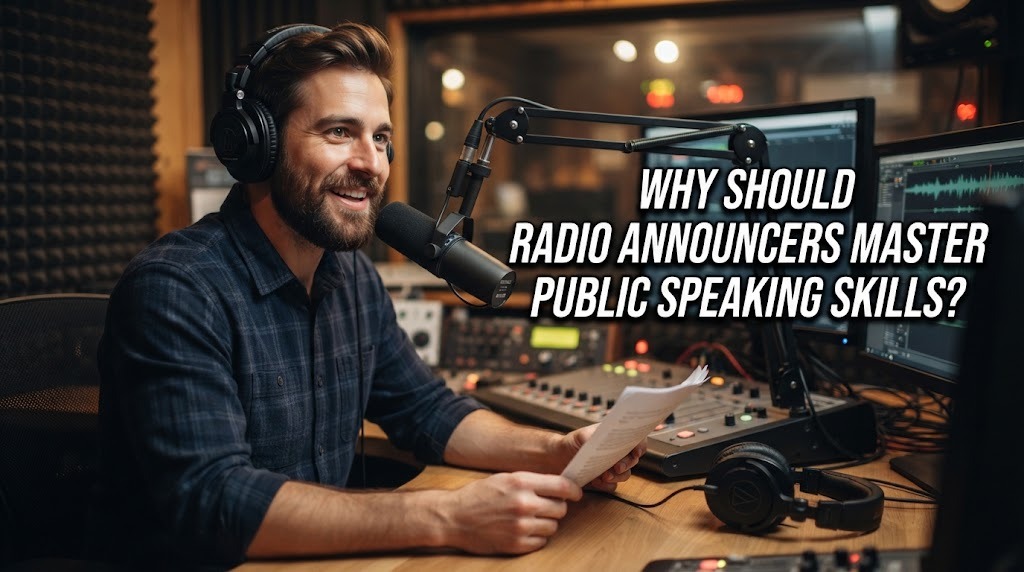
Public speaking is one of the most important skills for a radio announcer because speaking is the main way they communicate with listeners. Although radio does not provide visual communication, an announcer must still deliver information in a clear, confident, and engaging way. Listeners depend on the announcer’s voice to understand news, entertainment, advertisements, interviews, and other program content. Strong public speaking skills help an announcer make every message easier to understand and more enjoyable to hear. For this reason, mastering public speaking can support both the quality of a broadcast and the professional development of a radio announcer.
HELPING ANNOUNCERS SPEAK CLEARLY
A radio announcer needs clear speech so listeners can understand every message without unnecessary confusion. Good public speaking skills help announcers improve pronunciation, articulation, vocabulary, and sentence delivery. Clear pronunciation becomes especially important when mentioning names, locations, numbers, or other specific information. An announcer should also avoid speaking in a way that is too fast or difficult to follow.
Clear communication does not mean speaking in a rigid or overly formal manner. A professional announcer should sound natural while maintaining appropriate language for the program and its audience. This balance allows information to remain understandable while making the broadcast feel comfortable and conversational.
BUILDING CONFIDENCE IN FRONT OF THE MICROPHONE
Confidence is essential when speaking on radio because listeners can often recognize uncertainty through a person’s voice. Public speaking practice can help announcers become more comfortable expressing ideas and handling different broadcasting situations. A confident voice can make introductions, discussions, interviews, and announcements sound more professional. It can also help an announcer remain calm when something unexpected happens during a live program.
Confidence develops through preparation and repeated practice rather than simply speaking loudly. Announcers can practice reading scripts, recording their voices, and speaking spontaneously about familiar topics. Over time, these activities can improve fluency and reduce hesitation while speaking.
KEEPING LISTENERS INTERESTED
Radio announcers compete for listeners’ attention, so their delivery needs to be engaging. Public speaking skills help announcers vary their tone, rhythm, volume, and pauses according to the content. A lively tone can support entertainment segments, while a calmer delivery may be more suitable for serious information. Using vocal variation can prevent a program from sounding monotonous.
An engaging announcer also understands how to communicate with the audience rather than simply reading a script. Conversational expressions and appropriate humor can make listeners feel more involved. However, the style should remain suitable for the station, program, topic, and target audience.
IMPROVING VOICE CONTROL
Voice control is an important part of effective public speaking for radio professionals. An announcer needs to manage breathing, volume, pitch, speaking speed, and pauses while using the microphone. Proper control can make the voice easier to understand and help create the desired atmosphere. It can also reduce the risk of sounding rushed, flat, or difficult to follow.
Pauses are particularly useful because they give listeners time to process information. Strategic pauses can also emphasize important statements and create smoother transitions between topics. With regular vocal exercises, announcers can gradually become more comfortable controlling their voices during live broadcasts.
SUPPORTING LIVE BROADCASTING
Live radio requires announcers to think and speak at the same time. They may need to introduce a song, respond to a listener, interview a guest, or explain an unexpected change in the program. Strong public speaking skills help them organize their thoughts quickly and communicate without excessive hesitation. This ability is valuable because live broadcasting does not always allow time for extensive preparation.
Good public speaking also helps announcers recover from mistakes. If they mispronounce a word or lose their train of thought, they need to remain calm and continue the program naturally. Professional recovery can prevent a small mistake from becoming a major disruption.
MAKING INTERVIEWS MORE EFFECTIVE
Radio announcers frequently interview guests, making public speaking and listening skills highly valuable. A good interviewer needs to ask questions clearly, listen carefully to the answers, and respond appropriately. Public speaking skills help the announcer maintain a natural conversational flow instead of simply reading questions one after another. This can make interviews more informative and enjoyable for listeners.
The announcer should also know how to ask follow-up questions when a guest provides an interesting answer. Good follow-up questions demonstrate active listening and can reveal useful information that was not included in the original question. This approach helps create a more authentic conversation.
STRENGTHENING PROFESSIONAL CREDIBILITY
The way an announcer speaks can influence how listeners perceive the credibility of a radio program. Organized speech, accurate pronunciation, appropriate vocabulary, and confident delivery can create a professional impression. This is especially important when discussing news, public information, educational topics, or other subjects that require clarity and responsibility.
Professional public speaking also involves understanding the impact of words. Announcers should avoid unclear statements, unnecessary exaggeration, and language that could mislead listeners. Combining effective delivery with accurate information helps maintain audience trust.
DEVELOPING PUBLIC SPEAKING SKILLS
Radio announcers can improve public speaking through consistent and structured practice. Reading articles or scripts aloud can strengthen pronunciation and fluency, while recording practice sessions allows announcers to evaluate their own delivery. They can also practice speaking without a script to improve their ability to organize ideas spontaneously. Listening to experienced broadcasters can provide useful examples of pacing, tone, transitions, and audience interaction.
Feedback is another important part of improvement. Trainers, colleagues, or experienced broadcasters can identify problems that an announcer may not notice independently. By applying feedback and practicing regularly, an announcer can gradually develop a more natural and professional broadcasting style.
CONCLUSION
Radio announcers should master public speaking skills because their voice is the primary tool for communicating with listeners. Strong public speaking improves clarity, confidence, voice control, audience engagement, interviewing, and live broadcasting abilities. It also helps announcers respond to unexpected situations while maintaining a professional and natural delivery. These skills can be developed through regular practice, recording exercises, active listening, and constructive feedback. Ultimately, effective public speaking helps radio announcers deliver broadcasts that are clear, engaging, informative, and trusted by their audiences.
Recent Posts

Bagaimana Sistem SKS pada Program Kuliah... 22.11.2026/35 View

How Does Technology Make Daily Evaluation... 21.11.2026/69 View

Apa Strategi Menghadapi Kesenjangan antara Kompetensi... 21.11.2026/69 View

Mengapa Inventaris Aset Penting bagi Kelancaran... 21.11.2026/67 View

When Should Musicians Join a Record... 21.11.2026/68 View
