

Why Should Reading Habits Be Introduced to Children Through Early Literacy Movements?
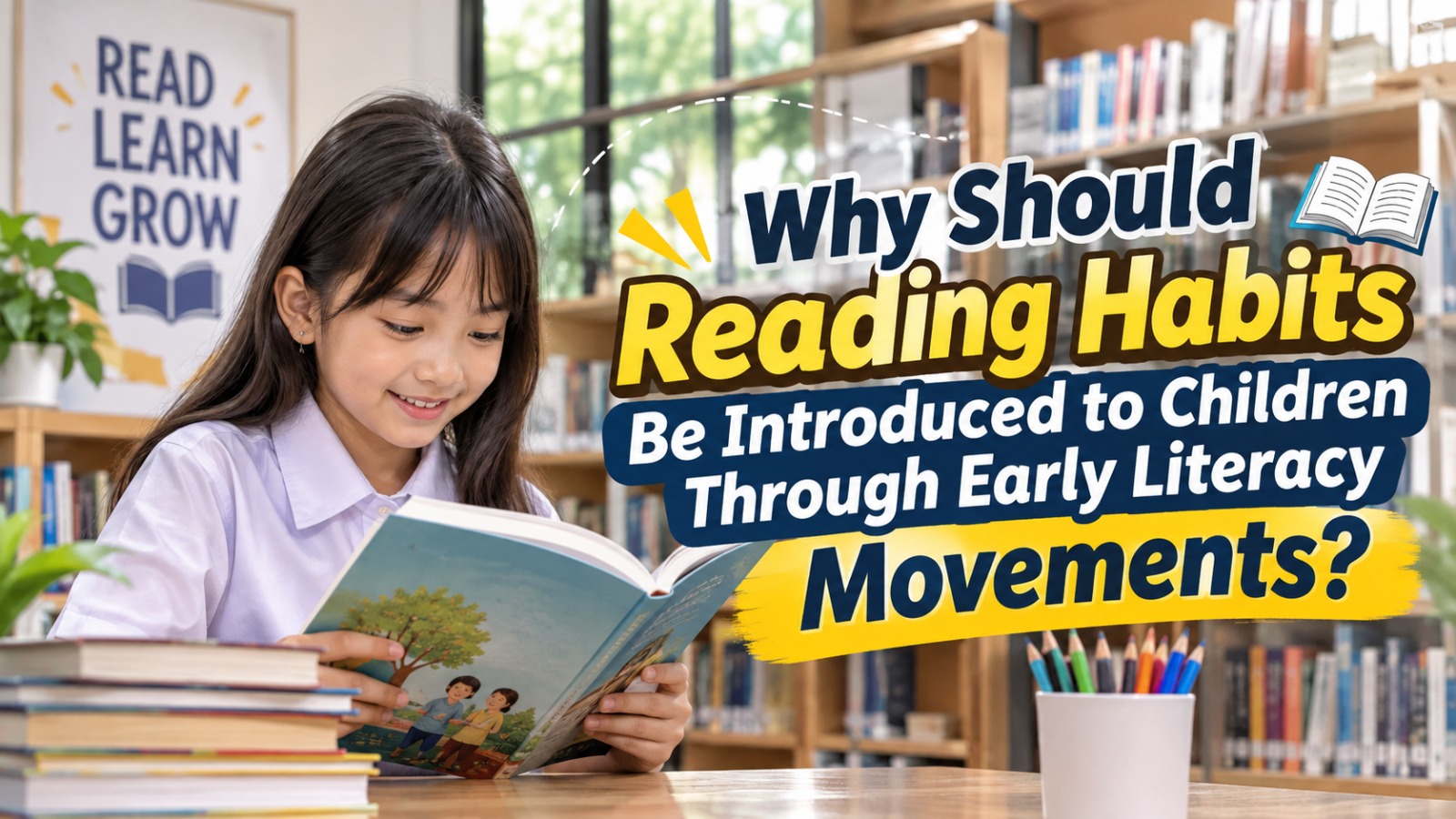
Reading habits play an important role in children's intellectual, emotional, and educational development. Introducing reading activities at an early age helps children become familiar with books, language, and different sources of knowledge. However, many children today spend more time using digital devices for entertainment than exploring educational materials. This situation makes early literacy movements increasingly important for encouraging positive reading habits. Through support from parents, teachers, and communities, children can develop a strong interest in reading that benefits their future learning experiences.
THE IMPORTANCE OF EARLY LITERACY FOR CHILD DEVELOPMENT
Early literacy refers to the development of basic reading, writing, listening, and language skills before children enter formal education. These abilities help children recognize words, understand simple stories, and communicate their thoughts more effectively. Introducing books and reading activities at an early age allows children to become familiar with language naturally. It also helps them develop curiosity about the world around them.
Early literacy is important because childhood is a valuable period for developing fundamental learning abilities. Children who are regularly introduced to reading materials have more opportunities to expand their vocabulary and improve language comprehension. Reading also introduces them to different experiences, cultures, and ideas through stories and educational information. These experiences can support their intellectual development and prepare them for future academic activities.
IMPROVING LANGUAGE SKILLS AND VOCABULARY
Reading regularly helps children learn new words and understand how language is used in different situations. When parents read stories aloud, children can hear correct pronunciation, sentence structures, and expressions. They gradually become familiar with new vocabulary and learn how to use words when communicating. This process can improve their speaking, listening, and early writing abilities.
Furthermore, reading activities encourage children to ask questions and express their understanding of stories. Parents and teachers can discuss characters, events, and interesting information to help children practice communication. For example, asking children to explain what happened in a story encourages them to organize their thoughts. Over time, these activities can strengthen their confidence and ability to communicate with others.
DEVELOPING IMAGINATION AND CRITICAL THINKING
Books introduce children to different situations, characters, and environments that may be unfamiliar to them. Through stories, children can imagine places, explore new experiences, and understand different perspectives. These activities stimulate creativity and encourage them to think beyond their immediate surroundings. Reading also provides opportunities for children to develop curiosity and discover new interests.
In addition, discussing reading materials can introduce children to basic critical thinking skills. Parents and teachers can ask questions about why characters make certain decisions or how a problem could be solved differently. Children can learn to compare information, identify causes and effects, and express personal opinions. Although these abilities develop gradually, early reading experiences can provide a strong foundation for independent thinking.
BUILDING POSITIVE READING HABITS THROUGH FAMILY SUPPORT
Families have a significant influence on children's interest in reading. Parents can introduce reading activities by providing attractive picture books, telling bedtime stories, and reading together regularly. These simple activities make reading feel like an enjoyable part of everyday family life. Children may also become more interested in books when they see their parents enjoying reading.
Creating a comfortable reading environment at home can further encourage children to develop consistent habits. Parents can prepare a small reading corner, provide age-appropriate books, and allow children to choose stories that interest them. It is also important to avoid forcing children to read for excessively long periods because this may make reading feel like a punishment. Instead, positive encouragement and regular interaction can help children develop a genuine interest in books.
THE ROLE OF SCHOOLS AND COMMUNITIES IN EARLY LITERACY MOVEMENTS
Schools play an important role in strengthening the reading habits introduced at home. Teachers can organize storytelling sessions, classroom reading activities, book-sharing programs, and visits to libraries. These activities help children explore different reading materials while interacting with their classmates. Schools should also provide books that match children's ages, interests, and reading abilities.
Communities can support early literacy through public libraries, children's reading corners, and volunteer-led storytelling activities. Local organizations can organize book donations and reading events to provide more children with access to educational materials. Parents, teachers, librarians, and community volunteers can work together to create supportive learning environments. Through this cooperation, early literacy movements can reach children from different backgrounds and provide more equal opportunities to develop reading skills.
OVERCOMING CHALLENGES IN INTRODUCING READING HABITS
Introducing reading habits to children is not always easy because every child has different interests and learning abilities. Some children may find books less attractive than television, online games, or social media content. Limited access to age-appropriate books and a lack of parental involvement can also affect their reading development. Therefore, literacy activities need to be adapted to children's individual needs.
One effective strategy is to combine traditional reading materials with appropriate digital resources. Parents and teachers can introduce interactive electronic books, educational storytelling videos, and digital reading applications. However, digital activities should be supervised to ensure that children use technology safely and focus on educational content. By providing interesting materials, consistent guidance, and positive encouragement, adults can help children overcome difficulties and develop long-lasting reading habits.
CONCLUSION
Introducing reading habits through early literacy movements is essential for supporting children's intellectual, language, and emotional development. Reading activities help children expand their vocabulary, improve communication skills, develop imagination, and build the foundations of critical thinking. These benefits can support their academic progress and prepare them to become independent learners.
The success of early literacy movements requires cooperation between families, schools, and communities. Parents should introduce enjoyable reading activities at home, while schools and communities need to provide accessible books and supportive learning environments. With consistent guidance and suitable reading materials, children can develop a positive relationship with books from an early age. Ultimately, early literacy movements can help build a generation that is knowledgeable, creative, confident, and eager to learn throughout life.
Recent Posts

Bagaimana Sistem SKS pada Program Kuliah... 22.11.2026/28 View

How Does Technology Make Daily Evaluation... 21.11.2026/65 View

Apa Strategi Menghadapi Kesenjangan antara Kompetensi... 21.11.2026/65 View

Mengapa Inventaris Aset Penting bagi Kelancaran... 21.11.2026/62 View

When Should Musicians Join a Record... 21.11.2026/63 View
