

Why Should State Budget Preparation Reflect Public Needs?
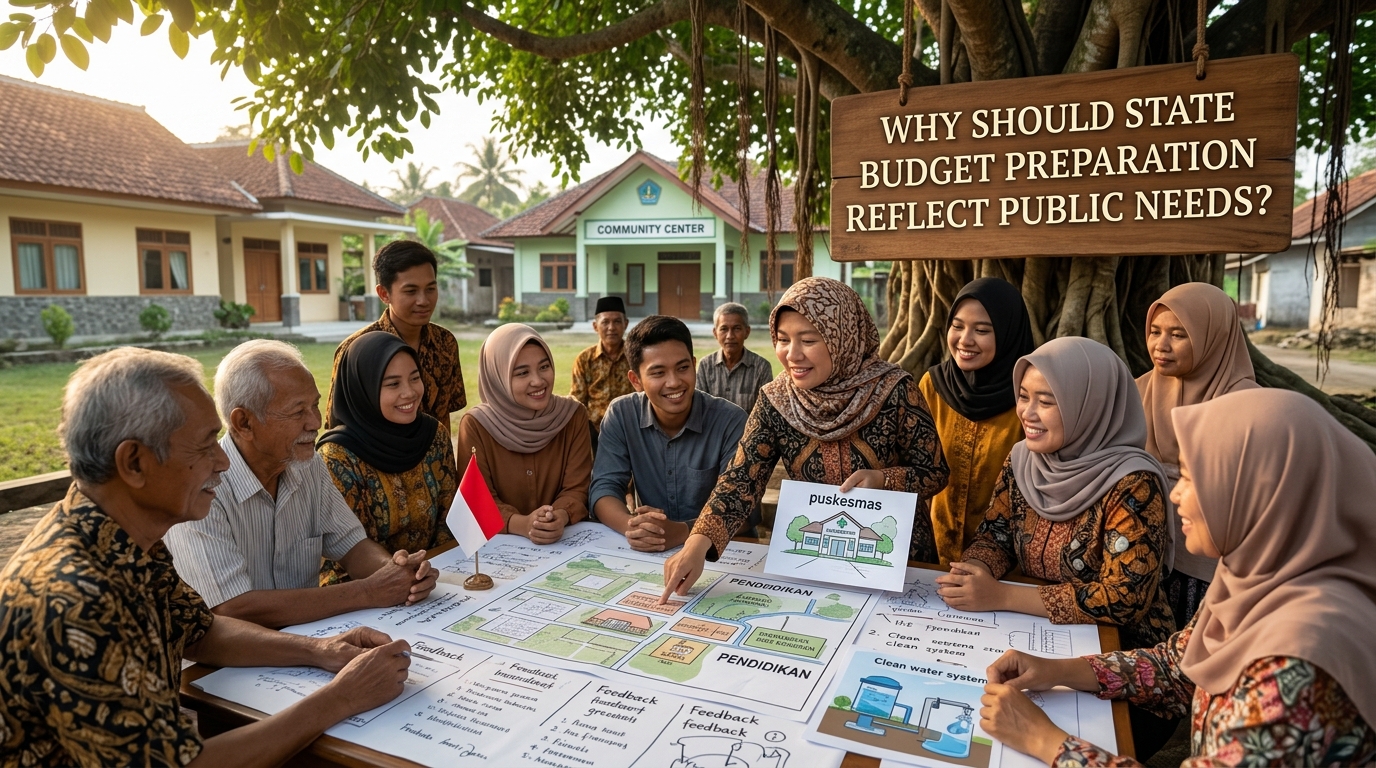
State budget preparation is an essential process that determines how a government uses public money to improve people's lives. A well-planned budget should reflect the real needs of society, including access to education, healthcare, infrastructure, employment, and social protection. When government spending matches public priorities, limited financial resources can be used more effectively. In Indonesia, the State Budget or Anggaran Pendapatan dan Belanja Negara (APBN) supports national development and the delivery of public services. Therefore, reflecting public needs in budget preparation is important for creating fair, effective, and sustainable development.
ENSURING PUBLIC MONEY MEETS REAL NEEDS
The main purpose of a state budget is to finance government activities and provide services that benefit society. Public needs vary depending on population size, economic conditions, and the challenges faced by different communities. For example, areas with limited healthcare facilities may need more investment in medical services, while regions with poor transportation may require better roads. By identifying these differences, the government can establish spending priorities based on actual needs rather than making decisions without sufficient information. This approach helps ensure that public money delivers meaningful benefits to the people who need it most.
IMPROVING EDUCATION AND HEALTHCARE
Education and healthcare are essential foundations of a productive and prosperous society. When budget preparation reflects public needs, the government can allocate funds for school facilities, teacher development, scholarships, hospitals, and community health centers. These investments help improve access to quality education and essential medical services. Adequate funding can also support programs for disadvantaged families and communities with limited facilities. By prioritizing education and healthcare spending, the government invests in human resources and supports long-term national development.
REDUCING POVERTY AND SOCIAL INEQUALITY
A budget that reflects public needs can help reduce poverty and improve the distribution of development benefits. The government can provide funding for social assistance, affordable public services, job training, and programs that support vulnerable households. These measures can help people meet basic needs while creating opportunities to improve their economic circumstances. Budget planning should also consider communities that face barriers to education, employment, and essential services. Through targeted social spending, the government can support a more inclusive society and reduce inequalities between different income groups.
SUPPORTING REGIONAL DEVELOPMENT
Public needs are not the same in every region. Some areas require better roads and transportation, while others may need improved access to clean water, schools, healthcare, or reliable internet connections. A budget that considers regional conditions can help direct resources toward communities with the greatest development gaps. In Indonesia, transfers to regional governments and other public programs help finance local responsibilities and development activities under applicable regulations. Fair and evidence-based budget allocation can strengthen regional economies and help more communities benefit from national progress.
INCREASING PUBLIC TRUST IN GOVERNMENT
People are more likely to trust government institutions when they see public money being used to address important community problems. Budget preparation that considers public needs demonstrates that government decisions are connected to citizens' interests. Transparency allows people to understand how spending priorities are determined and where public funds are allocated. Public consultation, clear reporting, and independent oversight can also help identify problems and reduce the risk of misuse. As a result, transparent and accountable budgeting can strengthen public confidence and encourage greater participation in development.
PROMOTING ECONOMIC GROWTH AND EMPLOYMENT
When government spending responds to public needs, it can also support economic activity and job creation. Investment in transportation, education, digital infrastructure, and skills training can improve productivity and help businesses operate more efficiently. Funding for small businesses and local economic development may create additional opportunities for workers and entrepreneurs. However, the benefits depend on whether programs are well designed, properly implemented, and evaluated. Needs-based budget planning can help connect public spending with economic opportunities while supporting sustainable growth.
ENCOURAGING PUBLIC PARTICIPATION
Public participation helps the government understand community priorities more accurately. Citizens can share their concerns through consultations, public meetings, representative institutions, and other official feedback channels. This information can help decision-makers identify urgent problems and compare different spending proposals. Public participation does not mean that every request can be funded, because the government must also consider available revenue, legal obligations, and national priorities. Nevertheless, meaningful public involvement can improve budget decisions and make development programs more responsive to society.
MAKING GOVERNMENT SPENDING MORE EFFECTIVE
Reflecting public needs is not only about choosing the right programs but also about ensuring that those programs achieve their objectives. The government should use reliable data to identify problems, estimate costs, and determine expected results. After funds are allocated, regular monitoring can show whether projects are completed on time and whether public services have improved. Programs that fail to deliver results may need to be revised, while successful initiatives can provide lessons for future planning. Through performance evaluation and responsible spending, the government can reduce waste and make better use of limited public resources.
CONCLUSION
State budget preparation should reflect public needs because government spending directly affects public services, economic opportunities, and social welfare. A responsive budget helps prioritize education, healthcare, poverty reduction, regional development, and employment while encouraging transparency and public participation. However, the government must balance community expectations with available revenue, legal requirements, and long-term fiscal sustainability. Effective and needs-based budgeting requires accurate information, clear priorities, accountable implementation, and regular evaluation. When these principles are applied consistently, the state budget can become a stronger tool for improving people's lives and supporting national development.
Recent Posts

Bagaimana Sistem SKS pada Program Kuliah... 22.11.2026/47 View

How Does Technology Make Daily Evaluation... 21.11.2026/74 View

Apa Strategi Menghadapi Kesenjangan antara Kompetensi... 21.11.2026/76 View

Mengapa Inventaris Aset Penting bagi Kelancaran... 21.11.2026/72 View

When Should Musicians Join a Record... 21.11.2026/76 View
