

Why Should Students Participate in Flag Ceremonies Respectfully?
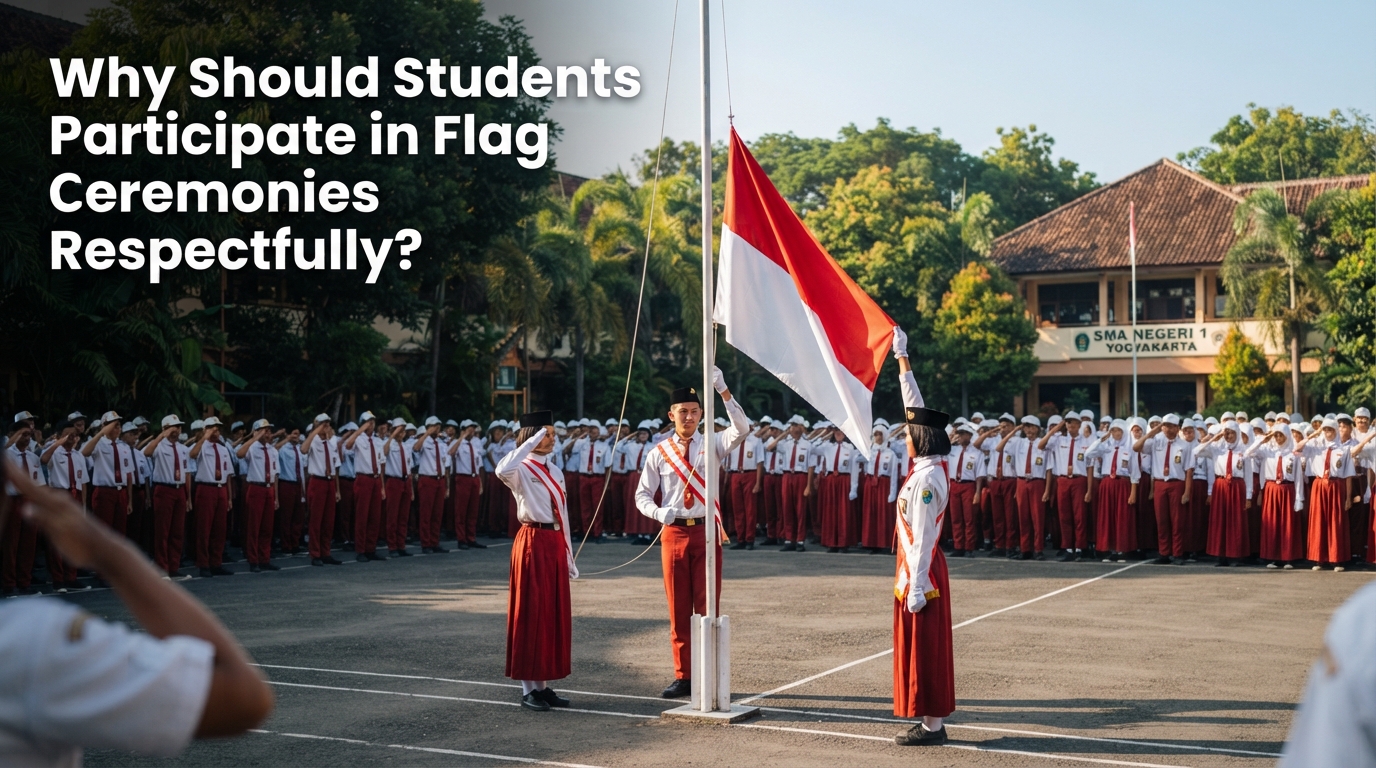
Flag ceremonies are important school activities that teach students to appreciate their national identity, understand historical values, and develop positive character. In Indonesia, flag ceremonies are commonly held every Monday morning and during national commemorative events. Students participate in activities such as raising the Red and White Flag, singing the national anthem, and listening to messages delivered by the ceremony supervisor.
Participating respectfully in these activities is important because a flag ceremony is not merely a school routine. It represents national pride, respect for national symbols, discipline, and appreciation for the struggles of national heroes. Through proper participation, students can learn how to behave responsibly, respect others, and understand the meaning of being Indonesian citizens. Therefore, showing respect during flag ceremonies is an important part of students' character development and national education.
SHOWING RESPECT FOR NATIONAL SYMBOLS
One important reason students should participate respectfully in flag ceremonies is to demonstrate appreciation for national symbols, especially the Indonesian Red and White Flag. The flag represents the identity, sovereignty, and independence of Indonesia. During the ceremony, students are expected to stand properly, maintain silence, and pay attention while the flag is being raised. These actions show that they understand the importance of respecting symbols that represent their country.
Respecting the national flag also means understanding its historical significance. The Red and White Flag reminds students of the struggles and sacrifices made by previous generations to achieve independence. By participating seriously, students can develop greater appreciation for their country's history. This awareness encourages them to protect national values and respect the identity of their nation.
DEVELOPING DISCIPLINE AND RESPONSIBILITY
Participating respectfully in flag ceremonies helps students develop discipline and responsibility. Students must arrive on time, wear appropriate uniforms, follow instructions, and maintain an orderly position throughout the activity. These simple habits teach them to respect schedules and understand the importance of following school regulations. Regular participation can gradually strengthen their ability to manage their behavior.
Responsibility is also demonstrated when students carry out their duties during the ceremony. For example, students assigned as flag-raising officers must prepare carefully and perform their tasks according to the established procedures. Other participants also have responsibilities, such as maintaining order and respecting the ceremony. These experiences teach students that every individual has a role in creating a successful and meaningful activity.
STRENGTHENING NATIONALISM AND LOVE FOR INDONESIA
Flag ceremonies provide an opportunity for students to strengthen their nationalism and love for Indonesia. Singing the national anthem and watching the flag being raised can remind them of the importance of independence and national identity. These activities encourage students to appreciate their country's history, culture, and achievements. They also help develop a sense of belonging to the Indonesian nation.
However, nationalism should not only be expressed during formal ceremonies. Students can demonstrate their love for Indonesia by studying seriously, respecting different cultures, obeying regulations, and contributing positively to society. They can also help maintain peace and unity within their communities. By understanding these responsibilities, students can apply the spirit of nationalism in their everyday lives.
APPRECIATING THE STRUGGLES OF NATIONAL HEROES
Another reason students should respect flag ceremonies is to appreciate the sacrifices made by national heroes. Indonesia's independence was achieved through years of struggle, courage, and cooperation among people from different regions. The flag ceremony reminds students that the freedom they enjoy today was not obtained easily. This historical awareness helps them understand the value of independence.
Respecting the ceremony can also encourage students to learn more about national history and important historical figures. Messages delivered by teachers or ceremony supervisors often provide opportunities to discuss patriotism, sacrifice, and national development. Students can take these lessons as motivation to become responsible individuals who contribute to their country. In this way, respect for national heroes can be demonstrated through positive actions and meaningful achievements.
BUILDING RESPECT AND POSITIVE ATTITUDES TOWARD OTHERS
Participating respectfully in flag ceremonies teaches students to appreciate other people and their responsibilities. Students are expected to listen when someone delivers a speech, follow the ceremony leader's instructions, and avoid disturbing other participants. These behaviors develop tolerance, mutual respect, and social awareness. They also help students understand that maintaining order requires cooperation from everyone.
Positive attitudes developed during ceremonies can influence students' relationships in the classroom and wider community. For example, students who learn to listen respectfully may become better at communicating with teachers and classmates. They can also become more understanding when dealing with different opinions and backgrounds. These qualities are important for creating a friendly, inclusive, and harmonious school environment.
IMPROVING CONCENTRATION AND SELF-CONTROL
Flag ceremonies require students to pay attention and maintain appropriate behavior throughout the activity. They need to listen carefully to instructions, remain orderly, and avoid unnecessary movements or conversations. These expectations encourage the development of concentration and self-control. Students learn how to manage their actions even when they are participating in activities that require patience.
Self-control is useful in many aspects of education and daily life. Students who can control their behavior may find it easier to concentrate during lessons, complete assignments, and participate in group activities. They also learn to respond appropriately in different situations. Through regular practice, respectful participation in ceremonies can support the development of more mature and responsible behavior.
CREATING A POSITIVE AND ORDERLY SCHOOL ENVIRONMENT
Respectful participation helps create a school environment that is organized, peaceful, and comfortable for everyone. When students follow instructions and respect the ceremony procedures, the activity can take place smoothly. Teachers and school staff can also deliver important messages without unnecessary interruptions. This creates a better atmosphere for learning and developing positive values.
Furthermore, orderly ceremonies encourage students to understand the importance of cooperation and shared responsibility. Every participant contributes to the success of the activity through their behavior. Students can learn that individual actions have an impact on the entire school community. These lessons can also be applied to other school activities, including classroom discussions, student organizations, and extracurricular programs.
HOW STUDENTS CAN SHOW RESPECT DURING FLAG CEREMONIES
Students can demonstrate respect during flag ceremonies through simple but meaningful actions. They should arrive on time, wear the appropriate school uniform, stand in the correct position, and follow the instructions given by the ceremony leader. When the national flag is raised and the national anthem is performed, students should behave respectfully according to the ceremony procedures. They should also listen carefully to speeches and avoid disturbing others.
In addition, students should understand the purpose of each activity rather than participate only because it is required by the school. They can learn about national history, ask questions, and reflect on the values shared during the ceremony. Teachers can support this process by explaining the meaning of national symbols and providing positive examples. Through these efforts, students can develop genuine respect and apply the lessons to their daily behavior.
CONCLUSION
Students should participate respectfully in flag ceremonies because these activities help develop nationalism, discipline, responsibility, self-control, and appreciation for national symbols. By following ceremony procedures, respecting other participants, and understanding the meaning of national traditions, students can gain valuable lessons about citizenship and character development. These values are important for both their education and their future responsibilities.
Ultimately, respecting flag ceremonies means respecting the history, identity, and unity of Indonesia. Students should not view these activities as ordinary school routines but as opportunities to learn and develop positive attitudes. By demonstrating respect through consistent actions, they can become disciplined, responsible, and patriotic members of society.
Recent Posts

How Does Technology Make Daily Evaluation... 21.11.2026/58 View

Apa Strategi Menghadapi Kesenjangan antara Kompetensi... 21.11.2026/60 View

Mengapa Inventaris Aset Penting bagi Kelancaran... 21.11.2026/56 View

When Should Musicians Join a Record... 21.11.2026/55 View

Daily Evaluation or Daily Planning Which... 21.11.2026/63 View
