

Why Should Teachers Become Role Models in the Digital Era?
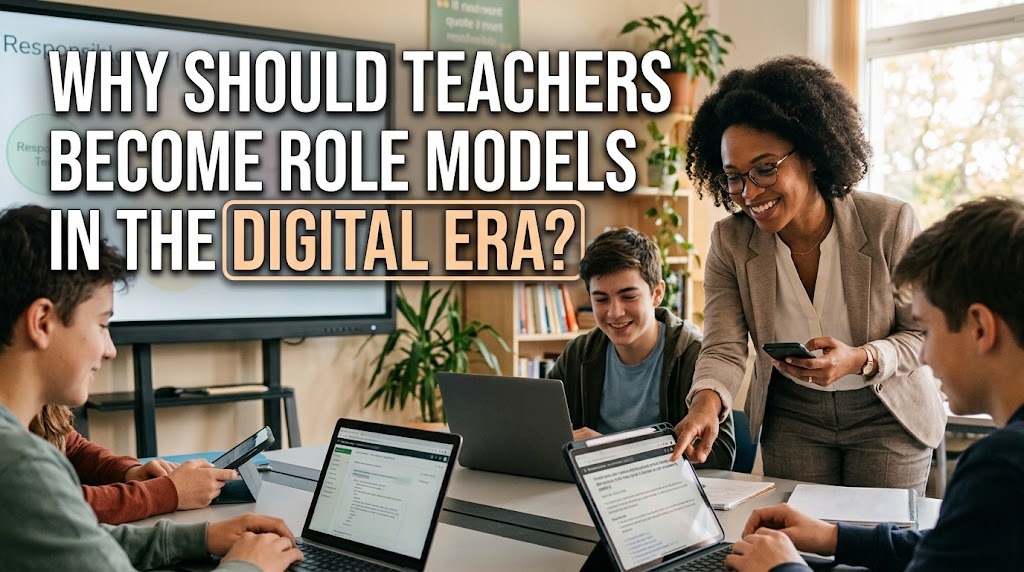
The digital era has transformed how students access information, communicate, and develop their understanding of the world. With smartphones, social media, and artificial intelligence becoming part of everyday life, students need more than academic knowledge to navigate modern challenges. They also need guidance in developing responsible behavior, critical thinking, digital ethics, and emotional maturity. Teachers play an important role in this process because students often learn not only from classroom explanations but also from the behavior they observe. By becoming positive role models, teachers can help students use technology wisely, build strong character, and prepare for life in a connected society.
TEACHERS SHAPE STUDENT CHARACTER THROUGH EXAMPLE
Students frequently observe how teachers communicate, respond to problems, and treat other people. These everyday interactions can influence how students understand respect, responsibility, honesty, and discipline. In the digital era, teachers can demonstrate these values by communicating politely, acknowledging mistakes, and respecting different perspectives. When teachers practice the principles they teach, their guidance becomes more meaningful and credible. This consistency helps students understand that good character must be demonstrated through real actions rather than simply discussed in lessons.
PROMOTE RESPONSIBLE DIGITAL BEHAVIOR
Technology offers valuable opportunities for learning, but it also creates challenges involving privacy, misinformation, cyberbullying, and excessive screen time. Teachers can help students understand how to behave responsibly when using digital platforms. For example, they can demonstrate respectful online communication, explain the importance of protecting personal information, and encourage students to think before sharing content. Teachers should also model responsible technology use during lessons instead of allowing digital devices to become constant distractions. These practices help students develop habits that support safer and more productive participation in online communities.
TEACH STUDENTS TO EVALUATE INFORMATION CRITICALLY
The internet provides access to enormous amounts of information, but not every source is accurate, reliable, or presented fairly. Students may encounter misleading headlines, manipulated images, fabricated claims, and content designed to attract attention rather than inform. Teachers can serve as role models by checking sources, comparing evidence, and explaining how they reach conclusions. They can encourage students to distinguish facts from opinions and recognize the limits of information found online. By demonstrating these habits, teachers help students become more independent thinkers who make informed decisions.
DEMONSTRATE ETHICAL USE OF ARTIFICIAL INTELLIGENCE
Artificial intelligence tools can support learning, research, writing, and creative work. However, students need guidance on using these tools honestly and responsibly. Teachers can demonstrate how to verify AI-generated information, protect confidential data, acknowledge relevant assistance, and follow academic integrity rules. They should also explain that AI output can contain errors or biased information and should not automatically be treated as fact. When teachers use technology transparently, they help students understand that digital tools should support human judgment and learning rather than replace independent thinking.
BUILD HEALTHY COMMUNICATION AND ONLINE RESPECT
Digital communication can make it easier for people to connect, but messages without facial expressions or vocal tone can also lead to misunderstandings. Teachers can model respectful communication by listening carefully, choosing words thoughtfully, and responding calmly during disagreements. They can also explain why insulting comments, public humiliation, and spreading rumors can cause harm, even when they occur online. Classroom discussions about digital citizenship help students consider how their actions affect others. Through consistent examples, teachers can encourage students to communicate with empathy in both online and offline environments.
ENCOURAGE LIFELONG LEARNING AND ADAPTABILITY
Technology changes rapidly, introducing new tools, skills, and ways of working. Teachers cannot always rely on methods that were effective in the past, so they need to remain open to learning and professional development. By exploring new educational resources, attending training, and learning alongside students when appropriate, teachers demonstrate that improvement is a continuous process. They can also acknowledge when they need to research a topic before giving an answer. This attitude encourages students to remain curious, adapt to change, and view learning as a lifelong responsibility.
BALANCE TECHNOLOGY WITH EMOTIONAL INTELLIGENCE
Although digital tools can make education more flexible, they cannot replace every aspect of human connection. Students still need encouragement, empathy, meaningful conversations, and opportunities to develop interpersonal skills. Teachers can model emotional intelligence by recognizing students' concerns, managing their own reactions, and resolving conflicts constructively. They can also encourage face-to-face collaboration and help students maintain a healthy balance between online activities and offline relationships. This balance supports students' social development while allowing them to benefit from digital learning opportunities.
STRENGTHEN TRUST THROUGH CONSISTENT BEHAVIOR
Students are more likely to respect teachers whose actions align with their words. A teacher who discusses digital responsibility but shares unverified information, for example, may weaken the credibility of that lesson. Consistency helps students recognize that ethical behavior applies to everyone, regardless of age or position. Teachers can strengthen trust by admitting mistakes, correcting inaccurate information, and explaining decisions fairly. These actions show students that being a role model does not require perfection but does require honesty, accountability, and a willingness to improve.
PREPARE STUDENTS FOR FUTURE CHALLENGES
Students entering higher education and the workforce will encounter digital collaboration, automated systems, online professional networks, and increasingly complex information environments. Academic knowledge alone may not be enough to navigate these situations successfully. Teachers can prepare students by modeling problem-solving, teamwork, adaptability, ethical decision-making, and responsible technology use. Practical classroom activities can help students apply these values to realistic situations. Through positive examples and relevant guidance, teachers can help students develop the judgment and character needed to participate effectively in modern society.
CONCLUSION
Teachers should become role models in the digital era because students need guidance that extends beyond academic achievement. By demonstrating responsible technology use, critical thinking, digital ethics, empathy, and lifelong learning, teachers help students develop skills for navigating an increasingly connected world. Their daily behavior can reinforce the values discussed in the classroom and encourage students to apply those principles in their own lives. Although technology continues to evolve, the importance of honesty, respect, responsibility, and human connection remains essential. Teachers who model these qualities can help students become capable, ethical, and adaptable members of society.
Recent Posts

Bagaimana Sistem SKS pada Program Kuliah... 22.11.2026/57 View

How Does Technology Make Daily Evaluation... 21.11.2026/86 View

Apa Strategi Menghadapi Kesenjangan antara Kompetensi... 21.11.2026/84 View

Mengapa Inventaris Aset Penting bagi Kelancaran... 21.11.2026/82 View

When Should Musicians Join a Record... 21.11.2026/86 View
