

Why Should Vocational Curriculum Prioritize Practical Hands On Experience?
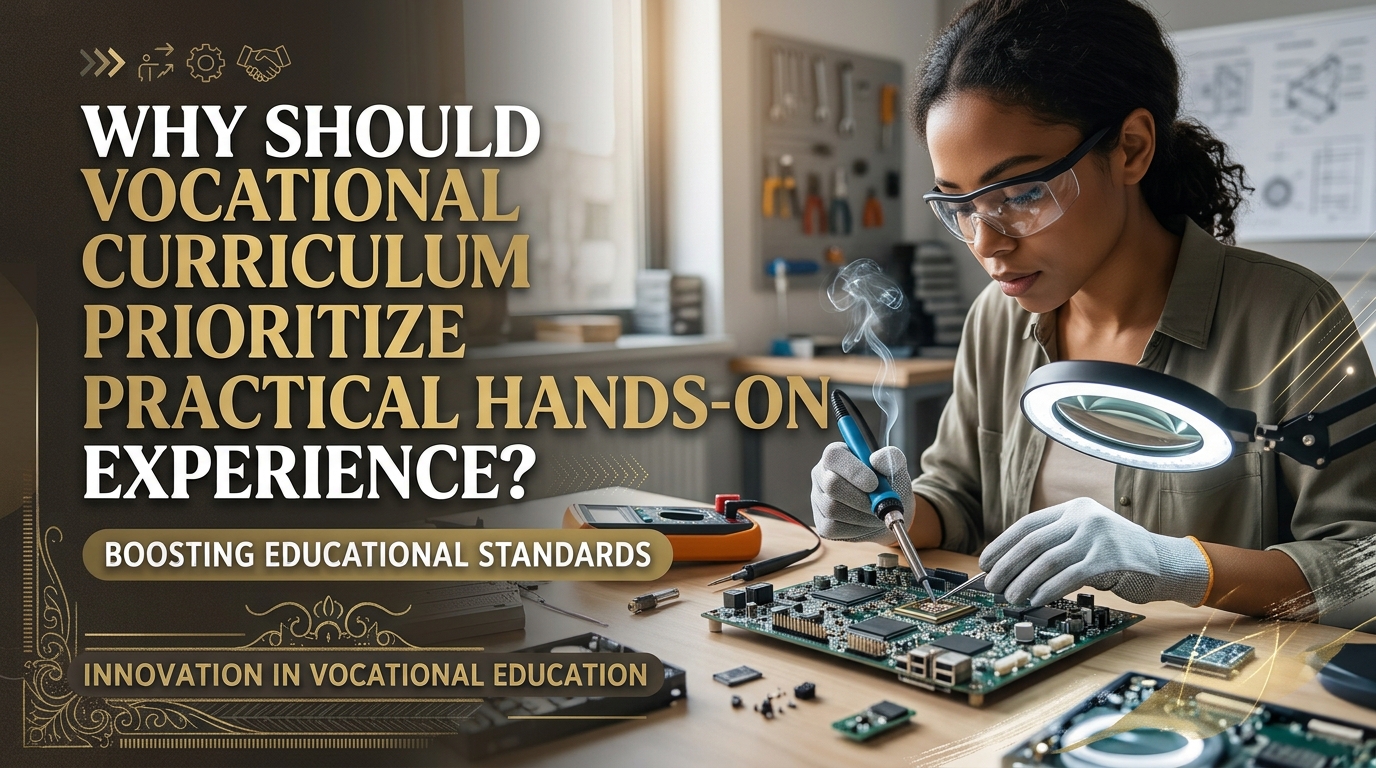
The modern job market values practical expertise over theoretical knowledge, making real-world practice an essential foundation for technical education. High schools, polytechnics, and technical academies must ensure that their learning programs focus on dynamic, real-world application. Prioritizing practical hands-on experience in vocational education bridges the gap between textbook instruction and actual workplace execution. When students engage directly with tools, software, and industry equipment, they build muscle memory and true operational confidence. However, traditional academic approaches often overemphasize theory, leaving graduates underprepared for fast-paced professional environments.
BRIDGING THEORY AND REAL WORLD WORKPLACE APPLICATION
Integrating direct interactive practice into daily coursework helps students transform abstract concepts into actionable technical skills. Reading about complex mechanical systems or digital workflows is rarely enough to achieve actual operational mastery. Active participation allows learners to test theories, analyze physical results, and understand underlying operational mechanics thoroughly.
Consequently, students develop a deeper comprehension of their chosen technical fields through real-world trial and error. Experiencing immediate outcomes during practical sessions reinforces technical understanding much better than passive classroom listening. This direct application ensures that learners acquire the exact competencies required by modern employers today.
BOOSTING STUDENT ENGAGEMENT AND PROBLEM SOLVING ABILITIES
Interactive learning environments naturally increase student motivation and participation compared to traditional lecture-based classrooms. When learners actively assemble hardware, operate machinery, or write computer code, their critical thinking abilities improve significantly. Facing unexpected equipment errors during practical sessions forces students to troubleshoot real problems independently under teacher guidance.
Furthermore, solving authentic technical challenges builds cognitive resilience and sharpens analytical decision-making skills. Students learn to evaluate complex situations quickly and apply immediate, logical solutions in high-pressure scenarios. These essential problem-solving capabilities prepare graduates to handle challenging real-world workplace situations effectively.
ALIGNING GRADUATE COMPETENCIES WITH INDUSTRY REQUIREMENTS
Leading companies across various industrial sectors actively seek job candidates who require minimal initial workplace onboarding. Emphasizing continuous physical practice ensures students graduate with job-ready technical capabilities highly valued by hiring managers. Schools that mirror actual working conditions produce graduates who transition seamlessly into professional corporate positions.
Additionally, extensive laboratory practice familiarizes students with safety protocols, quality control standards, and industry tools. Employers save substantial time and training resources when hiring workers who already understand standard operational procedures. Therefore, hands-on learning significantly enhances graduate employability and long-term career growth potential.
ACCELERATING CAREER READINESS AND CONFIDENCE
Mastering technical tasks through repeated physical practice instills strong professional confidence and workforce readiness in young learners. Confidence develops when students successfully complete complex projects, manage professional equipment, and produce tangible results. This self-assurance allows graduates to demonstrate their technical expertise proudly during job interviews and skill tests.
Moreover, confident individuals adapt much faster to evolving workplace technologies and collaborative team environments. Having already handled real tools throughout their education, new workers approach daily tasks without anxiety or hesitation. Prioritizing physical engagement creates capable professionals ready to contribute productively from their very first working day.
CONCLUSION
Prioritizing practical hands-on experience within technical educational programs is vital for preparing students for successful careers. Direct physical practice enhances problem-solving skills, boosts learning engagement, and aligns student capabilities with real market needs. While establishing modern laboratories and purchasing updated equipment requires initial financial investment, the long-term benefits are substantial. Educational institutions must continue expanding interactive workshops to ensure their study programs remain effective and relevant. Empowering students with real-world technical skills guarantees a resilient, highly capable, and future-ready workforce for global industries.
Recent Posts

Bagaimana Sistem SKS pada Program Kuliah... 22.11.2026/54 View

How Does Technology Make Daily Evaluation... 21.11.2026/83 View

Apa Strategi Menghadapi Kesenjangan antara Kompetensi... 21.11.2026/82 View

Mengapa Inventaris Aset Penting bagi Kelancaran... 21.11.2026/78 View

When Should Musicians Join a Record... 21.11.2026/84 View
