

Why Should You Keep Your ATM PIN Secret?
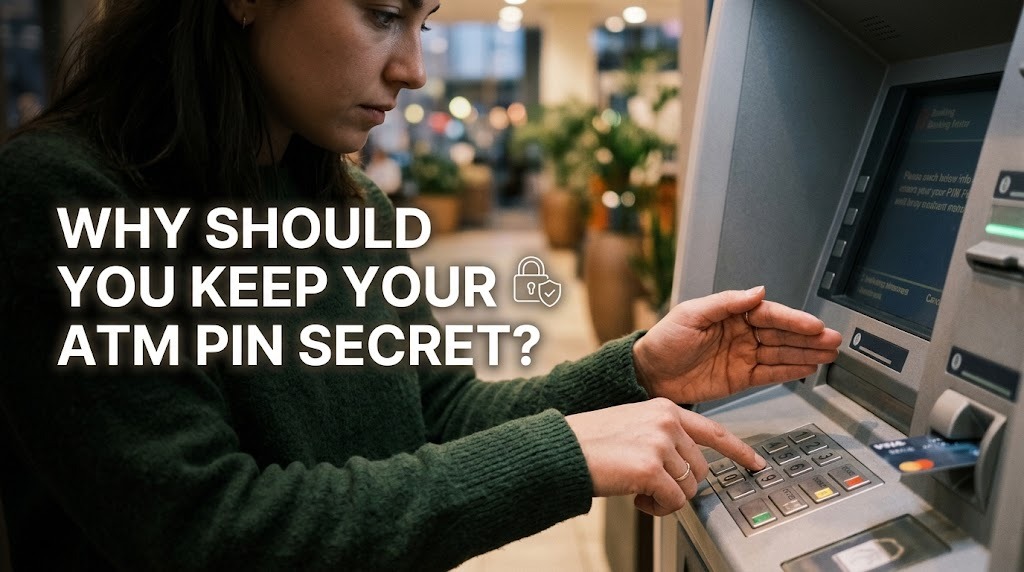
An ATM PIN is confidential information that helps verify a customer's identity when accessing certain banking services. Because the PIN can be used together with a bank card to authorize transactions, keeping it private is an important part of protecting a bank account.
Sharing a PIN, writing it in an easily accessible place, or entering it where other people can see may increase the risk of unauthorized banking access. Understanding why a PIN must remain secret can help customers develop safer habits when using ATMs and other banking services.
PROTECTING YOUR BANK ACCOUNT
Keeping an ATM PIN secret helps reduce the risk of unauthorized access to certain banking services. A PIN is intended to be known only by the authorized account holder, so it should be treated as confidential information.
A bank card and PIN can serve different security purposes. While the card identifies the account or payment instrument, the PIN can provide an additional verification step for certain transactions.
For this reason, bank account security depends partly on how carefully customers protect their PIN. Users should never assume that sharing the number with someone they trust is completely risk-free.
PREVENTING UNAUTHORIZED TRANSACTIONS
Someone who obtains confidential banking information may attempt to use it improperly. Keeping the ATM PIN private can help reduce the possibility of unauthorized transactions, particularly if the physical card is also lost or compromised.
Customers should monitor their account activity and report unfamiliar transactions to their bank through an official channel. Acting promptly can help the bank investigate potential security issues.
In addition to protecting the PIN, users should also protect their bank card and account information. Security is stronger when several protective habits are used together.
AVOIDING PIN EXPOSURE AT AN ATM
PINs can sometimes be exposed when customers enter them at an ATM. People standing nearby may accidentally or intentionally see the numbers being entered if the keypad is not properly shielded.
When entering an ATM PIN, cover the keypad with your hand or body. Also, check your surroundings before beginning a transaction and avoid allowing strangers to stand too close.
If an ATM appears damaged, unusual, or suspicious, consider using another machine and contacting the bank if necessary. These simple habits can improve ATM safety.
DO NOT SHARE YOUR PIN WITH OTHER PEOPLE
Customers should never share their ATM PIN with friends, relatives, strangers, or anyone claiming to need it for verification. A confidential PIN should remain under the control of the authorized account holder.
Be particularly careful with unexpected calls, messages, emails, or online communications requesting a PIN. Avoid providing confidential banking information through channels that cannot be verified as official.
If someone claims to represent a bank and asks for your PIN information, contact the bank directly using an official phone number, website, or application to verify the request.
USE OTHER SAFE BANKING HABITS
Keeping a PIN secret is only one part of ATM security. Customers should also protect their physical card, use secure ATMs, check transaction notifications, and contact the bank if something unusual occurs.
Avoid storing the PIN in an obvious location or writing it directly on the bank card. When choosing a PIN, avoid information that may be easy for other people to associate with you.
Regularly reviewing account activity can also help identify potential problems early. Combining these habits can provide stronger banking protection.
CONCLUSION
You should keep your ATM PIN secret because it is confidential banking information that helps protect access to certain account services. Sharing the PIN or allowing other people to observe it can increase security risks.
Good ATM security habits include shielding the keypad, protecting your card, avoiding suspicious requests, monitoring transactions, and never disclosing your PIN to others. These steps can help reduce the risk of unauthorized banking activity.
Recent Posts

Bagaimana Sistem SKS pada Program Kuliah... 22.11.2026/35 View

How Does Technology Make Daily Evaluation... 21.11.2026/69 View

Apa Strategi Menghadapi Kesenjangan antara Kompetensi... 21.11.2026/69 View

Mengapa Inventaris Aset Penting bagi Kelancaran... 21.11.2026/67 View

When Should Musicians Join a Record... 21.11.2026/68 View
