

Why Should You Never Share Your ATM PIN?
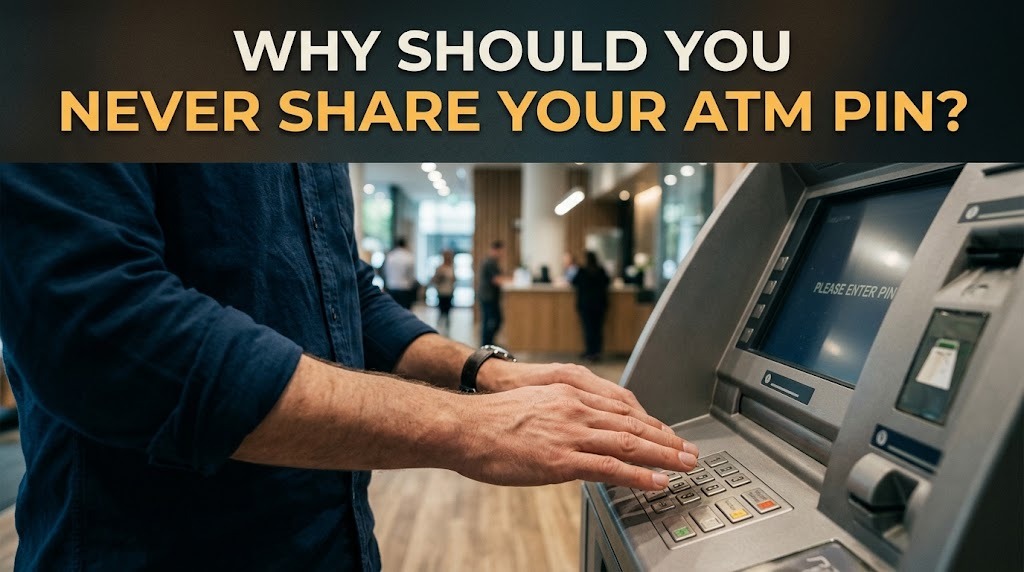
An ATM PIN is confidential information used to help verify access to certain banking services. Because the PIN is intended for the authorized account holder, sharing it with another person can create unnecessary security risks.
Even when someone claims to need the PIN for assistance or verification, customers should not disclose it. Protecting the PIN is an important part of bank account security and safe banking habits.
YOUR ATM PIN IS CONFIDENTIAL INFORMATION
An ATM PIN is designed to be known only by the person authorized to use the associated banking account. It should therefore be treated differently from information that can safely be shared with others.
Sharing the PIN can reduce the effectiveness of an important security layer. If another person learns the number, they may potentially have additional information needed to attempt unauthorized access.
For this reason, keeping the PIN private is a basic part of PIN security.
SHARING YOUR PIN CAN INCREASE SECURITY RISKS
When you share an ATM PIN, you lose control over who knows the number. Even if you trust the person receiving it, you cannot always control how the information is stored or whether it may later be exposed.
The risk can become greater if the PIN is shared through text messages, social media, email, or other communication channels. These channels may not be appropriate for confidential banking information.
Keeping the number private helps reduce the possibility of unauthorized banking activity.
BE CAREFUL WITH REQUESTS FOR YOUR PIN
Some people may claim to represent a bank, financial service, or other organization and ask for your ATM PIN. Treat unexpected requests for confidential information with caution.
Do not provide the PIN through phone calls, messages, emails, or social media. If you are unsure whether a request is legitimate, contact your bank directly through an official website, application, or customer service channel.
Using official banking channels allows you to verify account-related concerns without exposing your PIN.
PROTECT YOUR PIN WHEN USING AN ATM
Keeping your PIN secret also means preventing other people from seeing it while you enter the number. When using an ATM, cover the keypad with your hand or body.
Pay attention to your surroundings and avoid unnecessary assistance from strangers. If the ATM appears damaged or unusual, consider ending the transaction and using another verified machine.
These simple practices can strengthen ATM security and help prevent your PIN from being observed.
WHAT SHOULD YOU DO IF YOU HAVE SHARED YOUR PIN?
If you have accidentally shared your ATM PIN, contact your bank through an official channel and ask what security steps should be taken. Depending on the situation, the bank may recommend changing the PIN or taking other precautions.
Do not continue using a PIN if you believe another person may know it. Follow the bank's instructions and monitor your account for unfamiliar transactions.
Afterward, keep the new PIN confidential and avoid sharing it with anyone, regardless of how trustworthy they may seem.
CONCLUSION
You should never share your ATM PIN because it is confidential banking information that helps protect access to certain account services. Sharing it can increase the risk of unauthorized access and reduce your control over account security.
Protect your PIN by keeping it private, shielding the keypad at ATMs, avoiding suspicious requests, and using official bank channels whenever you need assistance with your account.
Recent Posts

Bagaimana Sistem SKS pada Program Kuliah... 22.11.2026/35 View

How Does Technology Make Daily Evaluation... 21.11.2026/69 View

Apa Strategi Menghadapi Kesenjangan antara Kompetensi... 21.11.2026/69 View

Mengapa Inventaris Aset Penting bagi Kelancaran... 21.11.2026/67 View

When Should Musicians Join a Record... 21.11.2026/68 View
