

Why Should You Never Share Your OTP Code with Other People?
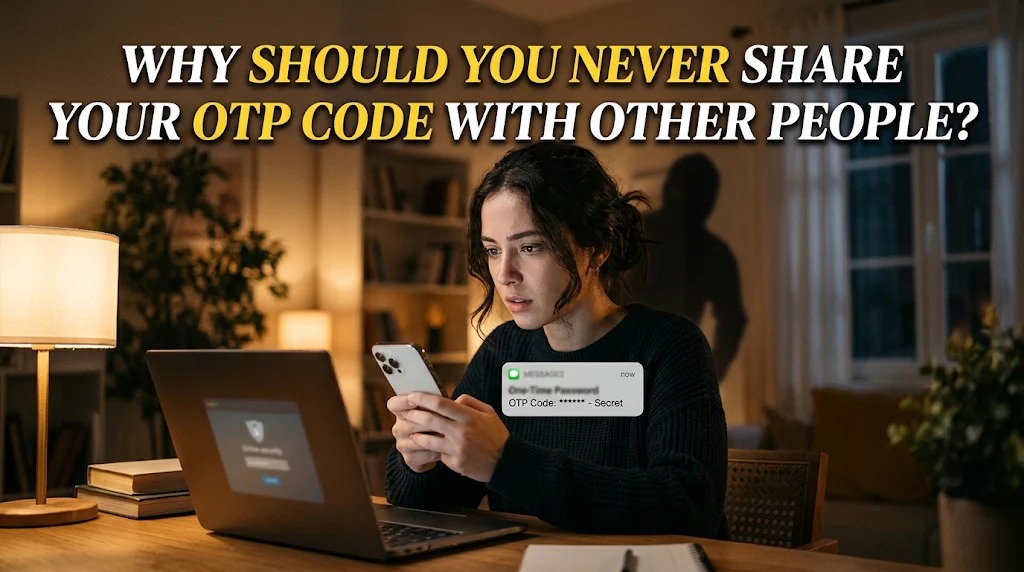
Digital accounts have become an important part of everyday life. People use them to communicate, shop online, access banking services, store personal information, and complete financial transactions. To protect these activities, many digital platforms use an OTP code as an additional security measure. However, this protection can become ineffective when users carelessly share their verification codes with other people.
An OTP code, or One-Time Password, is a temporary verification code used to confirm a user's identity. Although it usually consists of only a few numbers, it can provide access to important accounts or authorize sensitive activities. Understanding why OTP codes must remain confidential is essential for preventing account theft, financial losses, and other digital security problems.
UNDERSTANDING WHY OTP CODES MUST REMAIN CONFIDENTIAL
An OTP code is designed to provide temporary access or confirm a specific authentication request. Unlike regular passwords, this code is generally valid for only a limited period and is intended for one-time use. Its main purpose is to ensure that the person completing a verification process has access to an authorized device or communication channel.
When users share their OTP codes, they may unintentionally give another person the opportunity to complete an authentication process. For example, someone who already knows a user's account password may request an OTP code to finish logging in. If the account owner shares the code, the other person may successfully enter the account without permission.
This is why an OTP code should be treated like a personal password. Even if someone claims to be a bank employee, application administrator, or customer service representative, users should never reveal their verification codes. An OTP code is private security information, not ordinary information that can be shared with others.
HOW CYBERCRIMINALS TRICK USERS INTO SHARING OTP CODES
Cybercriminals often use social engineering to manipulate people into revealing confidential information. Instead of directly breaking into a digital system, they exploit human trust, fear, curiosity, and lack of security awareness. They may pretend to represent a bank, online marketplace, digital wallet provider, or popular technology company.
One common technique involves sending messages that claim an account has been blocked or that an unusual transaction has occurred. The message may instruct the victim to contact a particular number or provide an OTP code to restore account access. Because the situation appears urgent, some users share their codes without checking whether the request is legitimate.
Another method is impersonation through phone calls or messaging applications. Criminals may explain that an OTP code is required to verify a refund, confirm a delivery, or solve an account problem. In reality, they may be attempting to access the victim's account or authorize a transaction.
Phishing websites are also frequently used to steal OTP codes. These websites imitate official login pages and ask users to enter their account information and verification codes. Once the information is submitted, criminals can use it to complete unauthorized authentication activities.
THE DANGERS OF SHARING OTP CODES WITH OTHER PEOPLE
Sharing an OTP code can create serious consequences, especially when it is connected to financial or personal accounts. One of the most common risks is unauthorized account access. If criminals obtain the required verification code, they may enter an account, change its security settings, or take control of the account owner's digital identity.
Financial losses are another major concern. When OTP codes are used to approve banking transactions or digital wallet payments, sharing them with criminals may allow unauthorized transfers or purchases. Victims may lose money before realizing that their accounts have been compromised.
Personal information can also become exposed. Digital accounts often contain phone numbers, email addresses, transaction histories, private conversations, photographs, and other sensitive information. Criminals may misuse this information for identity theft, blackmail, fraudulent activities, or additional scams targeting the victim's contacts.
In some cases, criminals use compromised accounts to deceive other people. For example, they may send messages to friends or family members asking for money while pretending to be the legitimate account owner. Therefore, the consequences of sharing an OTP code can extend beyond one individual and affect other people as well.
WHY OTP CODES SHOULD ONLY BE USED FOR AUTHORIZED VERIFICATION
OTP codes should only be entered when users personally initiate a legitimate verification process through an official application or website. This principle helps ensure that the code is used for the intended activity rather than an authentication request initiated by someone else. Users should always check the purpose of a verification request before entering the code.
For example, when logging in to a banking application, users may receive an OTP code to confirm their identity. If they are not attempting to log in or complete a transaction, they should not use or share the code. An unexpected OTP message may indicate that someone is attempting to access their account.
Users should also understand that legitimate service providers do not need to know their confidential OTP codes. Customer service representatives may help users understand verification procedures, but they should not ask users to disclose their authentication codes. Any request to send an OTP through a chat message, phone call, or social media conversation should be treated as suspicious.
Furthermore, users should pay attention to the information contained in OTP notifications. Some platforms include details about the purpose of the code, such as login verification, password changes, or transaction approval. Checking these details can help users recognize suspicious activities before they cause damage.
PRACTICAL WAYS TO PROTECT OTP CODES FROM DIGITAL FRAUD
The first step in protecting OTP codes is to never share verification codes with anyone. Users should avoid sending screenshots of OTP messages or forwarding verification notifications to other people. They should also be careful when someone requests a code through messaging applications, email, or telephone calls.
Another important practice is using strong and unique passwords for important digital accounts. If one password is exposed, using different passwords for other services can prevent criminals from accessing multiple accounts. Users can also consider enabling an authenticator application, which may offer stronger protection than SMS-based verification against certain threats.
Keeping devices secure is equally important. Users should install application updates, use screen locks, avoid suspicious downloads, and protect their email accounts and registered mobile numbers. These measures help reduce the possibility of criminals accessing the channels used to receive verification codes.
If users accidentally share an OTP code, they should immediately take action to protect the affected account. They should change their password, review recent login activity, contact the official service provider, and block unauthorized transactions when possible. For banking or digital wallet accounts, contacting the provider immediately is particularly important to limit potential financial losses.
CONCLUSION
Sharing an OTP code with other people can expose digital accounts to unauthorized access, financial fraud, and personal information theft. Although OTP codes are designed to strengthen account security, their protection depends heavily on how carefully users handle them.
Cybercriminals often exploit trust and create urgent situations to convince victims to reveal their verification codes. Therefore, users should never disclose OTP codes, even to people claiming to represent official organizations. By maintaining strong passwords, using secure authentication methods, and recognizing suspicious requests, everyone can take important steps toward protecting their digital identity and online activities.
Recent Posts

Bagaimana Sistem SKS pada Program Kuliah... 22.11.2026/35 View

How Does Technology Make Daily Evaluation... 21.11.2026/69 View

Apa Strategi Menghadapi Kesenjangan antara Kompetensi... 21.11.2026/69 View

Mengapa Inventaris Aset Penting bagi Kelancaran... 21.11.2026/67 View

When Should Musicians Join a Record... 21.11.2026/68 View
