

Why Should Young Generations Learn to Adapt to Changing Times?
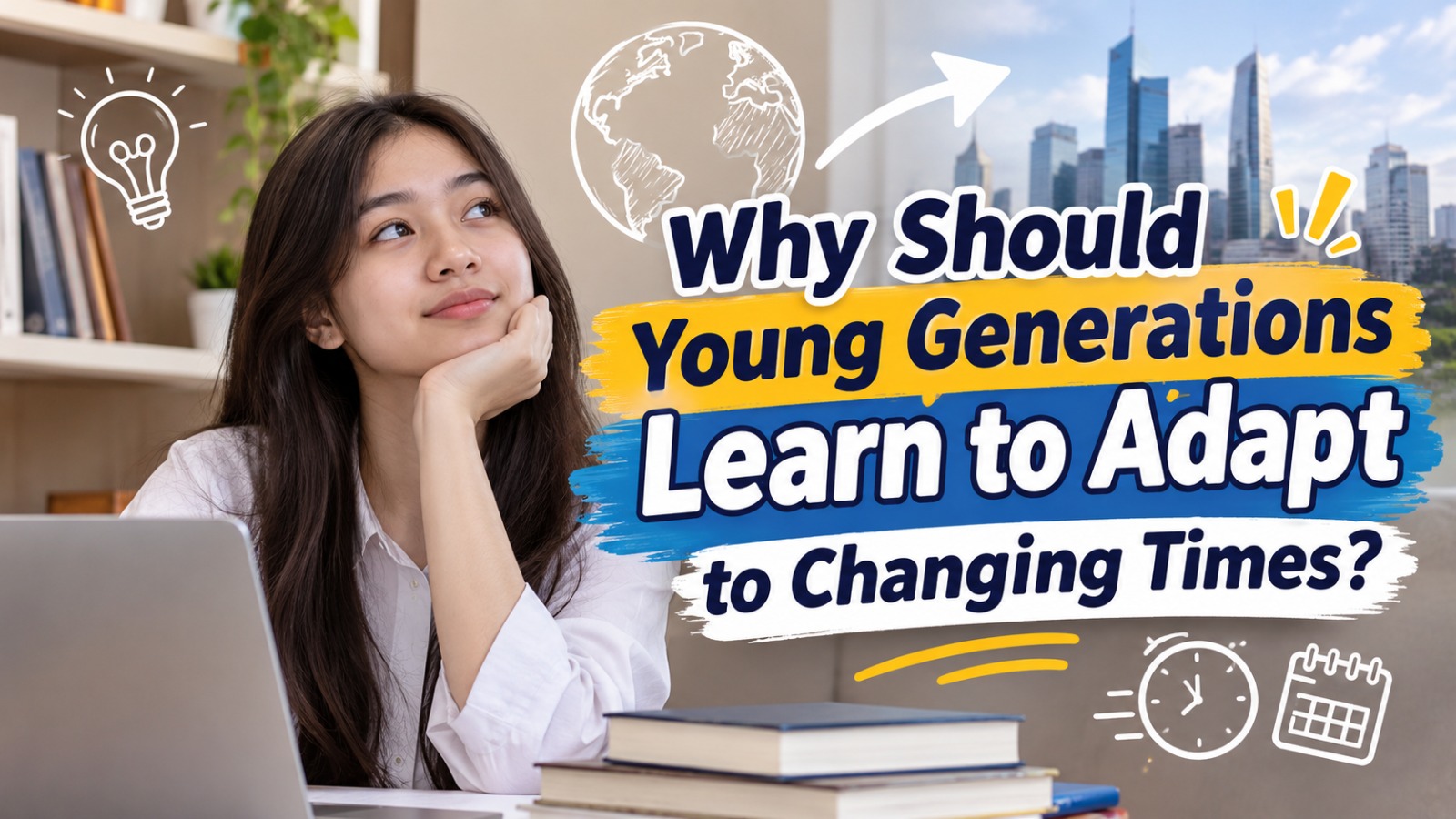
Changing times are an unavoidable part of human life. Technology, education, social relationships, and employment opportunities continue to develop as society moves forward. These changes influence how people communicate, work, study, and make decisions in their daily lives. As a result, young generations need to prepare themselves to face different situations and expectations.
Learning to adapt is not simply about following every new trend. It also involves developing the ability to understand changes, make thoughtful decisions, and use new opportunities wisely. Young people who have good adaptability can face challenges with greater confidence and prepare themselves for an increasingly competitive future.
UNDERSTANDING THE IMPORTANCE OF ADAPTABILITY
Adaptability is the ability to adjust to new situations, environments, and circumstances. This ability helps individuals respond to changes without losing their direction or personal values. In modern society, young generations encounter new developments almost every day, making adaptability an increasingly important skill.
People who are willing to adapt tend to be more open to learning and accepting different perspectives. They do not immediately reject unfamiliar situations but try to understand the benefits and challenges behind them. For example, students who are accustomed to traditional learning methods need to adjust when educational institutions introduce digital learning platforms.
Furthermore, adaptability helps young people become more independent when facing unexpected situations. They learn to evaluate problems, consider possible solutions, and take responsibility for their decisions. Having an adaptable mindset allows them to develop personally while remaining prepared for future changes.
FACING TECHNOLOGICAL DEVELOPMENT IN DAILY LIFE
Technological development is one of the biggest factors influencing changing times. Smartphones, artificial intelligence, digital platforms, and internet services have transformed many aspects of everyday life. Activities that previously required considerable time can now be completed more quickly through digital technology.
Young generations need to understand how to use these developments effectively. Technology provides opportunities to access educational resources, communicate with people from different countries, and explore various sources of information. However, technological progress also creates challenges, including misinformation, digital addiction, and privacy risks.
Therefore, adapting to technology requires more than simply knowing how to operate digital devices. Young people must develop digital literacy, understand online security, and evaluate information before accepting or sharing it. By using technology responsibly, they can benefit from innovation without becoming overly dependent on it.
DEVELOPING NEW SKILLS FOR FUTURE CAREERS
The world of employment continues to change as businesses adopt new technologies and working systems. Some traditional jobs are becoming less common, while new career opportunities are emerging in digital industries. This situation requires young generations to prepare themselves with skills that match current and future employment needs.
One important ability is continuous learning. Young people should not depend entirely on the knowledge they receive through formal education because professional requirements can change over time. They need to improve their communication, problem-solving, critical thinking, and technological skills through independent learning and practical experience.
In addition, creativity and adaptability can help individuals compete in an increasingly demanding job market. Employers often look for candidates who can work collaboratively, respond to unexpected challenges, and develop innovative solutions. By continuously improving their abilities, young generations can become more prepared to explore different career opportunities.
MAINTAINING SOCIAL AND CULTURAL VALUES AMID CHANGE
Changing times influence not only technology and employment but also social relationships and cultural habits. Social media has made communication easier, allowing people to connect regardless of geographical distance. However, excessive digital interaction can sometimes reduce direct communication and weaken relationships in everyday environments.
Young generations should learn to use modern communication tools while maintaining positive social relationships. Respect, empathy, honesty, and responsibility remain important values even when communication methods change. These principles help individuals build healthy relationships with family members, friends, colleagues, and the wider community.
Cultural preservation is another important responsibility. Globalization introduces new lifestyles, entertainment, and perspectives that can influence local traditions. Young people should be open to positive developments while continuing to appreciate their cultural heritage. Adapting to modern life does not mean abandoning traditional values, but finding ways to preserve meaningful traditions in contemporary society.
BUILDING MENTAL STRENGTH TO FACE UNCERTAINTY
Rapid changes can create pressure, confusion, and uncertainty, particularly among young people who are still discovering their goals and identities. Competition in education, employment, and social environments can sometimes make individuals feel that they must always achieve more. Without proper preparation, these conditions may affect their confidence and decision-making abilities.
For this reason, mental resilience is an important part of adaptability. Young generations need to understand that making mistakes and experiencing failure are normal parts of personal development. Instead of viewing difficulties as reasons to give up, they can use these experiences to evaluate their weaknesses and improve their abilities.
Developing mental strength also requires maintaining a healthy balance between responsibilities and personal well-being. Getting enough rest, building supportive relationships, and managing stress can help individuals remain focused when facing challenges. With a positive mindset and realistic expectations, young people can become more confident in dealing with uncertainty.
THE ROLE OF EDUCATION AND SELF-DEVELOPMENT IN PREPARING THE FUTURE
Education plays an important role in helping young generations understand and respond to changing times. Schools and universities provide knowledge, practical experience, and opportunities to develop different abilities. However, education should not only focus on academic achievements but also encourage students to become independent thinkers.
Self-development is equally important because learning does not end after graduation. Young people can improve their knowledge through books, online courses, training programs, internships, and professional communities. These activities allow them to gain new perspectives and understand how knowledge can be applied in real situations.
Families, educational institutions, and communities also have responsibilities in supporting young generations. They can create environments that encourage curiosity, creativity, collaboration, and responsible decision-making. When young people receive proper guidance and have opportunities to explore their potential, they become better prepared to face future developments.
CONCLUSION
Young generations should learn to adapt to changing times because changes influence almost every aspect of modern life. Technological development, employment competition, social relationships, and educational systems require individuals to continuously improve their abilities.
Adaptability, digital literacy, continuous learning, and mental resilience are essential qualities for facing future challenges. However, adapting to modern developments should not mean abandoning cultural identity or positive social values.
By maintaining an open mindset, developing relevant skills, and using technology responsibly, young generations can take advantage of new opportunities. Ultimately, the ability to adapt is an important foundation for personal growth, career development, and success in an ever-changing world.
Recent Posts

How Does Technology Make Daily Evaluation... 21.11.2026/57 View

Apa Strategi Menghadapi Kesenjangan antara Kompetensi... 21.11.2026/59 View

Mengapa Inventaris Aset Penting bagi Kelancaran... 21.11.2026/55 View

When Should Musicians Join a Record... 21.11.2026/54 View

Daily Evaluation or Daily Planning Which... 21.11.2026/61 View
