

How Can Students Avoid Plagiarism in Academic Thesis Writing?
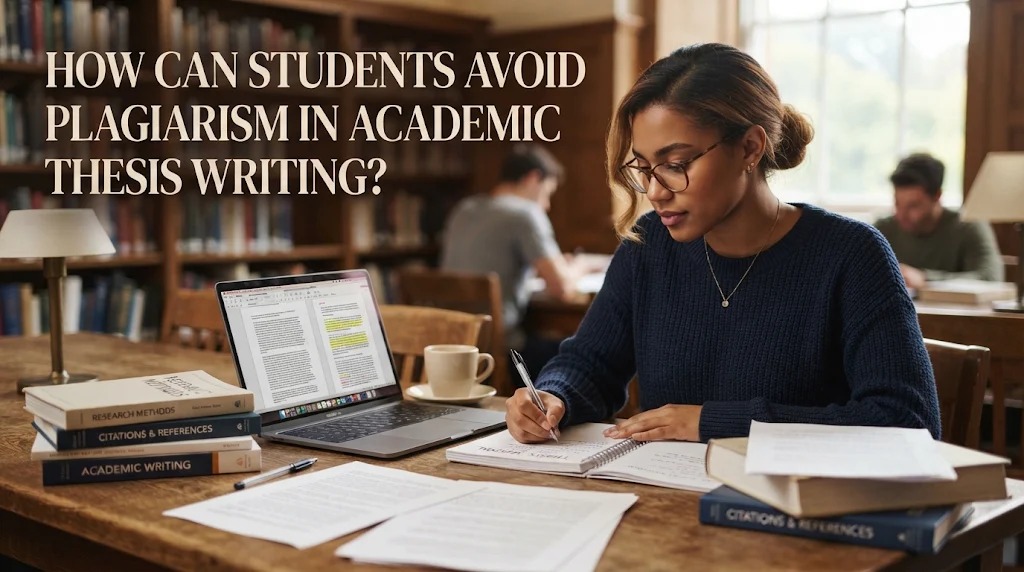
Plagiarism is one of the most serious academic problems students may encounter when writing a thesis. It occurs when someone uses another person's ideas, words, research findings, or work without giving proper credit to the original source. In academic environments, plagiarism can affect a student's credibility, research quality, and academic reputation. Therefore, students must understand how to use references correctly and develop responsible writing habits.
Avoiding plagiarism does not mean students cannot use information from books, journals, websites, or previous research. Instead, they must learn how to present information in their own words while acknowledging the original authors. With proper research techniques, accurate citations, and careful writing, students can produce an original and academically responsible thesis.
UNDERSTAND THE DIFFERENT TYPES OF PLAGIARISM
The first step in avoiding plagiarism is understanding its different forms. Direct plagiarism occurs when students copy sentences or paragraphs from another source without quotation marks or proper citations. This includes copying information from academic journals, books, websites, or other students' assignments.
Another common form is paraphrasing plagiarism, which happens when students change only a few words from an original source without acknowledging the author. Self-plagiarism can also occur when students reuse their previously submitted academic work without permission or proper disclosure. Accidental plagiarism happens when students forget to include citations, incorrectly record references, or misunderstand academic writing rules.
Understanding these types helps students recognize mistakes before submitting their thesis. By identifying potentially problematic writing practices, they can take appropriate steps to maintain academic integrity.
USE PROPER CITATION AND REFERENCING
Proper citation is one of the most effective ways to prevent plagiarism in academic thesis writing. Whenever students use another person's ideas, research findings, statistics, or direct statements, they must acknowledge the original source. Citations help readers identify where the information comes from and distinguish the student's ideas from existing research.
Students should follow the citation style required by their university or academic department. Common citation styles include APA, MLA, Chicago, and Harvard. Each style has specific rules for writing in-text citations and organizing references in the bibliography. Students must apply the selected format consistently throughout their thesis.
It is also important to record source information while conducting research. Keeping details such as authors' names, publication years, article titles, and journal names can prevent missing references. Accurate referencing demonstrates academic responsibility and makes research more trustworthy.
PARAPHRASE INFORMATION USING YOUR OWN WORDS
Paraphrasing is an important academic writing skill that allows students to explain information from other sources using their own language and sentence structure. However, effective paraphrasing involves more than replacing a few words with synonyms. Students must understand the original meaning before expressing the information in a different way.
A good approach is to read the original passage carefully, identify its main ideas, and then write the explanation without looking directly at the source. Afterward, students should compare their version with the original to ensure that the meaning remains accurate and the sentence structure is sufficiently different. Even when information has been paraphrased, the original author must still receive proper credit through citation.
Students should also avoid changing technical terms or important concepts simply to make sentences appear different. The main objective is to communicate information clearly while respecting the original research. Practicing paraphrasing regularly can improve writing skills and help students develop a more independent academic voice.
USE PLAGIARISM CHECKER TO REVIEW YOUR THESIS
Plagiarism detection tools can help students identify similarities between their thesis and existing sources. These tools compare submitted documents with available academic publications, websites, and other digital materials. The results usually appear as a similarity report that highlights matching words, phrases, or passages.
Students can use tools such as Turnitin to review their writing when access is provided by their university. However, a high similarity percentage does not automatically mean that a thesis contains plagiarism. Properly cited quotations, common academic expressions, and reference lists may also contribute to the similarity score. Therefore, students must examine the highlighted sections carefully rather than focusing only on the overall percentage.
If the software identifies problematic passages, students should review the writing, improve paraphrasing, add missing citations, or use quotation marks where necessary. They should also follow their university's similarity requirements because acceptable percentages can differ between institutions and academic departments.
DEVELOP ORIGINAL IDEAS AND MAINTAIN GOOD RESEARCH NOTES
Developing original ideas is essential for producing a high-quality academic thesis. Students should not depend entirely on copying explanations from previous studies. Instead, they need to analyze research findings, compare different perspectives, and explain how the information relates to their research questions.
Maintaining organized research notes can also reduce the risk of accidental plagiarism. Students should clearly separate direct quotations, paraphrased information, personal opinions, and original observations. Every note taken from an external source should include its corresponding reference details so that the information can be cited correctly during the writing process.
Students should also allocate enough time for research and writing. Rushing to complete a thesis can lead to careless copying, incomplete citations, and poor paraphrasing. By planning each writing stage and discussing unclear academic requirements with their supervisors, students can produce more original and reliable research.
FOLLOW ACADEMIC INTEGRITY RULES AND REVIEW YOUR WORK
Academic integrity is the foundation of responsible thesis writing. Students must respect intellectual property, acknowledge other researchers' contributions, and present research findings honestly. They should never purchase a thesis, copy another student's work, or present someone else's research as their own.
Before submitting a thesis, students should review every chapter to ensure that quotations, paraphrased information, citations, and references are correctly presented. They should also check whether all sources mentioned in the text appear in the reference list and whether the formatting follows university guidelines.
Consulting an academic supervisor is another useful way to prevent plagiarism. Supervisors can provide guidance on citation techniques, paraphrasing, research ethics, and academic writing standards. Following these practices helps students build responsible research habits and complete their thesis with greater confidence.
CONCLUSION
Students can avoid plagiarism in academic thesis writing by understanding different types of plagiarism, using proper citations, paraphrasing information correctly, and checking their work with plagiarism detection tools. Developing original ideas, maintaining organized research notes, and following academic integrity rules are equally important. By applying these practices consistently, students can produce an original, credible, and academically responsible thesis while respecting the intellectual contributions of other researchers.
Recent Posts

Bagaimana Strategi Perusahaan Menghadapi Persaingan Pasar?... 10.01.2027/16 View
Apakah Semua Kampus Menyediakan Program Kuliah... 24.11.2026/35 View
How Do Students Collect Data for... 24.11.2026/72 View
What Are the Common Mistakes Students... 24.11.2026/74 View
How Can School Cooperatives Develop Teamwork... 24.11.2026/39 View
