

How Do Global Economic Conditions Affect State Budget Preparation?
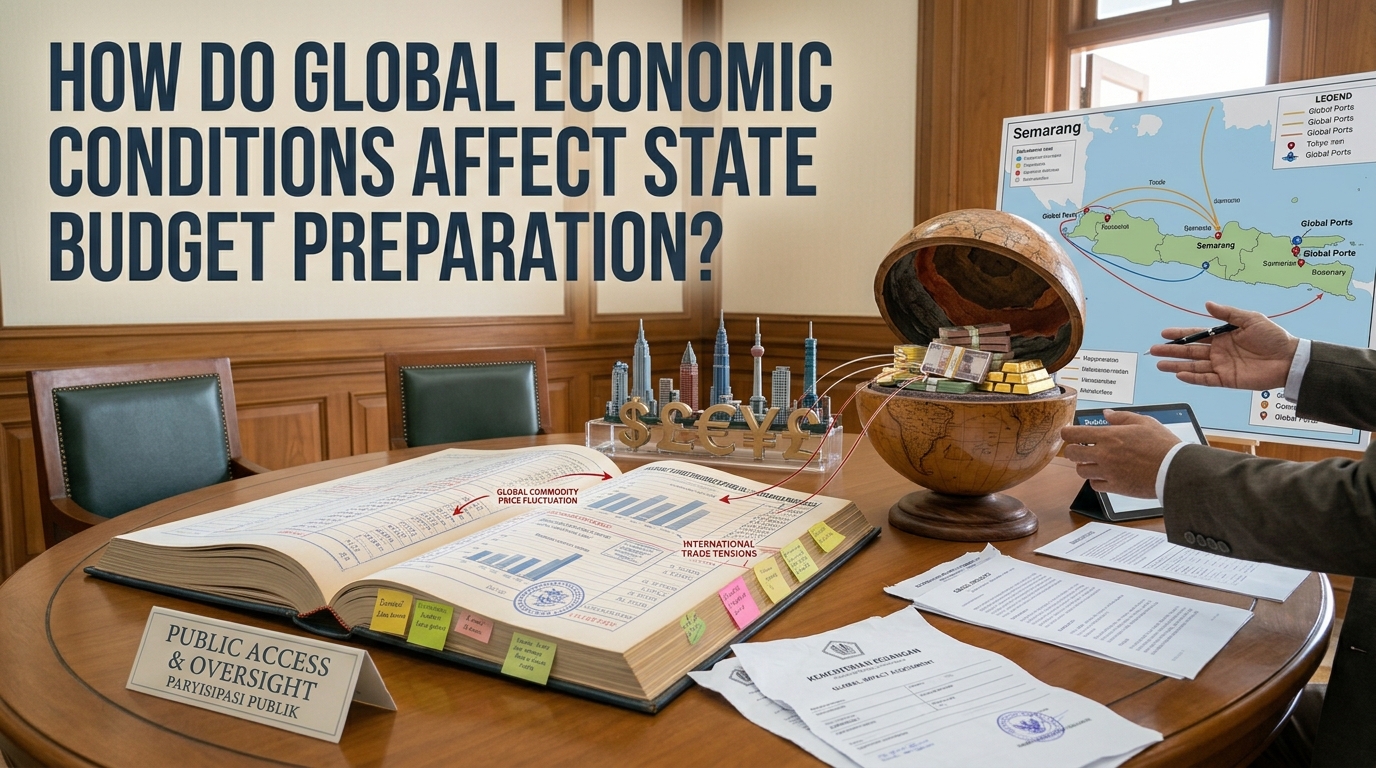
Global economic conditions play an important role in state budget preparation because countries are connected through international trade, investment, financial markets, and commodity prices. Changes in the global economy can influence government revenue, public spending, and national development priorities. In Indonesia, the State Budget or Anggaran Pendapatan dan Belanja Negara (APBN) must account for both domestic economic performance and international developments. Factors such as global inflation, exchange rate movements, interest rates, and demand for exports can affect the government's financial position. Understanding these influences helps the government prepare a realistic, flexible, and sustainable state budget.
CHANGES IN GLOBAL ECONOMIC GROWTH
Global economic growth affects the demand for Indonesian goods and services in international markets. When major trading partners experience strong economic growth, demand for Indonesian exports may increase, supporting business activity and government revenue. However, a global slowdown can reduce export demand, weaken business confidence, and limit economic growth at home. These changes may influence tax collections and the government's ability to finance development programs. Therefore, global growth forecasts are important when estimating national revenue and determining appropriate spending priorities.
FLUCTUATIONS IN COMMODITY PRICES
Commodity prices are particularly important for Indonesia because the country exports products such as coal, palm oil, and other natural resources. When international prices rise, certain resource-related revenues may increase, depending on production volumes, government policies, and collection arrangements. When prices fall, revenue from these sources may decline and affect budget planning. Commodity price changes can also influence domestic energy costs, production expenses, and government spending requirements. The government must use realistic commodity price assumptions to reduce the risk of relying on revenue that may not materialize.
EXCHANGE RATE MOVEMENTS
Exchange rates influence the value of international transactions and some government financial obligations. A weaker rupiah against foreign currencies can increase the rupiah cost of imported goods, including equipment and materials used in public projects. It may also increase the domestic cost of servicing foreign-currency debt, although the overall effect depends on the government's financial position and risk management. On the other hand, exchange rate changes can affect the competitiveness and profitability of Indonesian exporters. By monitoring exchange rate risks, the government can prepare more accurate revenue estimates and expenditure plans.
GLOBAL INFLATION AND RISING COSTS
Global inflation can increase the prices of energy, food, raw materials, and manufactured goods. These price increases may raise the cost of government projects, public procurement, and essential services. If imported goods become more expensive, infrastructure projects and public institutions may require larger budgets to maintain their planned activities. Higher living costs can also increase pressure for social assistance and other support programs. The government must consider inflation forecasts and cost estimates when preparing the state budget to maintain purchasing power and prevent unnecessary financial pressure.
INTERNATIONAL INTEREST RATES AND BORROWING COSTS
Changes in international interest rates can influence global investment flows and the cost of financing. When interest rates rise in major economies, some investors may move funds toward assets offering higher returns, which can place pressure on emerging-market currencies and financial markets. International borrowing costs may also increase, depending on market conditions and the country's credit risk. These developments can affect the government's financing strategy and the cost of managing public debt. Careful monitoring of interest rate movements and debt sustainability helps the government maintain fiscal stability while meeting its financing needs.
EFFECTS ON EXPORTS, IMPORTS, AND TAX REVENUE
International trade conditions influence business income, consumer spending, and government tax collections. Strong export demand may support production, employment, and company profits, potentially increasing certain tax revenues. Meanwhile, changes in import volumes and prices can affect import-related taxes and the cost of goods used by households and businesses. Trade disruptions or new international restrictions may also reduce economic activity in affected sectors. The government therefore considers trade forecasts and business conditions when estimating revenue and preparing development spending plans.
FOREIGN INVESTMENT AND EMPLOYMENT
Global economic conditions influence whether international companies are willing to invest in Indonesia. Stable economic prospects and predictable policies can encourage investment in manufacturing, infrastructure, technology, and other sectors. These investments may create jobs, expand production, and increase future tax revenue. However, global uncertainty or higher financing costs can cause businesses to delay or reduce investment plans. By considering foreign investment trends, the government can assess potential economic opportunities and prepare policies that support employment and long-term growth.
ADJUSTING BUDGET PRIORITIES TO GLOBAL RISKS
When global conditions change significantly, the government may need to review its budget assumptions and spending priorities. A global crisis could reduce revenue while increasing demand for assistance, emergency measures, or economic support. The government may respond by strengthening essential services, adjusting lower-priority expenditure, or using lawful financing mechanisms. Such decisions must follow applicable regulations and consider the impact on the budget deficit and public debt. Flexible budget planning and risk assessment help the government respond to uncertainty without abandoning important national development goals.
CONCLUSION
Global economic conditions affect state budget preparation through changes in economic growth, commodity prices, exchange rates, inflation, interest rates, trade, and investment. These factors influence how much revenue the government expects to collect and how much it may need to spend. In Indonesia, careful analysis of international developments helps improve APBN planning and reduce the risk of unrealistic financial assumptions. The government must combine reliable forecasts with responsible debt management, clear spending priorities, and regular economic monitoring. By preparing for different global scenarios, Indonesia can build a more resilient and sustainable state budget that supports national development.
Recent Posts

How Much Influence Does a Vice... 28.11.2026/70 View

Apa Alasan Kampus Menyediakan Program Kuliah... 15.11.2026/42 View

Bagaimana Cara Meningkatkan Kesiapan Diri Sebelum... 14.11.2026/53 View

Bagaimana Cara Menikmati Proses Hidup Tanpa... 14.11.2026/59 View

Why Are Leadership Skills Essential for... 14.11.2026/56 View
