

What Connects Business Planning With Long Term Sustainability?
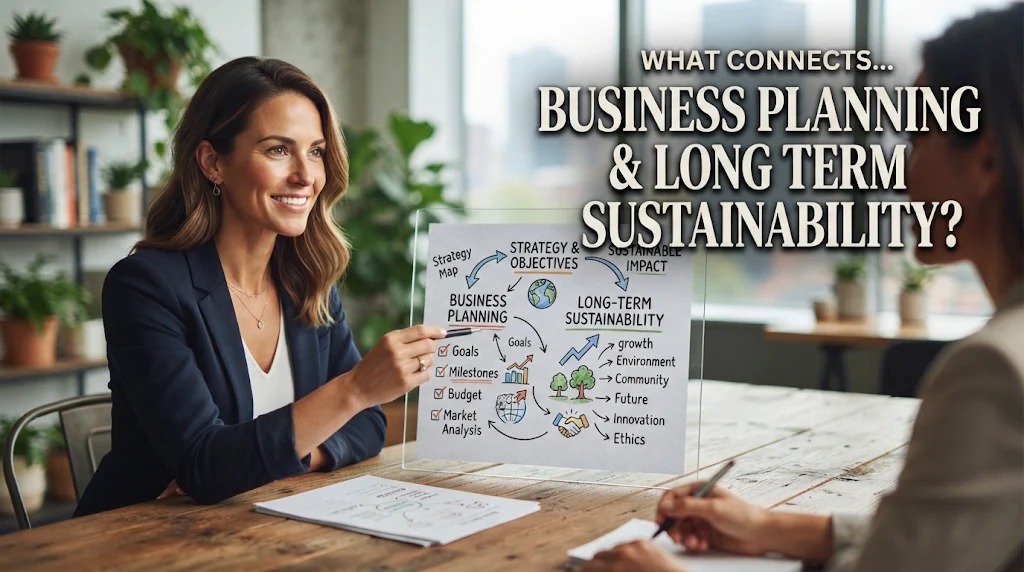
Building a sustainable business requires more than generating profits in the short term. Companies need to maintain financial health, respond to customer expectations, develop their workforce, and manage their impact on the environment. These responsibilities become easier to coordinate when businesses have a clear plan that guides their decisions and activities.
Business planning connects daily management with long-term sustainability by helping companies establish priorities, anticipate challenges, and allocate resources effectively. It provides a framework for balancing business performance with responsible practices. Through consistent planning and evaluation, entrepreneurs can build operations that remain relevant and capable of adapting to future developments.
ALIGN BUSINESS GOALS WITH LONG-TERM PRIORITIES
A sustainable business needs objectives that extend beyond immediate sales targets. Business planning helps entrepreneurs establish priorities related to profitability, customer satisfaction, operational efficiency, and responsible resource use. These objectives provide direction for decisions made across different departments.
For example, a company may aim to increase production while maintaining product quality and reducing unnecessary waste. Connecting these priorities encourages managers to consider the long-term consequences of their decisions. It also helps employees understand how their daily responsibilities contribute to the company's broader development.
DEVELOP A RESILIENT FINANCIAL STRUCTURE
Financial resilience allows businesses to continue operating when they experience unexpected expenses or changes in revenue. Business planning supports this objective through budgeting, cash flow forecasting, expense monitoring, and capital allocation.
Companies can use financial projections to estimate future requirements and prepare for different operating conditions. Maintaining appropriate cash reserves and controlling unnecessary spending can also reduce financial pressure. These practices help businesses protect their operations while creating opportunities for future investment.
ENCOURAGE RESPONSIBLE RESOURCE CONSUMPTION
The way companies use resources can influence both operating costs and environmental performance. Business planning allows entrepreneurs to identify areas where materials, energy, water, and equipment can be used more efficiently.
For instance, a manufacturing business may introduce production methods that reduce material waste or improve energy efficiency. A service company may reduce paper consumption by adopting digital documentation. Including these initiatives in business plans helps turn environmental considerations into practical operational objectives.
MAINTAIN PRODUCT AND SERVICE RELEVANCE
Customer expectations and market preferences can change over time. Businesses that regularly evaluate these developments are better prepared to maintain the relevance of their products and services.
Business planning encourages companies to collect customer feedback, examine purchasing patterns, and review product performance. These findings can guide improvements in quality, design, pricing, and service delivery. By responding to customer needs, businesses can strengthen relationships and maintain their position in the market.
INVEST IN EMPLOYEE SKILLS AND WELL-BEING
A company's long-term performance depends partly on the knowledge, abilities, and commitment of its employees. Business planning can include workforce development through training programs, career opportunities, performance reviews, and clear job responsibilities.
Companies that invest in employee development can improve productivity and prepare their teams for new operational requirements. Providing a supportive working environment also contributes to employee engagement and organizational stability. These efforts help businesses maintain the human resources needed for continued development.
PREPARE FOR OPERATIONAL AND MARKET RISKS
Unexpected challenges can interrupt business activities and affect financial performance. These challenges may include supply shortages, changing regulations, technology disruptions, economic uncertainty, or new competitors.
A business plan can identify potential risks and establish preventive measures. Companies may prepare alternative suppliers, maintain emergency budgets, strengthen data protection, and develop backup operating procedures. Preparing these responses helps businesses reduce disruption and maintain essential activities when conditions become difficult.
INTEGRATE ENVIRONMENTAL AND SOCIAL RESPONSIBILITY
Long-term sustainability also involves considering how business activities affect communities and the natural environment. Companies can include responsible practices in their plans, such as reducing pollution, improving workplace safety, supporting local suppliers, and treating employees fairly.
These initiatives should have clear objectives and realistic implementation steps. Businesses can establish targets, assign responsibilities, and monitor their progress. Integrating environmental and social considerations into planning helps companies evaluate their broader impact alongside financial results.
BUILD ADAPTABILITY THROUGH INNOVATION
Innovation helps businesses respond to technological developments, changing consumer behavior, and new industry requirements. Business planning creates opportunities to evaluate new ideas and determine whether they are suitable for the company's resources and objectives.
Innovation does not always require major technological investment. It may involve improving customer service, simplifying production processes, introducing new products, or using digital tools to manage operations. By reviewing opportunities regularly, businesses can remain adaptable without losing sight of their long-term priorities.
STRENGTHEN RELATIONSHIPS WITH BUSINESS PARTNERS
Reliable relationships with suppliers, distributors, customers, and other organizations can support business continuity. Business planning helps companies identify partnerships that contribute to operational efficiency and shared development objectives.
For example, a business may cooperate with local suppliers to improve material availability or work with distribution partners to reach new customer groups. Clear agreements, communication, and performance evaluations help maintain these relationships. Strong partnerships can provide additional support when businesses face operational challenges or pursue new opportunities.
MEASURE SUSTAINABILITY PERFORMANCE
Long-term sustainability requires businesses to evaluate whether their strategies are producing meaningful results. Business plans can include performance indicators covering financial, operational, environmental, and social objectives.
Companies may monitor profitability, cash flow, customer retention, employee turnover, energy consumption, and waste reduction. Reviewing these indicators helps managers identify progress and areas that need improvement. The findings can then be used to update targets and adjust business strategies when necessary.
CONCLUSION
Business planning connects with long-term sustainability by providing a structured approach to financial management, responsible resource use, customer satisfaction, employee development, and risk preparation. It also helps companies integrate environmental responsibility, innovation, and strong partnerships into their daily operations.
Sustainability requires continuous commitment rather than a single business decision. By setting measurable objectives, monitoring performance, and updating strategies when conditions change, companies can strengthen their operations and create a foundation for responsible long-term development.
Recent Posts

How Much Influence Does a Vice... 28.11.2026/91 View
What Connects Business Planning With Long... 16.11.2026/10 View

Apa Penyebab Seseorang Merasa Tertinggal dalam... 16.11.2026/7 View

Mengapa Kesuksesan Tidak Harus Dicapai pada... 16.11.2026/9 View
How Can Businesses Adapt Plans to... 16.11.2026/9 View
