

What Is a Joint Escrow Account and How Does It Work in Online Transactions?
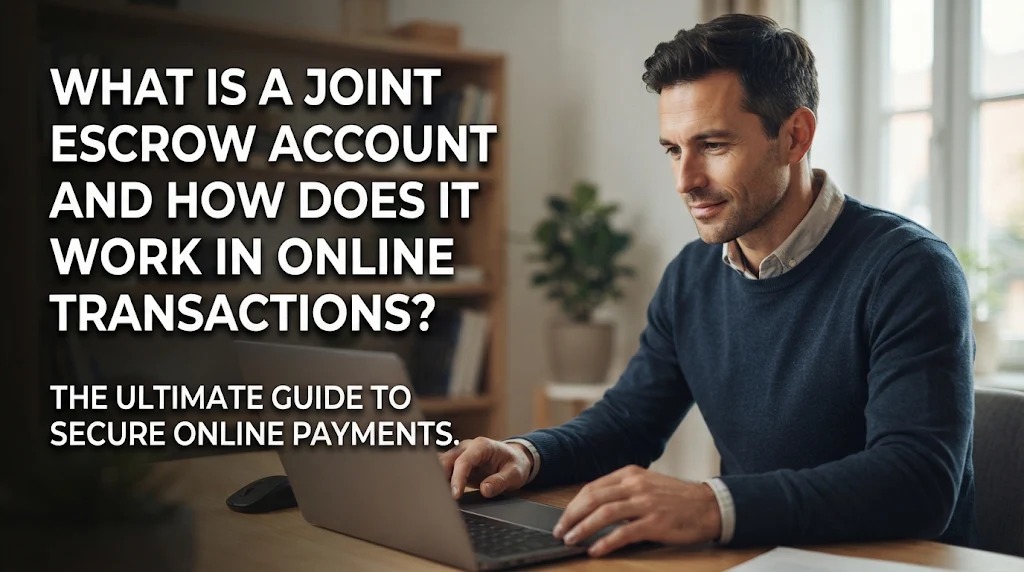
Online transactions have become an important part of modern business and daily life. People can purchase products, sell goods, and exchange services without meeting face to face. However, these transactions also create risks, especially when buyers and sellers do not know each other.
One way to reduce these risks is by using a joint escrow account. This system helps protect both parties by holding payment funds until the agreed transaction conditions are fulfilled. Understanding how escrow accounts work can help buyers and sellers make safer decisions when conducting business online.
WHAT IS A JOINT ESCROW ACCOUNT?
A joint escrow account is an arrangement in which money or other assets are held by a neutral third party until certain conditions are met. The third party, commonly called an escrow agent or escrow service provider, manages the funds according to an agreement between the buyer and seller.
In online transactions, the buyer usually deposits the payment into the escrow account before the seller delivers the product or service. The funds remain protected while the transaction is in progress. Once the buyer receives the goods or confirms that the agreed conditions have been satisfied, the escrow provider releases the money to the seller.
The main purpose of this arrangement is to protect both buyers and sellers from potential fraud and payment disputes. Buyers gain confidence that their money will not immediately go to an unverified seller. Sellers also receive assurance that the buyer has provided the required payment before completing the transaction.
Although the term joint escrow account suggests shared ownership, the exact legal arrangement depends on the service provider and applicable regulations. In many online transactions, the account is controlled by the escrow provider rather than being a conventional joint bank account owned directly by the buyer and seller.
HOW DOES A JOINT ESCROW ACCOUNT WORK IN ONLINE TRANSACTIONS?
The escrow process generally follows several stages. Each stage helps ensure that both parties understand their responsibilities and that the transaction proceeds according to the agreed conditions.
First, the buyer and seller agree on the product, price, delivery method, and transaction terms. They then select a reliable escrow provider and establish the conditions for releasing the funds. The buyer deposits the agreed payment into the escrow account, and the provider confirms that the funds have been received.
After receiving confirmation, the seller proceeds with the delivery of the product or service. The buyer can then inspect the goods or verify that the service meets the agreed requirements. If everything is satisfactory, the buyer confirms acceptance, allowing the escrow provider to release the funds to the seller.
The following steps explain the process more clearly:
- Agreement: The buyer and seller establish the transaction terms and conditions.
- Deposit: The buyer transfers the payment to the escrow provider.
- Verification: The provider confirms that the funds have been received.
- Delivery: The seller sends the product or completes the agreed service.
- Acceptance: The buyer checks the delivery and confirms that the conditions have been fulfilled.
- Fund release: The escrow provider transfers the payment to the seller according to the agreement.
If a problem occurs, such as a missing delivery or a product that does not match the agreement, the transaction may enter a dispute resolution process. The provider reviews the available evidence and follows the agreed procedures before deciding whether to release, return, or otherwise handle the funds.
WHAT ARE THE MAIN BENEFITS OF A JOINT ESCROW ACCOUNT?
One of the biggest advantages of a joint escrow account is increased payment security. The buyer does not need to send money directly to an unfamiliar seller without any protection. Instead, the funds remain under the control of the escrow provider until the required conditions are satisfied.
Escrow services also help create trust between buyers and sellers. In online marketplaces, people often conduct transactions without knowing each other personally. An independent provider can reduce uncertainty by managing the payment process according to clearly defined rules.
Another important benefit is the reduction of payment disputes. When the transaction terms are documented in advance, both parties have a clearer understanding of their responsibilities. If a disagreement occurs, the escrow agreement can provide a basis for reviewing the situation and determining the next steps.
Escrow accounts can also support transactions involving expensive products, specialized services, or international purchases. For example, a buyer purchasing expensive electronic equipment from another city may feel more comfortable using escrow than transferring money directly to an unfamiliar seller.
However, escrow does not guarantee complete protection against fraud. The service must be legitimate, the transaction terms must be clear, and both parties must follow the agreed procedures. Some providers also charge service fees, which should be considered before starting the transaction.
WHAT SHOULD BUYERS AND SELLERS CONSIDER BEFORE USING ESCROW?
Before using a joint escrow account, buyers and sellers should carefully evaluate the provider's reputation, security measures, and operating procedures. A trustworthy provider should explain how funds are held, when payments are released, and what happens if a transaction becomes disputed.
Verifying the provider's legitimacy is particularly important because scammers sometimes create fake escrow websites or impersonate established services. Users should check the provider's official identity, contact information, registration status where applicable, and independent reputation. They should also avoid relying solely on recommendations from strangers or links shared through suspicious messages.
Another important consideration is the transaction agreement. Both parties should clearly document the product description, total payment, delivery deadline, inspection period, and conditions for releasing or returning funds. These details help prevent misunderstandings and provide useful evidence if a dispute occurs.
Users should also understand the provider's fees and refund policies. Some escrow services charge a percentage of the transaction value, while others use fixed fees or additional charges for specific services. Buyers and sellers should confirm these costs before depositing money.
Finally, users should remember that escrow is only one part of a safe online transaction. They should still check the seller's credibility, review product information carefully, and keep records of communications and payments. A legitimate escrow provider combined with careful verification and clear agreements offers stronger protection than relying on escrow alone.
WHAT ARE THE RISKS AND LIMITATIONS OF ESCROW ACCOUNTS?
Although escrow accounts can improve transaction security, they also have limitations that users should understand. One possible risk is choosing a fraudulent provider that claims to offer escrow services but actually intends to steal the deposited money.
Another concern is the possibility of delayed fund releases. A transaction may take longer than expected if the buyer does not confirm acceptance, the seller fails to provide delivery evidence, or the provider needs additional information. Disputes can also delay payments while the provider reviews the available evidence.
Escrow services may not always provide the same level of protection. Some providers offer formal dispute resolution procedures, while others have limited support or unclear refund policies. Users should therefore review the service agreement carefully instead of assuming that every escrow provider offers identical protections.
There may also be legal and regulatory differences depending on the country, transaction type, and service provider. Certain transactions may require additional documentation or may not be supported by a particular escrow service. International transactions can involve currency conversion costs, transfer fees, and different consumer protection rules.
To reduce these risks, users should select a reputable provider, verify the official payment instructions, and keep copies of the transaction agreement. They should never deposit money into an account simply because a seller claims that it is protected by escrow. The actual protection depends on the legitimacy of the provider and the terms of the arrangement.
CONCLUSION
A joint escrow account is a useful payment arrangement for making online transactions safer. By holding funds with a neutral third party, escrow services help reduce payment risks and build trust between buyers and sellers.
The process usually involves an agreement, a payment deposit, product or service delivery, buyer confirmation, and the release of funds. This arrangement can be particularly helpful when dealing with unfamiliar parties or expensive purchases.
However, escrow services are not completely risk-free. Users must verify the provider's legitimacy, understand the transaction terms, and review the dispute resolution process before making a payment. When used carefully, a reliable escrow account can provide an additional layer of security and confidence in online buying and selling.
Recent Posts

Apa Saja Keuntungan Mengambil Kuliah Cepat?... 23.11.2026/27 View
What Is a Joint Escrow Account... 23.11.2026/12 View
Why Are Escrow Services Important for... 23.11.2026/10 View
How Can Buyers Use Escrow Accounts... 23.11.2026/8 View
What Are the Main Benefits of... 23.11.2026/7 View
