

What Is Learning Research and Why Is It Important in Modern Education?

Learning research is a systematic effort to understand how people learn, what influences their learning processes, and which teaching methods produce the best results. In modern education, learning research plays an important role in improving the quality of teaching and helping students achieve better academic outcomes. Through research, teachers, educators, and educational institutions can identify students' needs, evaluate learning strategies, and develop more effective educational approaches.
As technology and society continue to change, education must also adapt to new challenges. Learning research provides valuable information that helps schools and universities create relevant, inclusive, and innovative learning environments. It also encourages educators to make decisions based on evidence rather than assumptions.
UNDERSTANDING THE MEANING OF LEARNING RESEARCH
Learning research is a systematic process of studying how individuals acquire knowledge, develop skills, and improve their understanding of different subjects. It examines various factors that influence learning, including teaching methods, learning environments, student motivation, and educational technology. Researchers use different approaches, such as observations, interviews, experiments, and questionnaires, to collect and analyze information. The results help educators understand why some learning strategies work better than others. Therefore, learning research becomes an important foundation for improving educational practices.
In addition, learning research explores differences in how students process information and respond to teaching activities. Some students understand lessons more easily through visual materials, while others learn better through discussions, practical activities, or independent study. By understanding these differences, teachers can develop more flexible learning strategies that accommodate different learning needs. This approach makes education more meaningful and supports students in developing their abilities.
WHY IS LEARNING RESEARCH IMPORTANT IN MODERN EDUCATION?
Learning research is important because it helps educational institutions improve the effectiveness of teaching and learning activities. Without proper research, teachers may rely on traditional methods that do not always meet students' current needs. Research provides evidence-based information about which strategies are effective and which areas require improvement. It also helps schools and universities identify educational challenges and develop appropriate solutions. As a result, the learning process can become more structured, relevant, and productive.
Furthermore, learning research supports educational development in a rapidly changing world. Modern students need more than theoretical knowledge because they must also develop critical thinking, creativity, communication, and problem-solving abilities. Research helps educators understand how these skills can be integrated into classroom activities. It also encourages institutions to evaluate their educational programs regularly. Through continuous improvement, education can prepare students to face future academic and professional challenges.
IMPROVING TEACHING METHODS AND LEARNING STRATEGIES
One of the main benefits of learning research is its ability to improve teaching methods. Teachers can use research findings to identify teaching strategies that make lessons easier to understand and more engaging. For example, project-based learning, group discussions, case studies, and interactive presentations can encourage students to participate actively. These approaches help students connect theoretical concepts with real-life situations. Consequently, learning activities become more effective and meaningful.
Learning research also helps teachers evaluate whether their teaching strategies achieve the expected results. By collecting feedback, observing classroom activities, and assessing student performance, educators can identify areas that need improvement. If a particular method does not produce positive outcomes, teachers can adjust their approach. Continuous evaluation allows teaching strategies to develop according to students' progress and educational needs. This process helps create a more supportive and effective learning environment.
SUPPORTING STUDENTS' NEEDS AND LEARNING DEVELOPMENT
Every student has different abilities, interests, backgrounds, and learning challenges. Learning research helps educators understand these differences and identify the support students need to achieve their academic goals. For example, some students may require additional explanations, practical exercises, or learning materials that are easier to understand. By recognizing these needs, teachers can provide more appropriate learning experiences. This approach promotes inclusive education and gives students better opportunities to develop their potential.
Moreover, research can help identify factors that influence student motivation and academic performance. These factors may include family support, classroom conditions, access to technology, and relationships with teachers and classmates. Understanding these influences allows schools and universities to develop suitable support programs. Students can also receive more constructive feedback to improve their weaknesses. As a result, learning research contributes to both academic achievement and personal development.
THE ROLE OF TECHNOLOGY IN LEARNING RESEARCH
Technology has significantly changed how students access information and participate in educational activities. Digital platforms, online learning applications, educational videos, and virtual classrooms provide new opportunities for learning. Learning research helps educators evaluate whether these technologies improve student engagement and understanding. It also examines the challenges of digital education, including limited internet access, distractions, and differences in technological skills. These findings help institutions select technology that genuinely supports educational objectives.
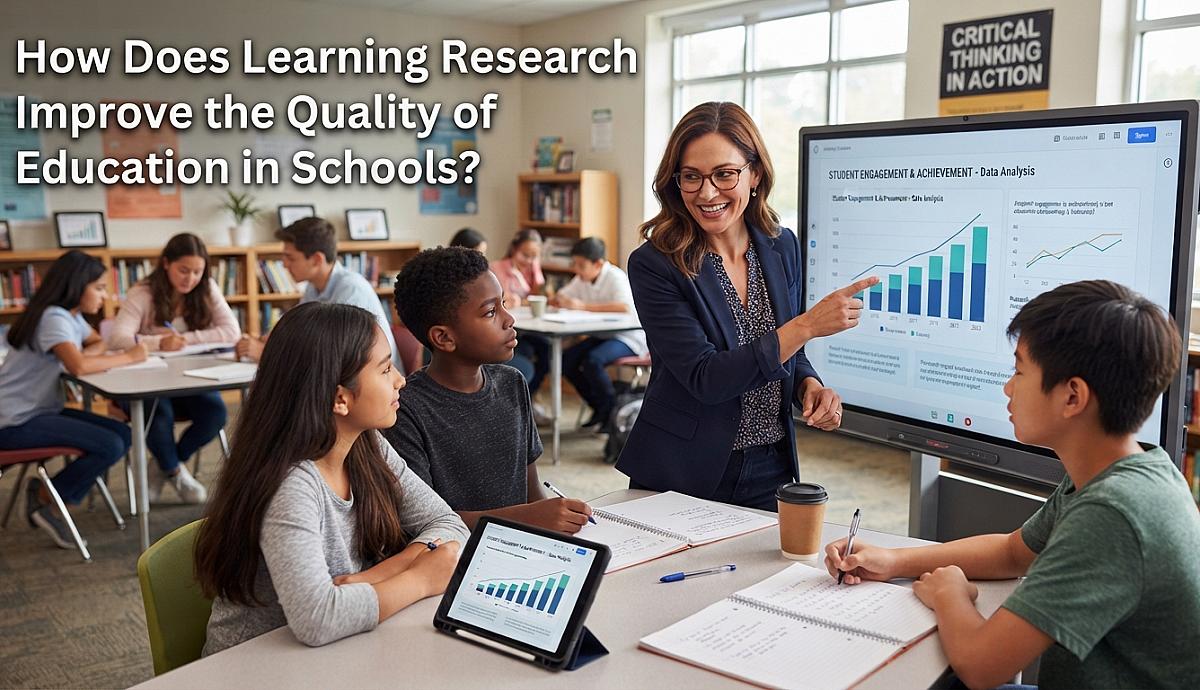
In addition, technology allows researchers to collect and analyze learning data more efficiently. For example, digital learning platforms can provide information about student participation, assignment completion, and learning progress. Educators can use this information to identify students who may need additional assistance. However, data privacy and responsible technology use must remain important considerations. Technology should support teachers and students rather than replace meaningful educational interaction.
DEVELOPING CRITICAL THINKING AND PROBLEM-SOLVING SKILLS
Modern education aims to prepare students to think independently and solve problems effectively. Learning research helps educators discover teaching approaches that encourage students to analyze information, evaluate different perspectives, and develop logical conclusions. Activities such as research projects, classroom debates, experiments, and problem-based learning can strengthen these abilities. Students are encouraged to ask questions instead of simply memorizing information. This makes the learning process more active and intellectually challenging.
Furthermore, learning research supports the development of creativity and independent thinking. Students can learn how to identify problems, explore possible solutions, and make decisions based on reliable information. These abilities are valuable not only in academic environments but also in everyday life and professional careers. By integrating research-based learning activities, educators can help students become more confident and responsible learners. Therefore, critical thinking and problem-solving skills are essential outcomes of modern educational development.
CHALLENGES IN CONDUCTING LEARNING RESEARCH
Although learning research provides many benefits, conducting it can involve several challenges. One common difficulty is the limited availability of research funding, learning facilities, and qualified researchers. Some educational institutions may also lack sufficient time and resources to conduct comprehensive studies. In addition, collecting accurate information from students and teachers requires appropriate research methods. Without reliable data, research findings may not accurately represent the actual learning situation.
Another challenge is applying research findings in real educational environments. A teaching strategy that works well in one school may not produce the same results in another because students, facilities, and educational conditions can differ. Educators must therefore consider local circumstances before implementing research-based recommendations. Collaboration between teachers, researchers, students, and educational institutions is also necessary to overcome these limitations. With proper planning and evaluation, learning research can provide more practical and relevant solutions.
THE FUTURE OF LEARNING RESEARCH IN MODERN EDUCATION
The future of learning research will continue to develop alongside changes in technology, educational needs, and learning environments. Artificial intelligence, personalized learning systems, and digital educational platforms are creating new opportunities for understanding student behavior and learning progress. Researchers can explore how these innovations influence student engagement, academic performance, and teaching effectiveness. However, technological development must be balanced with human interaction, ethical considerations, and equal access to education.
In the coming years, learning research will also become increasingly important in developing personalized and inclusive education. Educational institutions will need to understand students' individual needs while preparing them for a competitive and rapidly changing world. Cooperation between teachers, researchers, policymakers, and technology developers can help create better educational solutions. By continuously evaluating teaching practices and learning outcomes, schools and universities can improve educational quality. Ultimately, learning research will remain an essential foundation for building a more effective, innovative, and sustainable education system.
CONCLUSION
Learning research is an important part of modern education because it helps educators understand how students learn and how teaching methods can be improved. Through systematic investigation and evidence-based evaluation, research supports better teaching strategies, student development, technological innovation, and inclusive learning environments.
Although challenges such as limited resources and differences in educational conditions still exist, learning research provides valuable solutions for improving educational quality. By applying research findings consistently, schools and universities can create learning experiences that are more relevant to students' needs. Effective learning research helps build an education system that prepares students with the knowledge, skills, and confidence needed for the future.
Recent Posts

How Much Influence Does a Vice... 28.11.2026/125 View

Syarat Mengikuti Program Kuliah Cepat di... 17.11.2026/20 View

What Is Learning Research and Why... 17.11.2026/9 View
How Does Learning Research Improve the... 17.11.2026/7 View

Why Is Learning Research Important for... 17.11.2026/8 View
