

Why Is Learning Research Important for Developing Students Critical Thinking Skills?
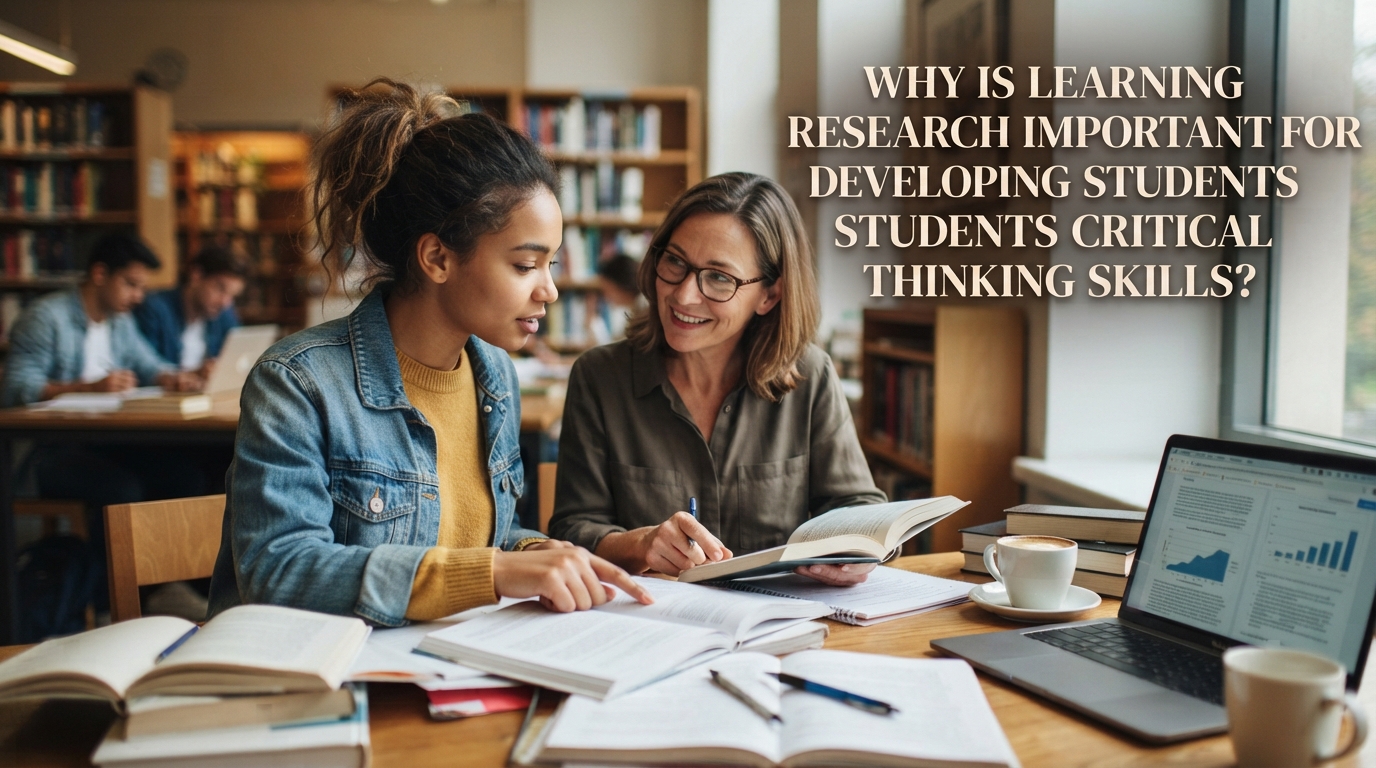
Learning research plays an important role in helping students develop critical thinking skills. In modern education, students are expected to do more than memorize information and complete assignments. They also need to understand concepts, analyze information, evaluate different perspectives, and make logical decisions. Learning research helps educators discover teaching approaches that encourage these abilities and create more meaningful learning experiences.
As educational needs continue to change, students must learn how to respond to information critically and responsibly. They often encounter information from textbooks, digital platforms, social media, and other sources that may not always be accurate. Through research-based learning activities, students can develop the ability to distinguish reliable information from misleading content. Therefore, learning research is essential for preparing students to become independent, thoughtful, and responsible individuals.
UNDERSTANDING LEARNING RESEARCH AND CRITICAL THINKING
Learning research is a systematic process of studying how students acquire knowledge, understand information, and develop different abilities. It examines teaching methods, learning activities, student motivation, and educational environments to discover effective ways of improving learning outcomes. Meanwhile, critical thinking refers to the ability to analyze information, examine evidence, identify assumptions, and form reasonable conclusions. These two concepts are closely connected because learning research helps educators understand how critical thinking can be developed through appropriate educational practices.
In the classroom, critical thinking allows students to explore information instead of accepting every statement without questioning it. For example, students can compare different explanations, examine supporting evidence, and discuss whether an argument is reasonable. Learning research helps teachers identify activities that encourage this type of intellectual development. By understanding how students process information, educators can design lessons that promote independent thinking and deeper understanding.
ENCOURAGING STUDENTS TO ANALYZE INFORMATION
One important reason learning research matters is that it helps teachers develop activities that strengthen students' analytical abilities. Students need opportunities to examine information, recognize important details, and understand relationships between different ideas. Research-based teaching methods can encourage students to work with real examples, analyze problems, and explain their reasoning. Activities such as case studies, classroom discussions, and research assignments can make students more active in the learning process. These experiences help them understand subjects beyond basic memorization.
Furthermore, students can learn to compare information from different sources before reaching conclusions. For example, when studying environmental issues, they can examine scientific reports, news articles, and research findings to understand different perspectives. Teachers can guide them to identify relevant evidence and recognize information that lacks sufficient support. Information analysis helps students become more careful when interpreting facts and making judgments. This ability is valuable in academic activities and everyday situations.
DEVELOPING THE ABILITY TO EVALUATE INFORMATION
Critical thinking requires students to evaluate information rather than accept everything they read or hear. Learning research helps educators identify teaching strategies that encourage students to question the accuracy, relevance, and credibility of information. Teachers can introduce activities that require students to examine arguments, identify possible biases, and verify supporting evidence. These activities train students to make decisions based on reliable information instead of personal assumptions. As a result, students become more responsible when using information.
This ability is increasingly important because digital platforms provide access to large amounts of information. However, not all online content is accurate, objective, or supported by credible evidence. Students must understand how to check the source, publication date, author's background, and supporting references. Through research-based learning, teachers can introduce media and information literacy as part of classroom activities. These skills help students avoid misinformation and develop more thoughtful opinions.
IMPROVING PROBLEM-SOLVING AND DECISION-MAKING SKILLS
Learning research also supports the development of students' problem-solving abilities. Research findings help teachers understand which learning activities encourage students to identify problems, explore possible solutions, and evaluate different approaches. For example, project-based learning allows students to investigate real-world challenges and develop solutions through collaboration. This process requires them to collect information, discuss ideas, and consider the possible consequences of their decisions. Such activities strengthen their ability to think logically and systematically.
In addition, students learn that many problems do not have only one possible solution. They need to consider different perspectives, examine available evidence, and select the most reasonable approach. Teachers can guide students through practical exercises, scientific experiments, and problem-based assignments. Logical decision-making becomes stronger when students understand how to support their choices with clear explanations. These abilities are useful in education, future careers, and daily life.
PROMOTING CREATIVITY AND OPEN-MINDED THINKING
Critical thinking is closely related to creativity because both abilities encourage students to explore ideas and consider different possibilities. Learning research helps educators discover teaching methods that allow students to express opinions, ask questions, and develop original solutions. Activities such as brainstorming, group projects, experiments, and creative assignments can create opportunities for independent exploration. Students become more comfortable sharing ideas and considering alternative approaches. This process supports intellectual development and encourages curiosity.
Open-minded thinking is also important because students need to understand that different people may have different opinions and experiences. Through classroom discussions and collaborative research projects, students can learn to listen to others, examine opposing arguments, and reconsider their own assumptions. Teachers should create an environment where students feel comfortable expressing ideas respectfully. Creativity and open-mindedness help students become more flexible when facing unfamiliar situations. These qualities also support innovation and effective communication.
USING EFFECTIVE TEACHING METHODS TO BUILD CRITICAL THINKING
Learning research provides evidence that helps teachers select teaching methods that encourage deeper thinking. One example is problem-based learning, where students investigate real situations and develop solutions through analysis. Another approach is project-based learning, which requires students to plan, research, collaborate, and present their findings. Classroom debates can also help students understand different arguments and support their opinions with evidence. These approaches encourage active participation rather than passive learning.
Teachers can also use reflective learning activities to strengthen students' understanding. For example, students can write short reflections after completing assignments, explain how they reached a conclusion, or identify difficulties they experienced. These activities help them recognize their thinking processes and evaluate their own learning progress. Active and reflective learning gives students opportunities to improve their reasoning abilities gradually. By applying appropriate teaching methods, educators can make critical thinking a regular part of classroom activities.
THE ROLE OF TEACHERS IN SUPPORTING CRITICAL THINKING DEVELOPMENT
Teachers have an important responsibility in creating learning experiences that encourage students to think independently. They can ask open-ended questions that require explanations, comparisons, and logical arguments instead of simple yes-or-no answers. Teachers should also encourage students to ask questions when they encounter unfamiliar concepts or conflicting information. This approach creates a classroom atmosphere where curiosity and discussion are part of the learning process. Learning research helps educators understand how to guide these activities effectively.
Furthermore, teachers need to provide constructive feedback that helps students improve their reasoning. Instead of immediately giving answers, educators can guide students to examine evidence and discover solutions independently. Teachers should also recognize that students develop critical thinking at different speeds and may require different levels of support. Guidance, feedback, and classroom interaction are important factors in developing these abilities. With consistent support, students can become more confident in expressing and defending their ideas.
CHALLENGES IN DEVELOPING STUDENTS' CRITICAL THINKING SKILLS
Developing critical thinking skills requires time, appropriate teaching methods, and consistent practice. One challenge is that some students are more familiar with memorizing information than analyzing concepts or questioning arguments. Large class sizes and limited learning resources can also make it difficult for teachers to provide individual guidance. In addition, strict learning schedules may reduce opportunities for discussions, experiments, and research activities. These conditions can limit students' opportunities to practice independent thinking.
Another challenge is the availability of inaccurate information and excessive digital content. Students may struggle to distinguish reliable sources from misleading information if they do not receive proper guidance. Schools can address these challenges by providing information literacy activities, encouraging classroom discussions, and improving access to learning resources. Teacher development and supportive educational environments are also necessary for successful implementation. Through continuous improvement, schools can create better opportunities for students to develop critical thinking skills.
CONCLUSION
Learning research is important for developing students' critical thinking skills because it helps educators understand how students learn, analyze information, and solve problems. Through research-based teaching methods, students can improve their analytical abilities, evaluate information, make logical decisions, and develop creative ideas. These skills are essential for achieving academic success and preparing students to face challenges in everyday life.
Although developing critical thinking requires time and consistent support, schools can improve the process through effective teaching strategies, constructive feedback, and active learning activities. Teachers, students, and educational institutions must work together to create an environment that encourages curiosity and independent thinking. Ultimately, learning research provides an important foundation for developing students who can think critically, make informed decisions, and contribute positively to society.
Recent Posts

How Much Influence Does a Vice... 28.11.2026/125 View

Syarat Mengikuti Program Kuliah Cepat di... 17.11.2026/20 View

What Is Learning Research and Why... 17.11.2026/8 View
How Does Learning Research Improve the... 17.11.2026/7 View
Why Is Learning Research Important for... 17.11.2026/8 View
