

How Do Digital Signatures Simplify Administrative Processes?
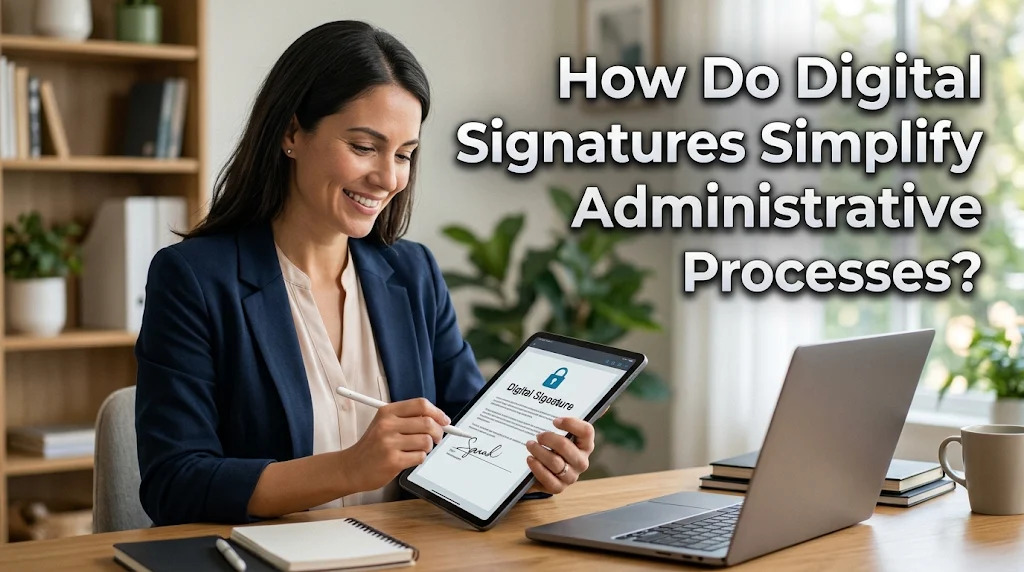
Administrative processes are an essential part of daily activities in companies, educational institutions, government offices, and other organizations. These activities often involve preparing documents, requesting approvals, signing agreements, and storing important records. Traditionally, many administrative procedures rely on printed paperwork and handwritten signatures, which can require considerable time and coordination.
The development of digital technology has introduced more practical ways to manage these activities. One solution is the digital signature, which allows authorized individuals to sign electronic documents using cryptographic technology. By incorporating digital signatures into administrative workflows, organizations can reduce unnecessary steps, improve document management, and make approval processes more efficient.
REDUCING THE TIME REQUIRED FOR DOCUMENT APPROVAL
One of the main ways digital signatures simplify administrative processes is by reducing the time needed to approve documents. Traditional procedures may require employees to print documents, distribute them to relevant individuals, collect handwritten signatures, and return the completed paperwork. This process can become complicated when several people need to approve the same document.
With digital signatures, documents can be prepared and distributed electronically through supported platforms. Authorized individuals can review the contents and sign them using their devices without handling physical copies. For example, a manager can approve an employee's administrative request electronically instead of waiting for printed documents to be delivered.
This approach is especially useful for organizations that process large numbers of documents regularly. It can reduce delays caused by physical document distribution and make approval activities easier to coordinate. Digital signatures help accelerate administrative workflows by allowing authorized users to complete signing activities more conveniently.
SIMPLIFYING DOCUMENT DISTRIBUTION AND COORDINATION
Administrative activities often involve several departments or individuals who need to review and approve the same document. In a traditional system, paperwork may need to move from one office to another before the process can be completed. This can create difficulties when participants work in different locations or have busy schedules.
Digital signatures make document distribution more flexible because electronic files can be shared through secure platforms. For example, a human resources department can send an employment agreement to a new employee, while the relevant manager can review and approve it through the same digital workflow. Some platforms also allow organizations to establish a signing order so that documents reach the appropriate participants at each stage.
This arrangement can improve communication between departments and reduce the possibility of documents being misplaced during distribution. Employees can also monitor the progress of certain signing activities when the platform provides status-tracking features. Electronic document coordination helps organizations manage approvals more systematically without depending entirely on physical paperwork.
IMPROVING DOCUMENT SECURITY AND AUTHENTICATION
Administrative documents may contain personal information, financial details, employment agreements, and other sensitive records. Protecting these documents is important because unauthorized changes or access can create serious problems for an organization. Digital signatures help address some of these concerns through cryptographic mechanisms designed to verify signatures and protect document integrity.
A digital signature generally uses a private key to create a signature and a corresponding public key to verify it. When a signed document is modified, the verification process can detect that its integrity has been affected. This allows recipients to check whether the document remains consistent with the version that was originally signed.
Organizations still need to establish appropriate security procedures when using this technology. Private keys must be protected, user identities should be verified, and access to sensitive documents must be controlled. Companies should also choose reliable providers and ensure that their signing processes meet applicable legal and regulatory requirements. Digital signatures strengthen document authentication when supported by proper security management.
MAKING DOCUMENT STORAGE AND RETRIEVAL MORE EFFICIENT
Managing large amounts of paperwork can be challenging for organizations. Printed documents require physical storage space, organized filing systems, and additional effort when employees need to locate specific records. Digital signatures support electronic document management by allowing signed files to be stored in digital repositories.
With an organized digital filing system, employees can search for documents using relevant information such as document names, dates, departments, or reference numbers. This can make it easier to retrieve employment agreements, approval forms, contracts, and other administrative records. Some platforms also provide audit trails that record important signing activities, including timestamps and information about the signing process.
However, storing documents electronically still requires proper management. Organizations should establish access permissions, retention policies, backup procedures, and secure storage systems. These measures help ensure that important records remain accessible to authorized individuals while reducing the risk of data loss or unauthorized disclosure. Digital document storage makes administrative records easier to organize, monitor, and retrieve.
REDUCING ADMINISTRATIVE COSTS AND SUPPORTING PAPERLESS WORKFLOWS
Digital signatures can help organizations reduce expenses associated with traditional paperwork. Printing, scanning, photocopying, physical storage, and document delivery all require resources. When these activities are performed frequently, their combined costs can become significant, particularly for companies with many employees or extensive administrative operations.
By adopting digital signing systems, organizations can reduce their dependence on printed documents. Employees can review, approve, and sign electronic files through supported platforms. This may also reduce the time spent handling physical paperwork, allowing administrative staff to focus on other responsibilities.
A paperless workflow can also support environmental efforts by reducing unnecessary paper consumption. Nevertheless, organizations should consider the costs of digital signature subscriptions, software integration, training, and data security when evaluating implementation. The most appropriate solution depends on the organization's size, document volume, and operational requirements. Digital signatures can support more cost-effective and environmentally conscious administration when introduced through careful planning.
CONCLUSION
Digital signatures simplify administrative processes by reducing approval times, improving document distribution, strengthening authentication, supporting efficient storage, and lowering dependence on physical paperwork. These advantages help organizations manage documents more systematically while making administrative activities more flexible and accessible.
However, successful implementation requires reliable technology, clear procedures, appropriate security controls, and compliance with applicable regulations. Organizations should also train employees to understand how digital signing systems work and how to use them responsibly. By integrating digital signatures into suitable administrative workflows, organizations can improve efficiency, strengthen document management, and support the transition toward modern digital operations.
Recent Posts

How Much Influence Does a Vice... 28.11.2026/128 View
How Can You Create a Secure... 17.11.2026/9 View
What Are the Benefits of Digital... 17.11.2026/8 View

Why Are Many Companies Starting to... 17.11.2026/8 View
How Do Digital Signatures Simplify Administrative... 17.11.2026/8 View
