

Why Are Many Companies Starting to Use Digital Signatures?
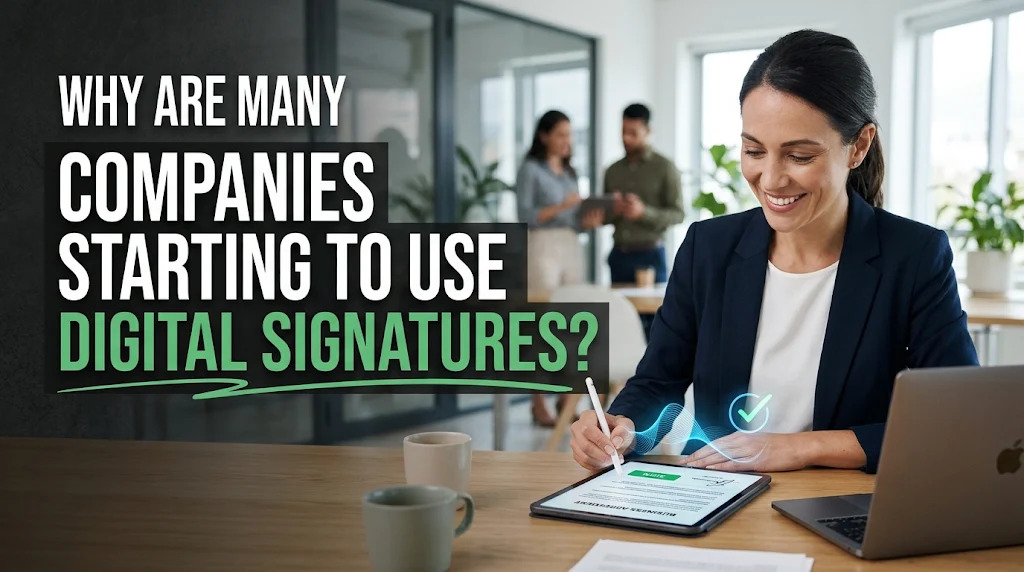
Digital transformation has changed the way companies manage documents, communicate with business partners, and complete administrative activities. Many business processes that previously depended on printed documents and handwritten signatures are now moving toward electronic systems. This shift is driven by the need for faster workflows, more flexible collaboration, and better document management. One technology that supports this development is the digital signature.
Companies across various industries are increasingly adopting digital signatures to simplify document approval and reduce dependence on traditional paperwork. This technology allows authorized individuals to sign electronic documents while supporting verification of the signer's identity and document integrity. Understanding why companies are starting to use digital signatures can explain how this innovation contributes to more efficient and secure business operations.
SPEEDING UP BUSINESS AND ADMINISTRATIVE PROCESSES
One of the main reasons companies adopt digital signatures is the ability to complete document approval more quickly. Traditional signing processes may require documents to be printed, delivered, signed manually, scanned, and returned. When several departments or business partners are involved, these steps can create unnecessary delays and slow down important decisions.
Digital signatures allow authorized individuals to sign documents electronically through supported platforms. For example, a human resources department can prepare employment agreements and send them to new employees for electronic signing. Managers can also approve internal documents without having to handle printed copies. This approach can make administrative activities more practical, especially when participants work in different locations.
Faster approval processes can help companies allocate more time to their main operational activities. Employees no longer need to spend as much time coordinating the physical movement of documents. Digital signatures help streamline administrative workflows and support more responsive business operations.
IMPROVING DOCUMENT SECURITY AND AUTHENTICITY
Companies frequently handle sensitive documents, including employment contracts, financial agreements, business proposals, and confidential records. Protecting these documents is essential because unauthorized access or modifications can create financial and legal problems. Digital signatures provide cryptographic mechanisms that help verify the identity associated with a signature and detect changes made to a signed document.
A digital signature generally uses a private key to create a signature and a corresponding public key to verify it. When the document is modified after signing, the verification process can indicate that its integrity has been compromised. This makes digital signatures useful for organizations that need to maintain reliable records of important transactions.
However, digital signatures do not automatically eliminate every security risk. Companies still need to protect private keys, manage user access, verify identities, and select trustworthy digital signature providers. Employees should also receive guidance on recognizing suspicious requests and protecting their account credentials. Strong security practices combined with digital signature technology can help companies maintain greater confidence in electronic document transactions.
REDUCING OPERATIONAL COSTS AND PAPER CONSUMPTION
Another reason companies are adopting digital signatures is the opportunity to reduce expenses associated with traditional document management. Printed paperwork requires paper, ink, printing equipment, scanners, physical storage, and sometimes courier services. These costs can increase when organizations process hundreds or thousands of documents regularly.
By moving selected signing activities to digital platforms, companies can reduce the need for printing and physical document delivery. Employees can prepare, distribute, sign, and store documents electronically. This approach may also reduce the administrative effort required to organize and retrieve physical records.
Reducing paper consumption can contribute to more environmentally conscious business practices. Although digital infrastructure still requires electricity, electronic devices, and data storage, companies can avoid unnecessary printing and reduce paper-related waste. Digital signatures support cost efficiency and more sustainable document management when implemented as part of a well-planned digital workflow.
SUPPORTING REMOTE WORK AND BUSINESS COLLABORATION
Modern companies often work with employees, clients, suppliers, and business partners located in different cities or countries. Coordinating handwritten signatures across these locations can be inconvenient and time-consuming. Digital signatures make it possible for authorized participants to sign documents electronically without being physically present in the same place.
For example, a company negotiating an agreement with an overseas business partner can use a suitable digital signing platform to exchange and sign documents remotely. Human resources teams can also complete certain recruitment and employment administration processes without requiring candidates to visit the office solely for document signing.
This flexibility is particularly useful for businesses that operate through remote or hybrid working arrangements. Employees can complete authorized document approvals using supported devices and secure platforms. Remote digital signing helps companies maintain business continuity and improves coordination among people working in different locations.
IMPROVING PRODUCTIVITY AND DOCUMENT MANAGEMENT
Digital signatures can also improve how companies organize and monitor their documents. Many signing platforms provide features for tracking document status, recording signing times, and identifying which participants have completed an approval process. These functions can help organizations manage documents that require authorization from multiple individuals.
Electronic document storage also makes it easier to search for and retrieve records when needed. Instead of manually checking physical folders, authorized employees can access documents through organized digital systems. This can support administrative activities such as contract reviews, employee record management, and internal audits.
Furthermore, digital signing workflows can be integrated with other business applications, depending on the platform and company's requirements. Integration with document management or enterprise systems may reduce repetitive data entry and improve coordination between departments. Nevertheless, companies should establish clear procedures for access permissions, backups, and record retention. Efficient digital document management helps employees work more productively while maintaining better control over important business records.
CONCLUSION
Many companies are starting to use digital signatures because this technology supports faster administrative processes, improves document authenticity, reduces paper-related costs, enables remote collaboration, and simplifies document management. These advantages make digital signatures a practical solution for organizations that want to modernize their operations and respond to changing business needs.
However, successful implementation requires more than simply adopting a digital signing platform. Companies need to choose reliable providers, understand applicable legal requirements, protect sensitive information, and train employees to use the technology correctly. Digital signatures are becoming an important part of modern business operations because they help organizations manage electronic documents more efficiently while supporting security, flexibility, and productivity.
Recent Posts

How Much Influence Does a Vice... 28.11.2026/128 View
How Can You Create a Secure... 17.11.2026/9 View
What Are the Benefits of Digital... 17.11.2026/8 View
Why Are Many Companies Starting to... 17.11.2026/9 View
How Do Digital Signatures Simplify Administrative... 17.11.2026/8 View
